
A retailer watched a vendor demo whose script matched the sales slideshow. The demo did not apply the retailer's returns policy, which is the process the sponsor needs. What should the architect decide?
Select an answer to reveal the explanation.
Short Explanation
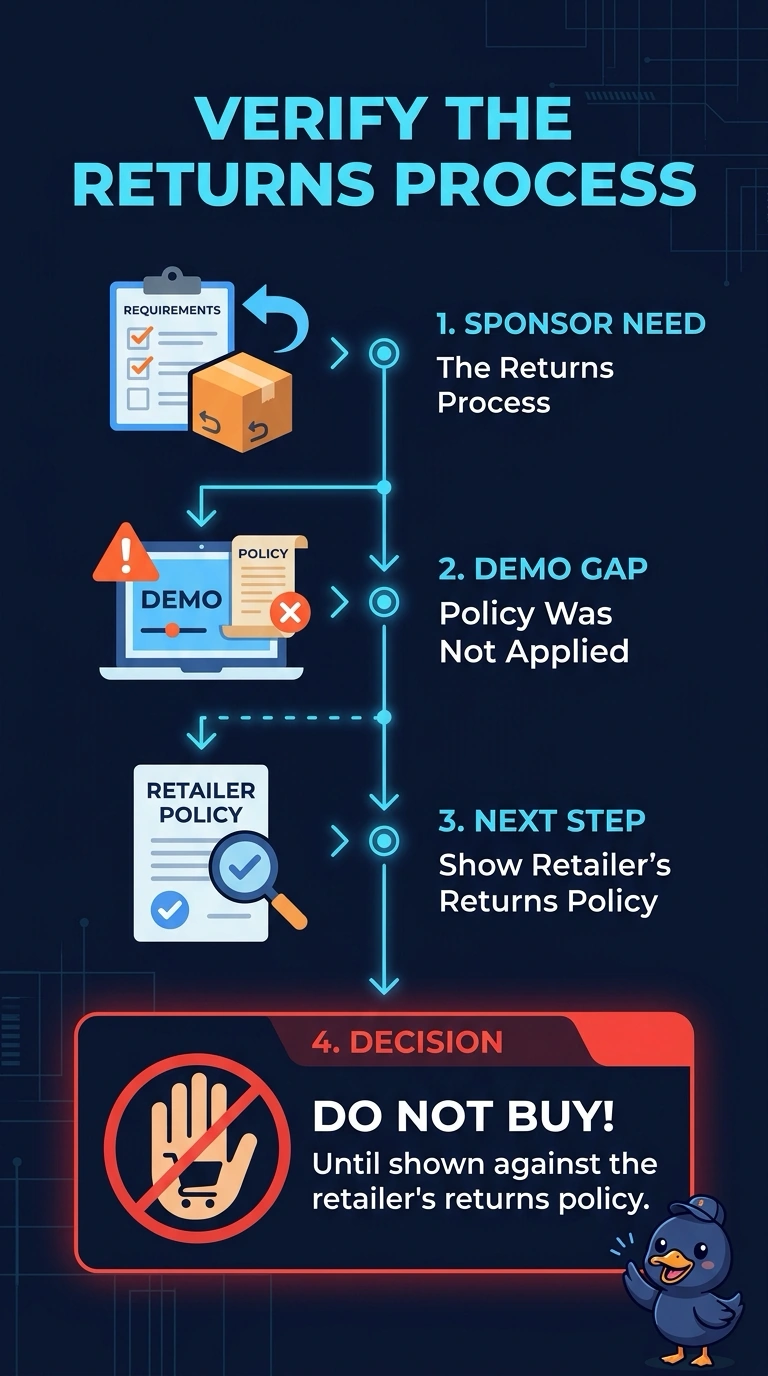
A rehearsal that follows the script is not a shift on your floor. You do not buy this product on a demo that did not apply the returns policy. A matching slideshow is the vendor's story, not your rule in action.
Full Explanation
A buy decision needs the product to perform the process the sponsor named. This demo followed the slideshow and did not apply the retailer's returns policy, so the architect does not buy it on that demo. The next showing has to run the real policy before money is committed. Buying because the slideshow lists returns treats marketing text as evidence, and the demo did not exercise that story on the retailer's rules. Signing the contract and starting a custom returns agent in parallel commits to the vendor and to a build before either one has proven the policy. Purchasing first and teaching the policy after go-live accepts the gap the sponsor cares about and hopes a later project will close it. Exam caveat: a later proof on the real returns policy can still support a purchase, and refusing this demo is not a decision to build a replacement. Operational check: rerun the scenario with three returns from the retailer's policy, including one the policy rejects, and buy only if those outcomes match the policy. Keep the slideshow result in the notes as a failed proof, not as a reason to sign.