
An airline classifies delay codes in a night batch and answers passenger questions during the day. The jobs need different models, and both may run inside the same data boundary. What should the architect use?
Select an answer to reveal the explanation.
Short Explanation
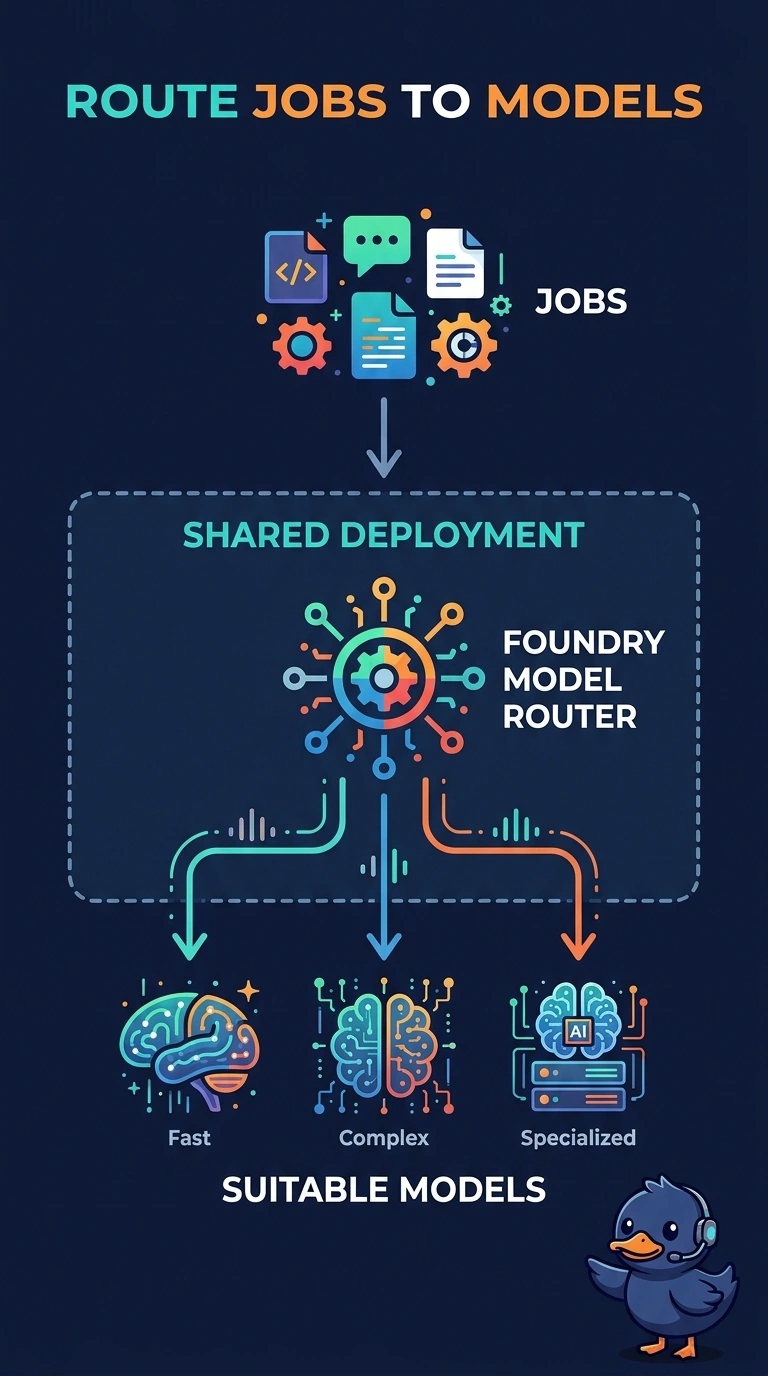
Two kinds of flights can share one airport when they are allowed to. You put a model router on the shared deployment so the night batch and the daytime answers each reach a suitable model. Hardcoding the largest model for both ignores the split.
Full Explanation
The night-batch classification and the daytime passenger answers need different models, and both may run inside the same data boundary, so one Foundry model router on that shared deployment can send each job to a suitable model. Hardcoding the largest model name for both jobs forces the cheap classification and the passenger answers onto one expensive model and does not route. Two separate tenants so the jobs cannot share a boundary breaks the condition that makes one router deployment fit, and it adds an isolation the scenario does not require. A single small model for both jobs leaves the daytime answers on a model chosen for the night batch, which is the opposite of giving each job a suitable model. Exam caveat: a shared boundary is a real constraint. If a later rule forbids the passenger data from sitting with the batch, the two-tenant option becomes the isolation that fits and the shared router no longer does. Operational check: run one night-batch classification and one daytime passenger question through the shared router and confirm they resolve to different models inside that same boundary.