
A logistics team wants a tracking assistant for shipments. The carrier portal they already license includes that assistant, and it can be configured for their account. A proposal would rebuild the same assistant from scratch. What should the architect decide?
Select an answer to reveal the explanation.
Short Explanation
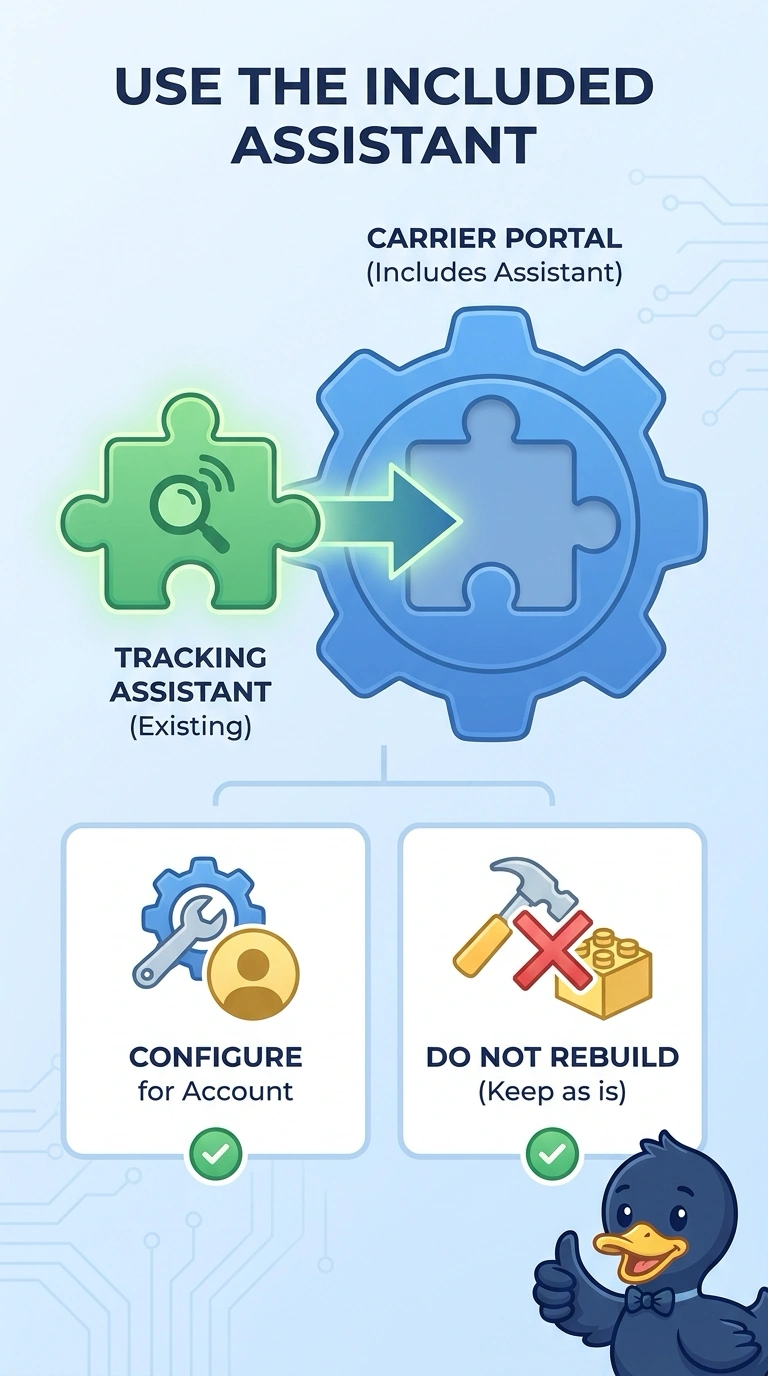
The assistant already sitting on the carrier portal is the one to switch on. You configure that tracking assistant for the team's account, and you do not rebuild it. A custom agent that repeats the same tracking job is a second copy of a product the team already has.
Full Explanation
Build, buy, or extend follows the size of the gap. Here the carrier portal already includes the tracking assistant the team wants, and it can be configured for their account, so the decision is to configure it and not rebuild. Rebuilding the assistant as a custom agent leaves a working product unused and spends the project on a copy of the same lookup. Training a custom model on last month's tracking pages freezes old shipment states and retires the live assistant that already follows current freight. A blank chat where clerks paste tracking numbers has no carrier connection and puts the lookup back on the person, which is the manual path the assistant was meant to replace. Exam caveat: configure means attach the account and confirm the assistant shows this team's shipments. If a later gap appears that configuration cannot close, that gap is a separate decision. Operational check: track a test shipment in the configured portal assistant and confirm the team did not stand up a second custom agent for the same lookup. The status on that test should match the shipment the carrier portal shows at that moment.