
A pharmacy chain wants to rank several agent ideas, but the criteria include no baseline. Nobody has recorded what the manual dispensing follow-up costs today. What should the architect define before any idea is ranked?
Select an answer to reveal the explanation.
Short Explanation
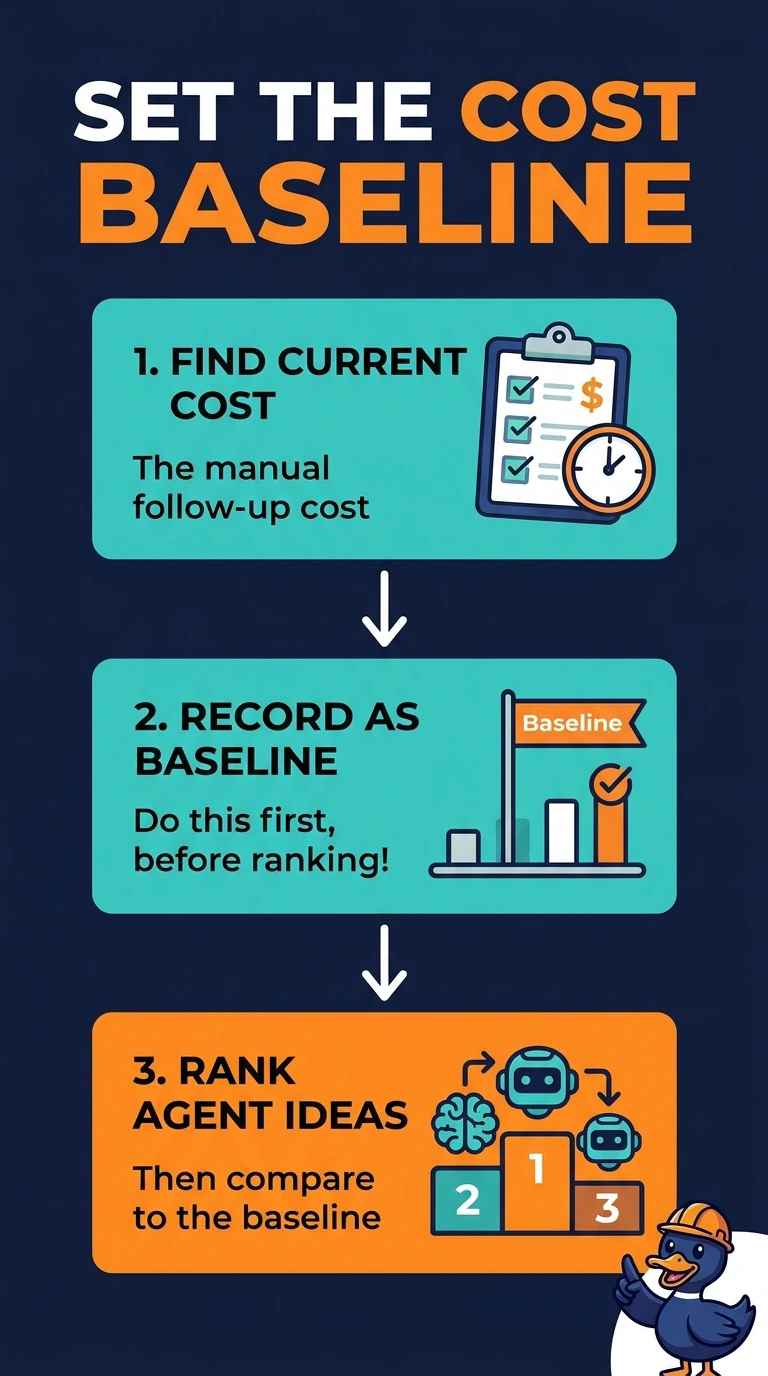
You cannot call the new clerk a bargain until you know what the work costs today. You write down the current cost of the manual process and use it as the baseline before any agent idea is ranked. A license price is not that baseline.
Full Explanation
A return comparison needs a starting point, and the starting point is what the manual process costs now. Until the pharmacy records the current cost of the dispensing follow-up, every agent idea is a number floating free of the work it claims to change, so the architect defines that baseline before any ranking. The license price of the first idea is a future bill, not the cost of today's follow-up, and using it as a stand-in hides whether an agent beats the manual work. Model size is a design attribute, not a baseline of the process, and ranking by it will prefer a heavy model over a modest change that removes more manual time. A count of agents the chain hopes to publish measures ambition and leaves today's cost blank, so the ranking still has nothing to compare against. Exam caveat: the baseline is the cost of the manual follow-up, not the license price of the first idea and not the size of a model. Operational check: record the manual follow-up's people time and rework for a normal week, put that figure on the ranking sheet, and refuse to score an idea until the figure is filled in.