
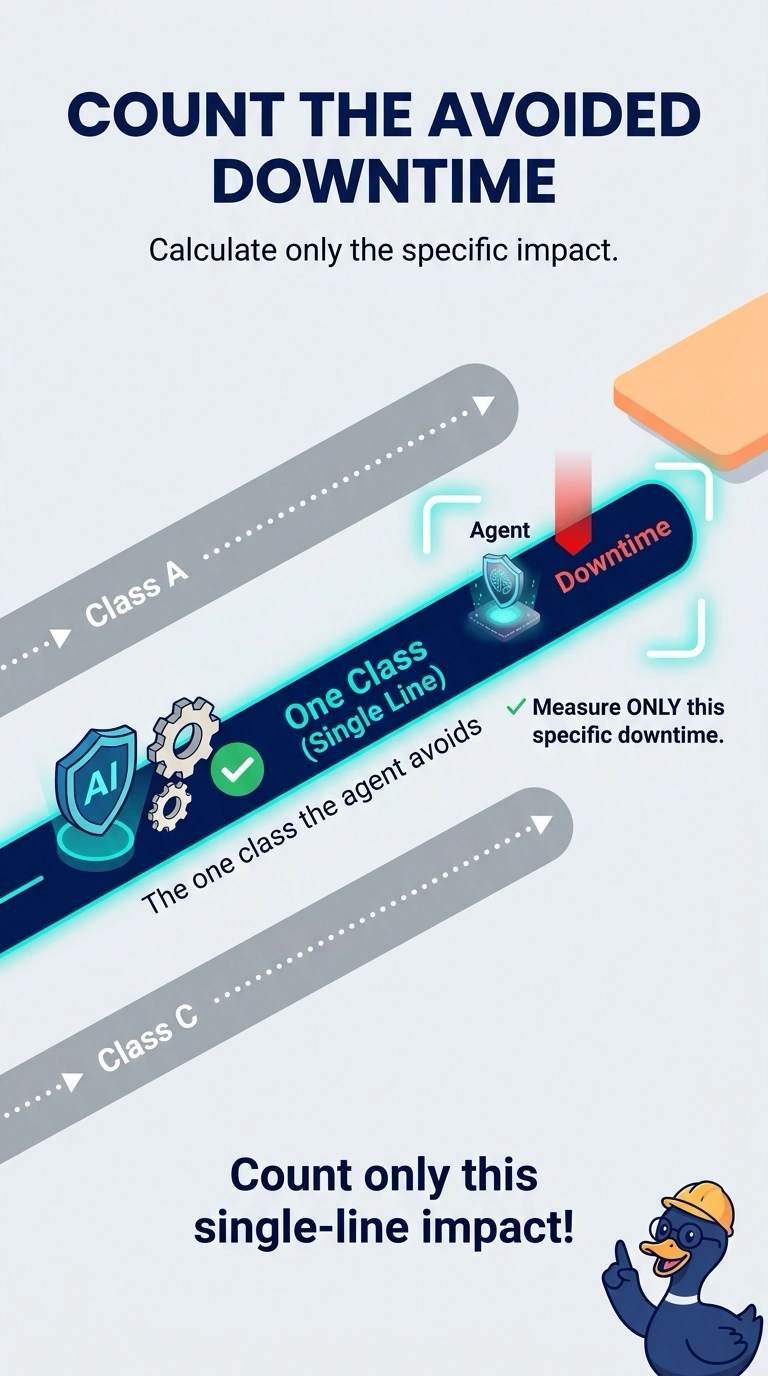
A manufacturer's maintenance agent avoids one class of unplanned downtime on a single line. The draft analysis claims company-wide savings across plants and lines the agent does not watch. What should the analysis use as the benefit?
Select an answer to reveal the explanation.
Short Explanation
Stopping one machine from failing is not a promise that every plant just got cheaper. You limit the benefit to the downtime class this agent avoids on the line it watches. A company-wide claim counts lines the agent does not touch.
Full Explanation
The benefit has to match the process the agent changes. This agent avoids one class of unplanned downtime on a single line, so the analysis should use that downtime and not a company-wide savings claim that pulls in plants and lines the agent does not watch. A company-wide figure will show a return the maintenance logs cannot support and will disappoint the first time another line fails for a different reason. Restating the license price as the benefit puts a cost on the gain side and leaves the avoided downtime out, so the case states what was bought rather than what changed. A staffing reduction at plants that do not run the watched line invents a labor saving in places the agent does not affect. Exam caveat: if the agent is later pointed at a second line, the benefit can grow by that line's same downtime class. It does not jump to every plant by assumption. Operational check: tie the benefit line to the downtime class and the line in the maintenance log, and reject a draft that states a company-wide total without that scope. Another plant enters the case only after the agent is actually watching a line there.