
A university admissions agent answers applicant questions after the office closes. The draft analysis claims the benefit is a cut in admissions headcount, and no role is being removed. What should the analysis treat as the benefit?
Select an answer to reveal the explanation.
Short Explanation
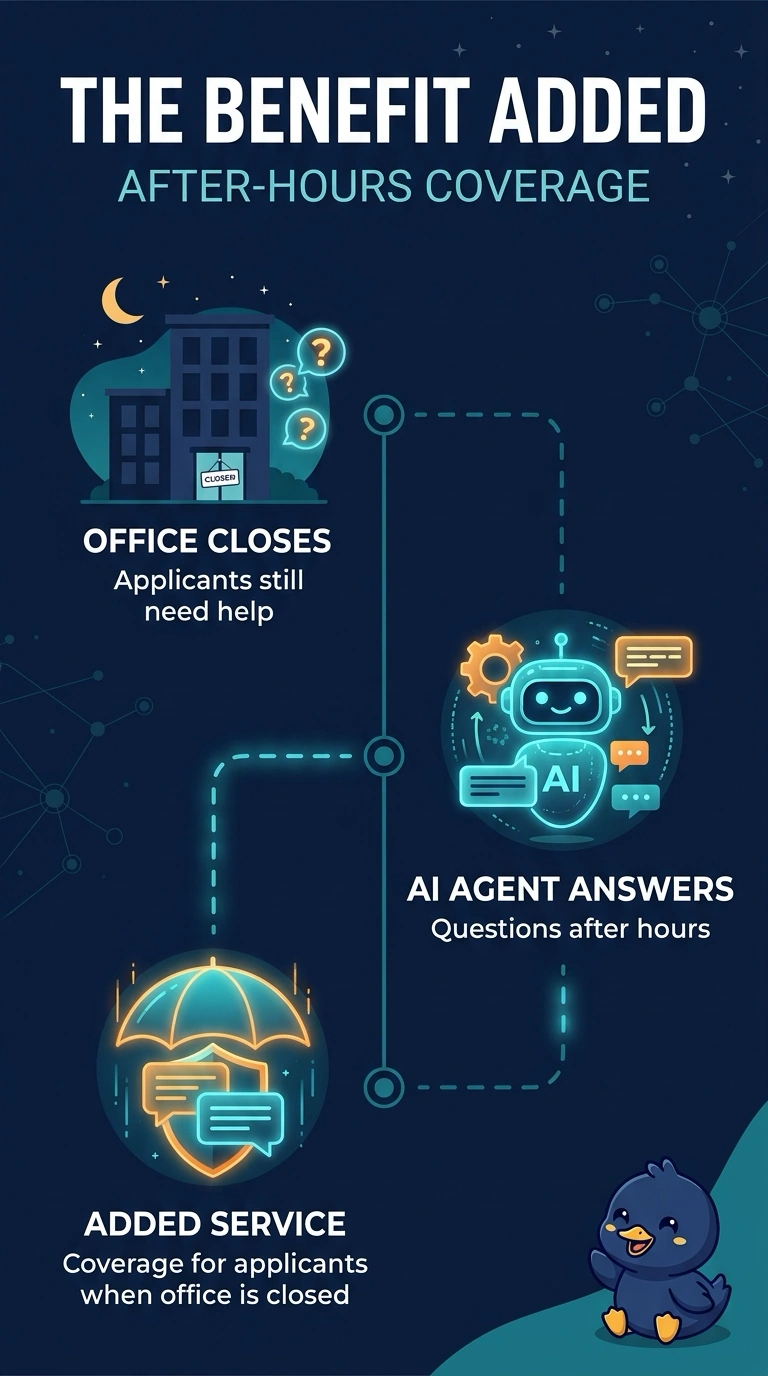
Answering the phone after the office locks the door is coverage, not a person you removed from the roster. You count after-hours coverage as the benefit, and you drop the headcount cut that no role is actually taking. A fictional reduction will not survive the first payroll.
Full Explanation
The benefit in the analysis has to be the outcome the agent produces. This agent answers applicants after the office closes, and no admissions role is being removed, so the benefit is after-hours coverage rather than a headcount cut. Claiming a cut sized to the evening shift records a saving the payroll will not show and overstates the return. Scoring the model size treats a design choice as if it replaced staff, which neither covers the evening in the benefit statement nor removes a salary. A license reduction from deleting the admissions mailbox invents a cut to a mailbox the office still uses during the day, so the cost remains while the analysis pretends it ended. Exam caveat: coverage can be stated as applicant questions the office can now answer after hours. It is not converted into salaries unless a role is actually coming off the plan. Operational check: read the benefit line and confirm it says after-hours coverage, and confirm the staffing plan still lists each admissions role the analysis no longer claims to remove. A role can appear as a saving only after the staffing plan shows that role leaving.