
A utility's storm agent shortens outage calls and will not dispatch a crew until a new on-call approver agrees. The analysis lists the saved call time and omits the approver. What should the analysis include?
Select an answer to reveal the explanation.
Short Explanation
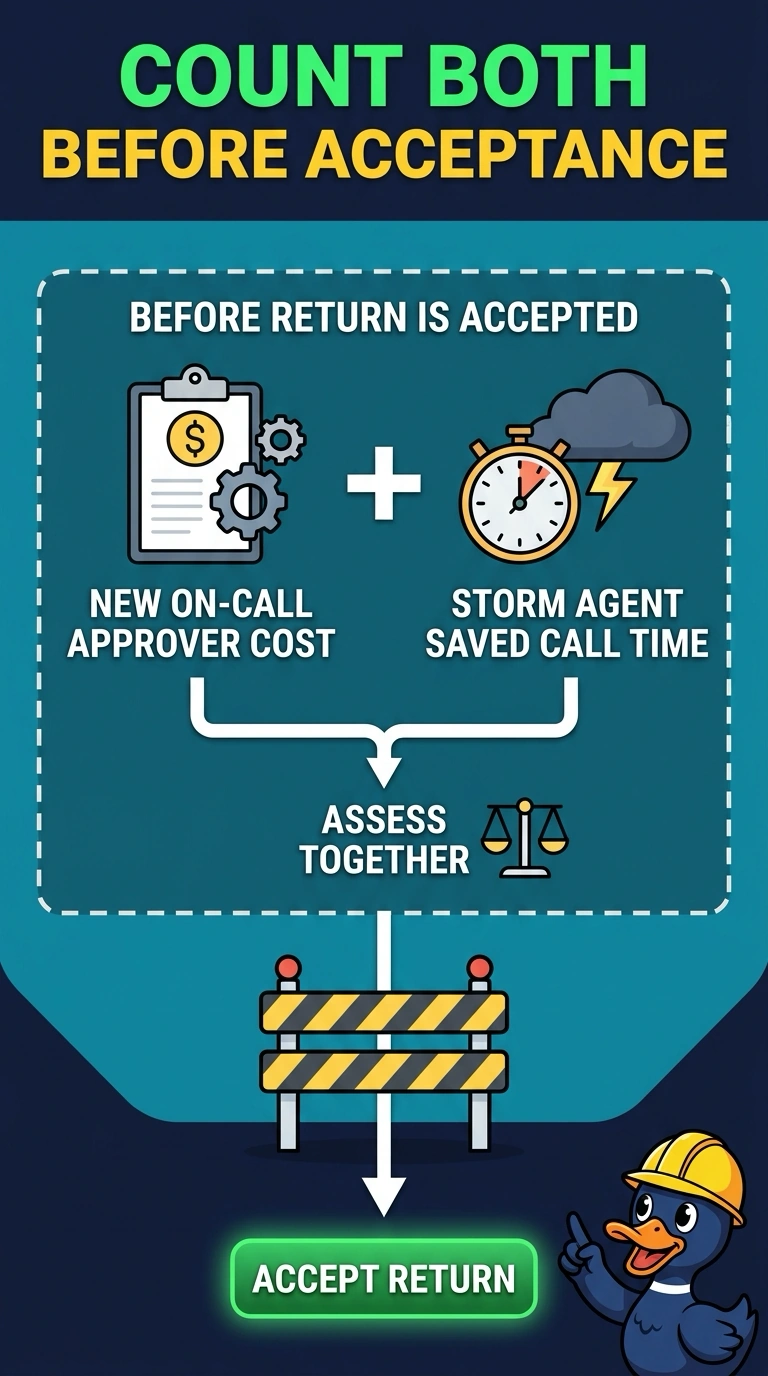
The shorter call still depends on the person who releases the truck. You include the new on-call approver’s cost alongside the call time the storm agent saves, so your analysis reflects both. Leaving the approver off the cost side makes dispatch look as though it approves itself.
Full Explanation
The storm agent’s return is the call time it saves, weighed against the cost of the control it now requires. Because dispatch depends on a new on-call approver, the analysis should include that approver’s cost together with the saved call time before accepting the return. Including only the saved call time leaves out a required cost and makes the benefit look larger than it is. Including only the approver’s cost and entering the saved call time as zero ignores the benefit the agent is intended to produce, so it cannot show whether the tool pays once both sides are counted. A tally of storms this season describes weather activity but includes neither the operational saving nor the approver’s cost, so it does not assess the agent’s return. Exam caveat: include the cost for the storm duty the approver covers; do not price a full-time quiet-season post that the storm process does not use. Practical check: put the approver’s storm-duty cost on the same sheet as the reduced call time, and confirm the analysis remains incomplete if the approver’s cost is blank.