
An airline's rebooking agent shortens calls. When it selects the expensive fare it also creates a compensation cost, and the current analysis leaves that cost out. What should the analysis include?
Select an answer to reveal the explanation.
Short Explanation
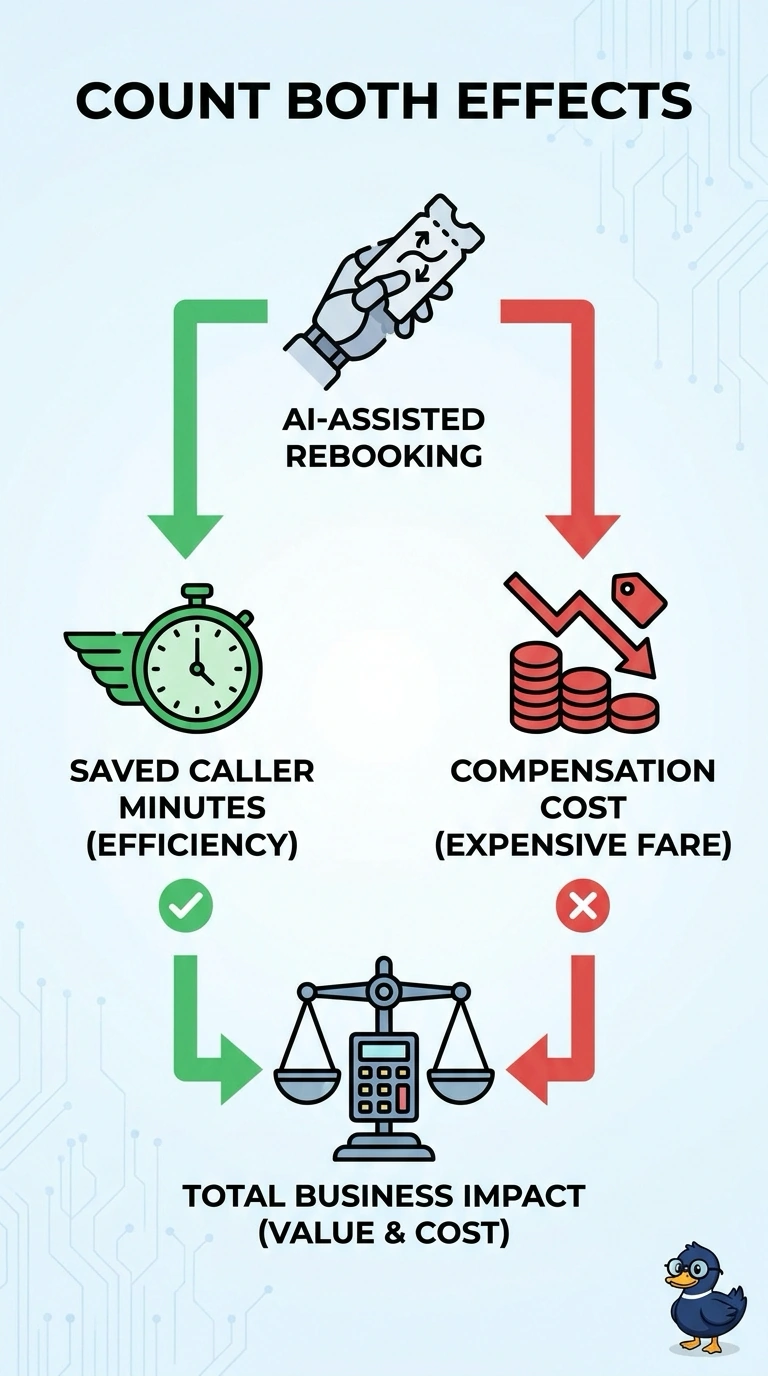
A shorter phone call is not a win if the new ticket costs more than the minutes you saved. You put both the saved caller minutes and the compensation cost of the expensive fare in the analysis. Counting only the shorter call hides the bill the rebooking just created.
Full Explanation
An analysis of this agent has to hold the benefit and the new cost of the same action. The rebooking agent saves caller minutes, and when it chooses the expensive fare it adds a compensation cost, so both belong in the analysis or the return is only half the story. Reporting only the caller minutes saved presents a gain and hides the compensation that fare created. Reporting only the compensation cost ignores the minutes the agent removed, which understates the benefit and can reject a rebooking path that still pays once both sides are visible. A side-by-side of two model vendors drops the operational saving and the fare cost, so the sheet compares products and says nothing about the rebooking process. Exam caveat: include the compensation when that expensive fare is chosen. Keep it off rebookings that stayed on a cheaper fare the analysis can separate. Operational check: take one test rebooking on the expensive fare and confirm the analysis shows the minutes saved and the compensation for that fare together. Repeat that check on a cheaper fare and confirm the compensation stays off that row.