
A hospital prior-authorization agent reduces clerk time and adds clinician review time. The analysis reports the clerk hours saved and leaves the new clinician time out. What should the analysis do?
Select an answer to reveal the explanation.
Short Explanation
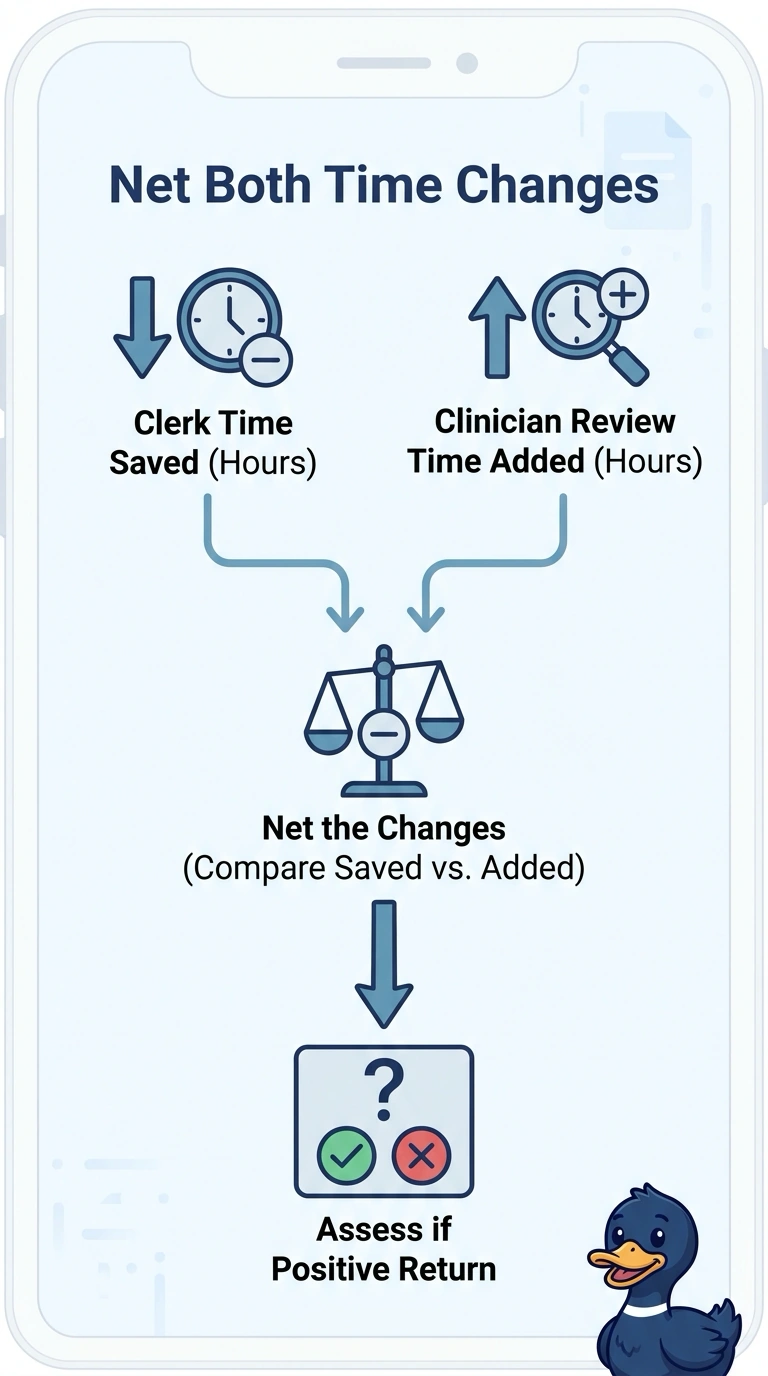
An hour saved at the filing desk is not a gift if it lands on a clinician who did not have that hour. You net the clerk time saved against the clinician review time added before you call the return positive. Reporting only the clerk hours tells half the shift.
Full Explanation
The return on this agent is a net, because the same design that removes clerk time creates clinician review time. The analysis should subtract the added clinician time from the saved clerk time and only then say whether the return is positive. A positive clerk line with a hidden clinician line can approve an agent that moves work onto a scarcer role. Reporting the clerk hours saved and leaving the clinician time off the page is the current draft, and it hides the new cost. Counting the added clinician time as a benefit because a clinician touched the case treats a cost as a gain and will inflate the return as review work grows. Dropping both figures and ranking by the model abandons the process times, so the analysis no longer describes prior authorization at all. Exam caveat: net the time in the units the hospital can compare, and do not treat a clerk hour and a clinician hour as the same kind of hour without saying so. Operational check: for a sample of cases, record clerk minutes removed and clinician minutes added, and confirm the analysis shows the difference before anyone marks the project as a saving.