
A retailer treats each deflected chat as a full saving. Many of those chats come back the next day as store visits, and the analysis does not count the returns. What should the analysis count?
Select an answer to reveal the explanation.
Short Explanation
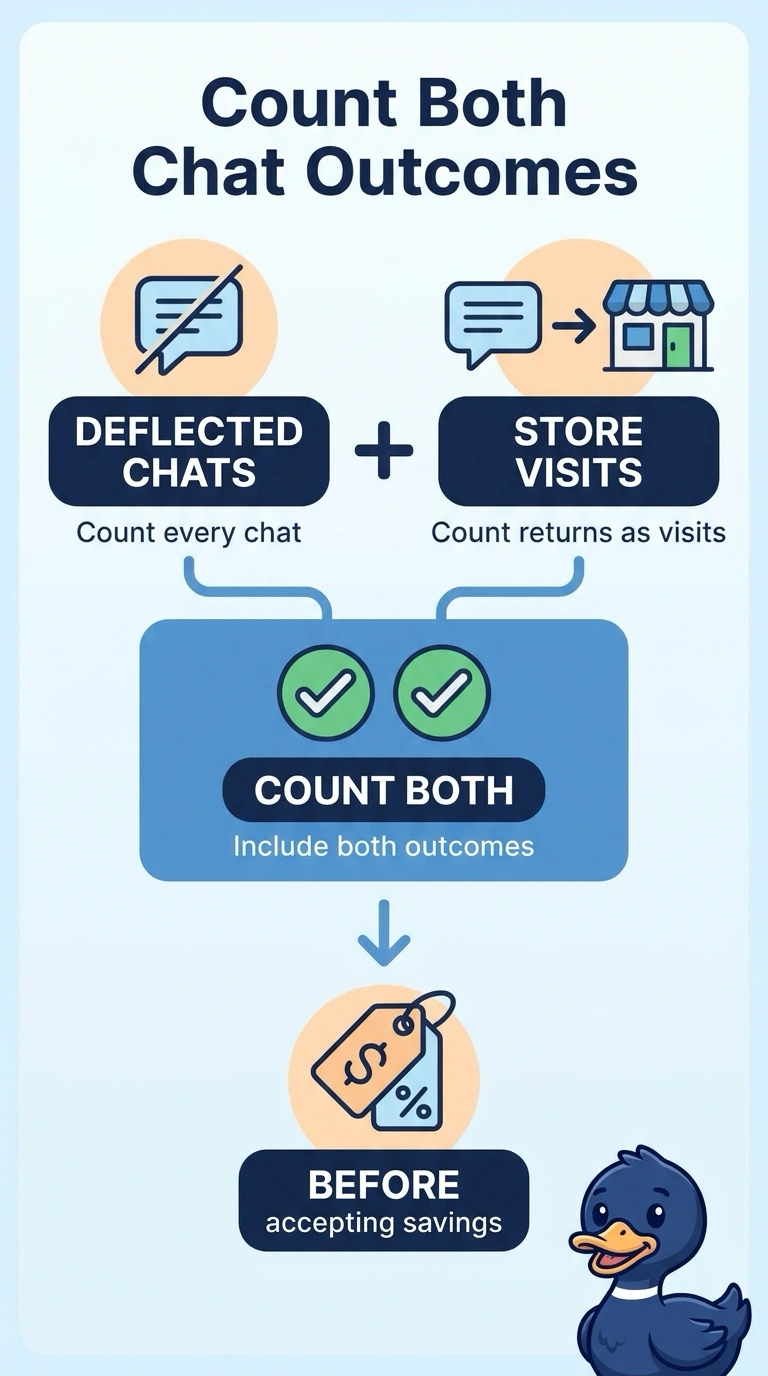
A chat that walks into the store the next day was not really finished online. You count those return visits along with the deflections before you accept the savings. A deflection total that ignores the trip to the store overstates what the agent removed.
Full Explanation
A deflection is a saving only when the customer's need stayed resolved. When a deflected chat comes back as a store visit, that return is part of the result, and the analysis has to count it before anyone accepts the savings figure. Counting only the deflected chats repeats the current overstatement and hides the visits the store still absorbs. Counting only the store visits drops the chats that stayed resolved, so the analysis misses the benefit the agent did deliver and can make a useful agent look empty. A chat satisfaction score says how the conversation felt and includes neither the count of deflections nor the count of return visits, so it cannot show whether the contact was actually removed. Exam caveat: a return visit counts against the deflection it came from. Leave out store traffic that started at the door and was not one of these chats. Operational check: mark a sample of deflected chats, see which ones show up as store visits, and confirm the savings sheet lists both numbers before it is approved. A sheet that cannot name the returned chats is not ready to treat the deflections as a saving.