
A logistics yard receives a short gate message that contains a container id. That same step must not bargain with the customer about fees. Which design fits?
Select an answer to reveal the explanation.
Short Explanation
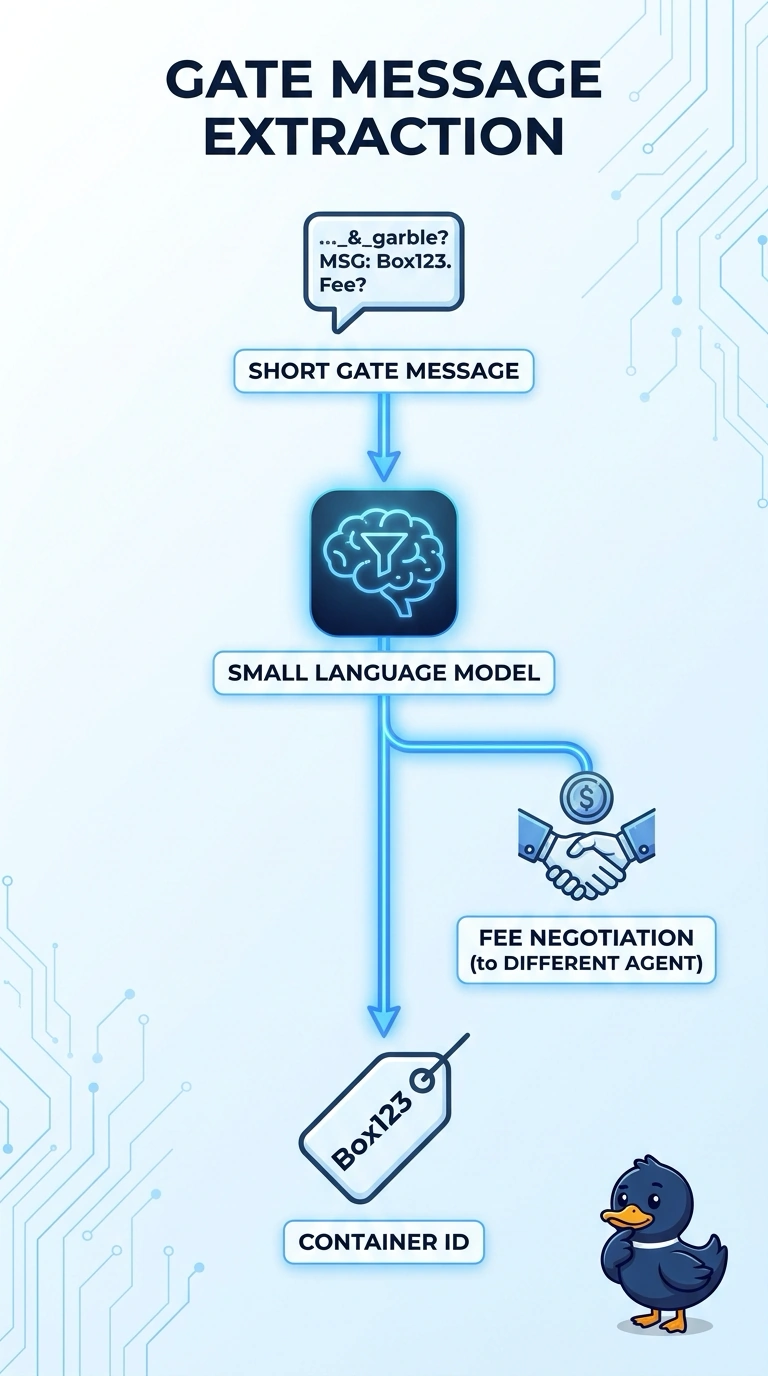
Reading the container number off a gate slip is a clerk's glance, not a negotiation at the window. You use a small language model to pull that id out of the short message, and you leave fee talks to a different agent. One model that does both will start haggling.
Full Explanation
Extracting a container id from a short gate message is a narrow, repetitive pull from text, which is a sound use of a small language model. Bargaining a fee is an open-ended customer conversation with business judgment, and the requirement keeps that off this step, so fee negotiation belongs to a different agent. One small model that extracts the id and bargains the fee inside the same reply mixes the narrow pull with the conversation the yard refused to automate here. A chat assistant that discusses the delay and leaves the gate message unread ignores the only fact the message was sent to provide. A next-morning tally started after the truck has left the yard is a count after the fact, and it neither reads the id at the gate nor keeps a negotiation in its proper place. Exam caveat: a small model can return the id for a downstream system to store; handing it the fee conversation is a different use, not a free extra. Operational check: submit a gate message that contains one container id and a fee complaint, and confirm the small model returns only the id while the fee text is routed to the other agent.