
A bank wants a small language model to be the only reviewer of suspicious-activity narratives that depend on account history, prior cases, and the written policy. What should the architect decide?
Select an answer to reveal the explanation.
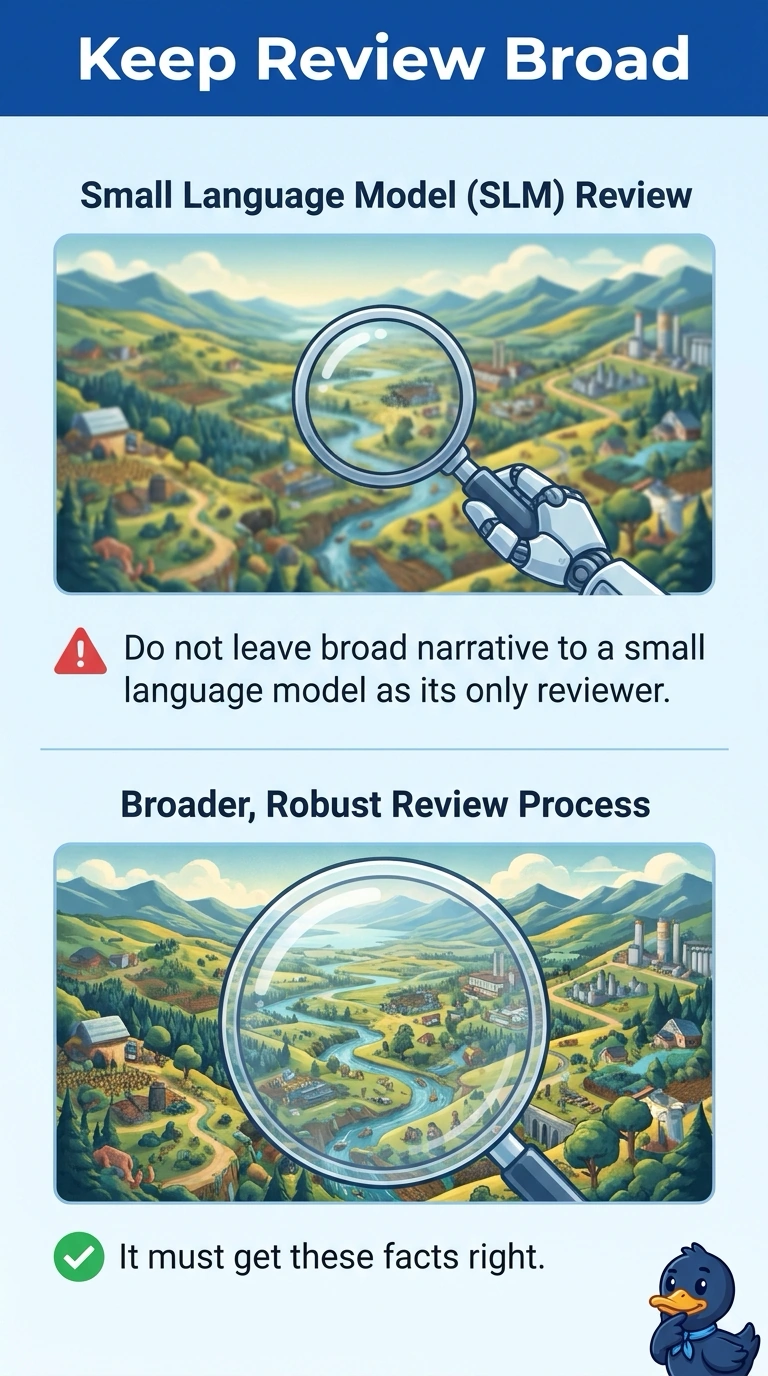
Short Explanation
You’re right to be cautious: a small language model should not be the only reviewer of a suspicious-activity narrative that depends on account history, prior cases, and policy. Speed is not a good reason to skip the broader review that this case needs.
Full Explanation
A small language model should not be the only reviewer of a suspicious-activity narrative that depends on account history, prior cases, and written policy. That broad context is beyond what you should entrust to the model as the sole reviewer, so the architect should reject that arrangement. Letting the model close the case from the narrative alone has the same flaw: it treats a constrained model as if it had the whole file and could own the judgment. Fine-tuning the model on a handful of closed cases does not solve the problem; those examples cannot stand in for the relevant account history, prior cases, and policy, and having the model file the final activity report still gives it responsibility for the outcome. Replacing the investigations unit removes the person who can weigh that context, leaving the narrative without the review it requires. Exam caveat: a small model may still be able to extract a date or account number from text; the important boundary here is that it must not be the narrative’s only reviewer. Practical check: identify who issues the case outcome and confirm that a person or broader review step remains responsible when the narrative depends on history, prior cases, and policy.