
A retailer wants an agent to answer whether a SKU is on sale. The price API already returns that flag. What should the architect decide?
Select an answer to reveal the explanation.
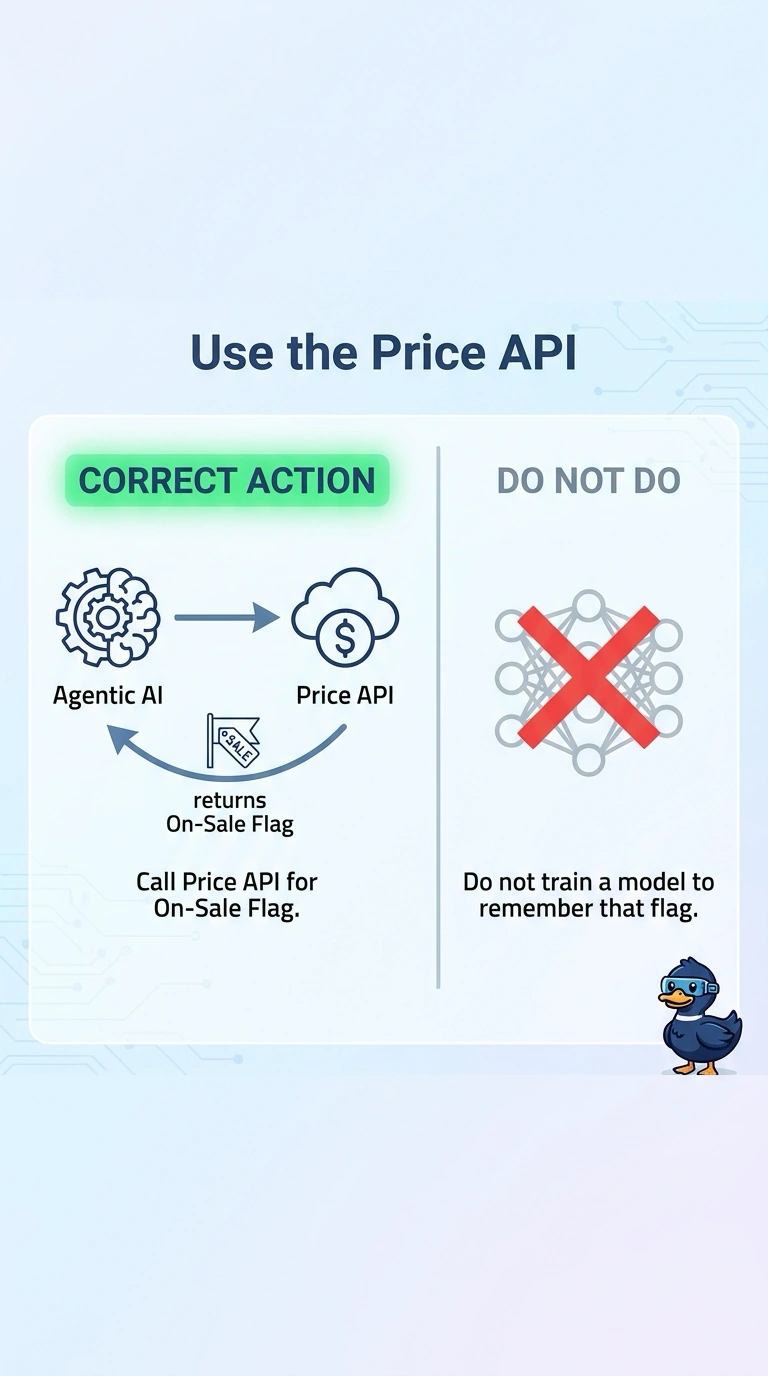
Short Explanation
If the sticker price is on the shelf edge, you do not enroll in a class to memorize it. You call the price API for the sale flag and you do not train a model to remember a fact the API already returns. Last month's export is how the agent quotes a sale that ended.
Full Explanation
A custom model is justified only when prompting, grounding, and tools cannot produce the behavior. Whether a SKU is on sale is a lookup the price API already answers, so the agent should call that API and should not be trained to remember the flag. The call happens when the question is asked, so the flag stays current when a promotion starts or ends. Fine-tuning a custom model on last month's sale list freezes a past promotion and skips the tool that has today's flag. Training a small language model to memorize the last export is the same memory, just smaller, and a sale flag changes faster than a retraining cycle. Grounding a generative reply on a spreadsheet copy of the price file and skipping the price API uses a detached copy that can disagree with the API the registers use. Exam caveat: the API is the source for this yes-or-no flag. A model can still draft the sentence around the flag after the tool returns it. Operational check: toggle the sale flag for one SKU in the price API, ask the agent, and confirm the answer matches the API without a model retrain.