
A bank sponsor asks for a custom model because the policy PDFs use an unusual brand font. The only job staff need is for the copilot to read the policy text they ask about. What should the architect decide?
Select an answer to reveal the explanation.
Short Explanation
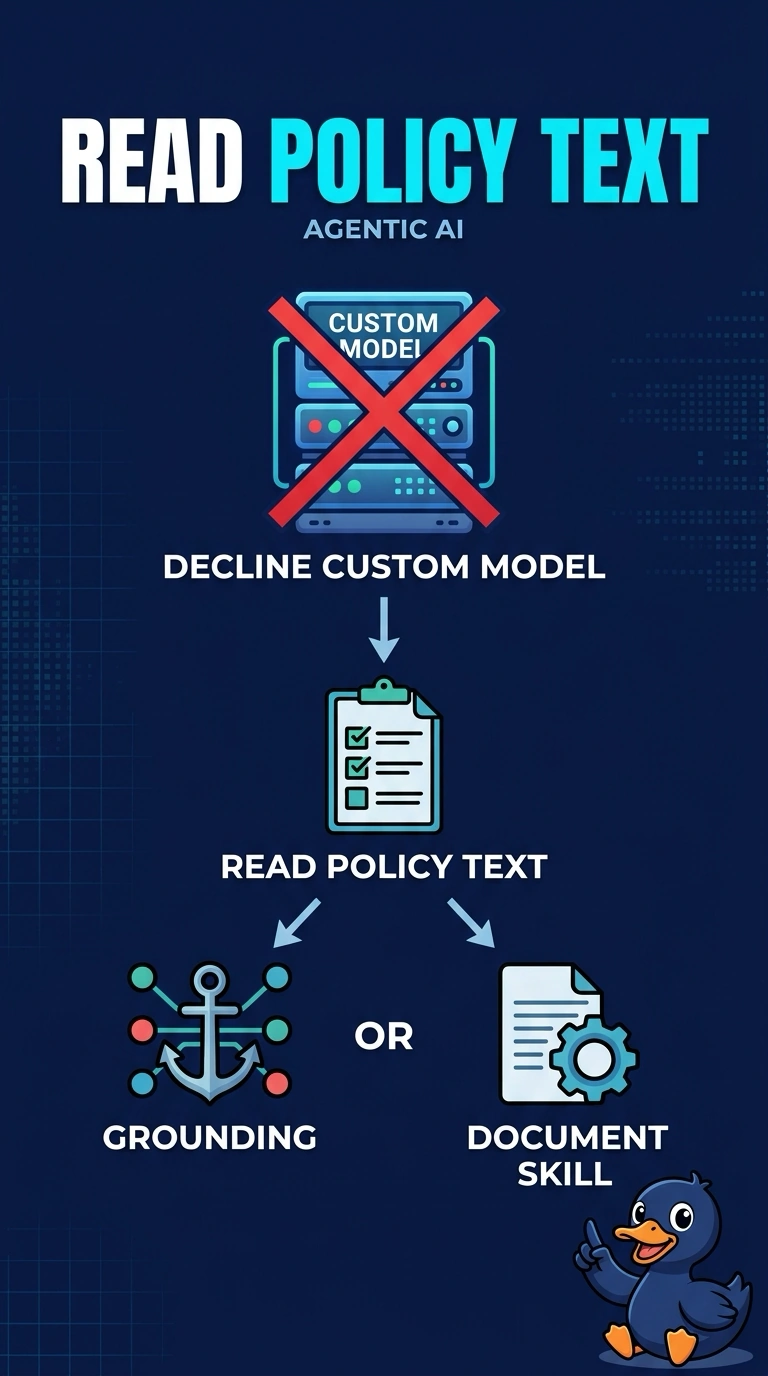
A fancy typeface does not change the sentence printed in it. You decline the custom model, because the job is reading policy text, and you use grounding or a document skill. Training on the font answers a question the bank did not ask.
Full Explanation
A custom model has to learn a behavior that prompting, grounding, and tools cannot produce. The bank's behavior is answering from policy text. An unusual brand font is a look, not that behavior, so the architect declines the custom model and has the copilot read the text through grounding or a document skill. A font that is hard to read is still not the behavior the bank asked a model to learn. Training a custom model on the shape of the brand font would score typeface recognition and still would not settle the coverage question. Replacing the library with photographs of the logo removes the policy wording the staff ask about. A small language model that memorizes the font name stores a label and skips the sentences the copilot must quote or paraphrase from. Exam caveat: a document skill that fails on one scanned page is a file problem, and it does not by itself justify a custom model of the brand. Operational check: ask a policy question against the current text source, confirm the answer cites that text, and confirm no training set of font images is being collected.