
A pharmacy agent is asked whether two drugs interact. Which behavior should the architect require for that answer?
Select an answer to reveal the explanation.
Short Explanation
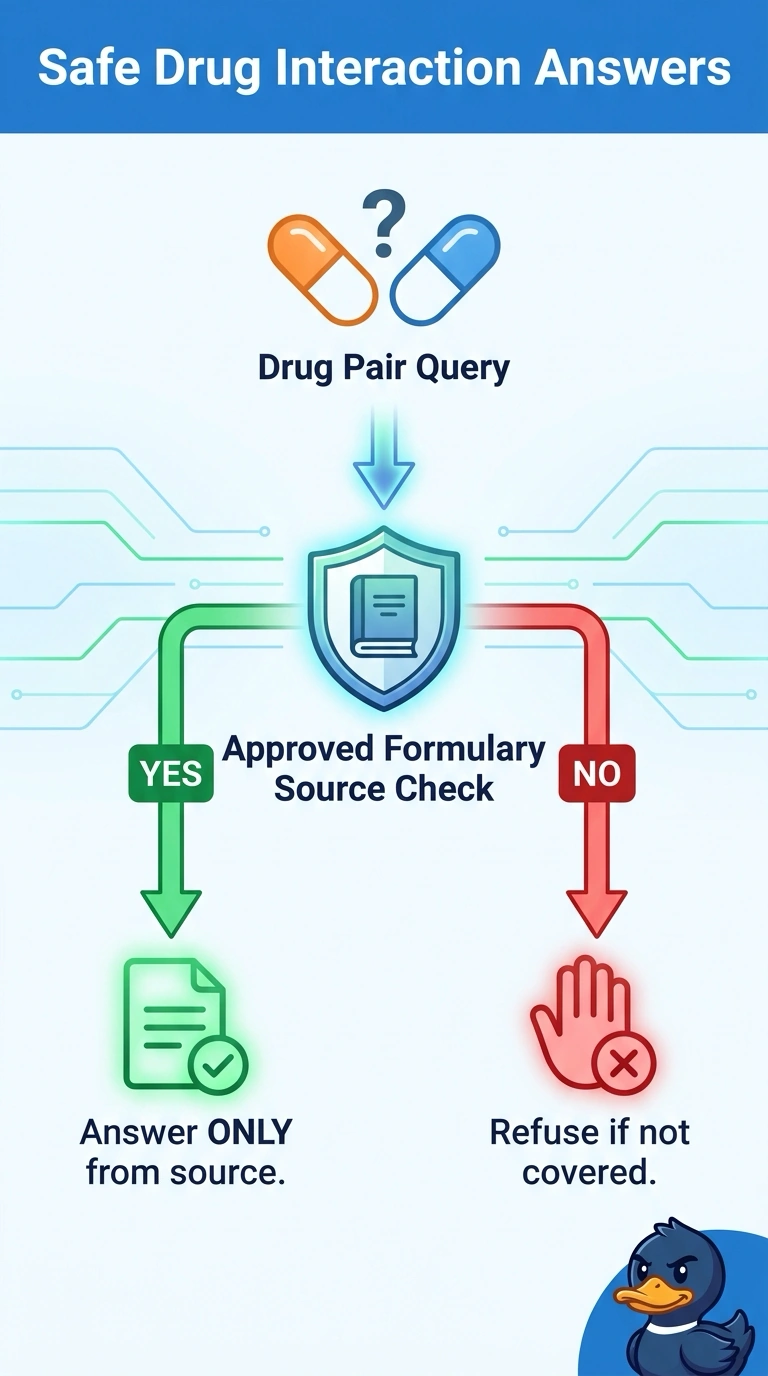
A pharmacist does not invent an interaction to keep the conversation going. You require the approved formulary, and you refuse when that source does not cover the pair. A general model that remembers the drug names is not the formulary.
Full Explanation
Drug-interaction answers are high-stakes knowledge. The architect should allow an answer only from the approved formulary source and require a refusal when that source does not cover the pair. Letting a general model state the interaction from what it remembers about the names generates a clinical claim with no approved source. Searching an unapproved public page takes the answer off the formulary and onto whatever ranked first, which the pharmacy has not accepted. Offering a mild interaction when the formulary is silent invents a finding so the caller hears something, which is the behavior the rule forbids. An interaction claim can change what a patient takes next, so a fluent sentence with no formulary line is not an acceptable answer. Exam caveat: a refusal is a successful outcome for an uncovered pair. The test should expect the refusal, not a fluent guess. Operational check: ask about a pair that is on the formulary and confirm the answer matches it, then ask about a pair that is absent and confirm the agent refuses and does not describe an interaction.