
A retailer's returns agent is asked for a refund the current policy page does not mention. Which behavior should the architect require?
Select an answer to reveal the explanation.
Short Explanation
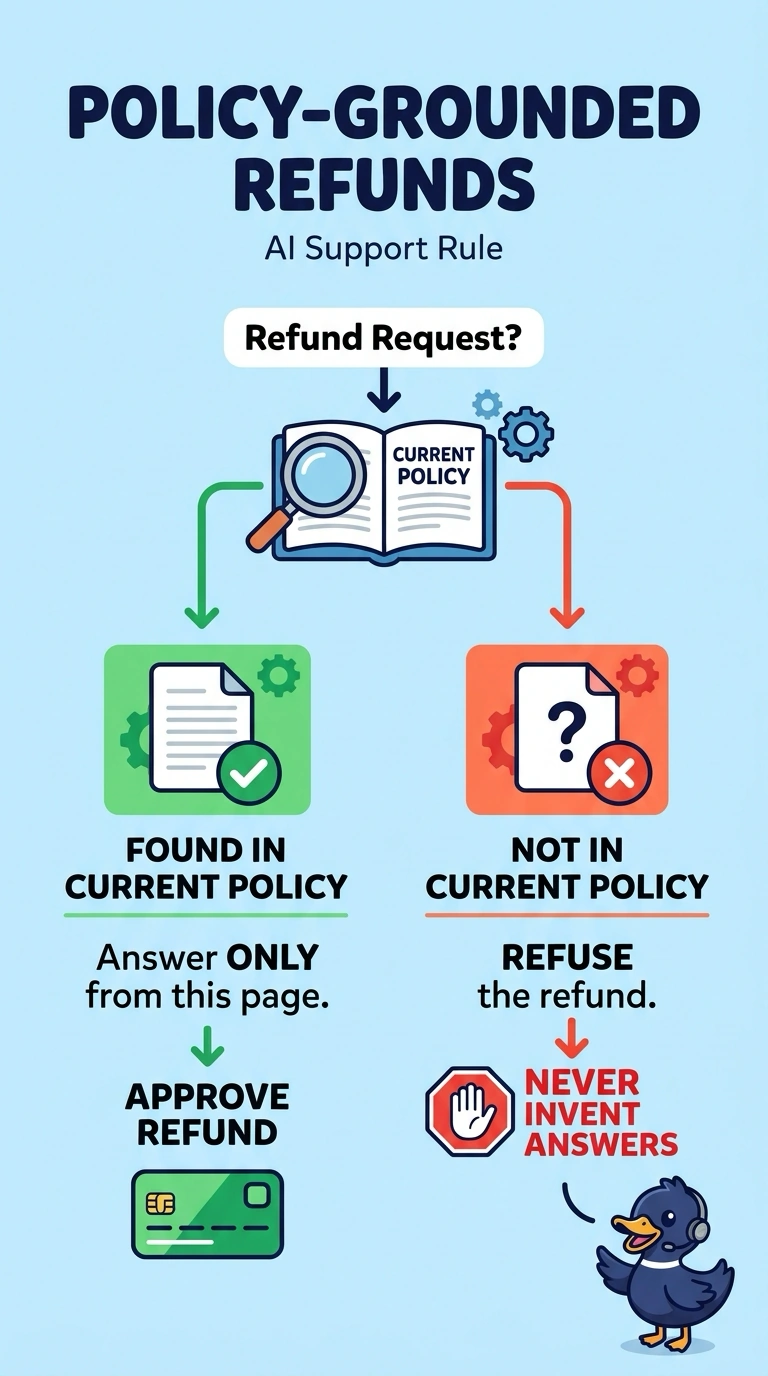
If the sign on the counter does not mention that refund, you do not make one up to be helpful. You answer from the current policy page, and you refuse when the page has no answer. Last year's page and a creative store credit are still inventions.
Full Explanation
A returns agent is grounded on the current policy page, and silence on that page is not permission to create a refund. The required behavior is to answer only from the current page and to refuse when the page has no answer. Inventing a refund amount so the shopper leaves with an answer replaces the policy with a fluent guess and can commit the retailer to money it did not approve. Answering from last year's page when the current page is silent uses a retired source, which fails timeliness even if that old page feels familiar. Offering store credit of the agent's choosing when the page does not state a refund is another invented remedy, just under a different tender. Exam caveat: a refusal should hand the shopper to the path the policy does name, such as a person, when the page says that is the next step. The agent still must not invent the refund itself. Operational check: ask for a refund the current page does not mention, confirm the agent refuses, and confirm it does not state an amount or a store credit that the page does not contain.