
Store associates at a retailer ask policy questions in the Microsoft 365 apps they already use, against their own work files. Shoppers on the public returns website have no work account and must start a return there. Which build should the architect choose?
Select an answer to reveal the explanation.
Short Explanation
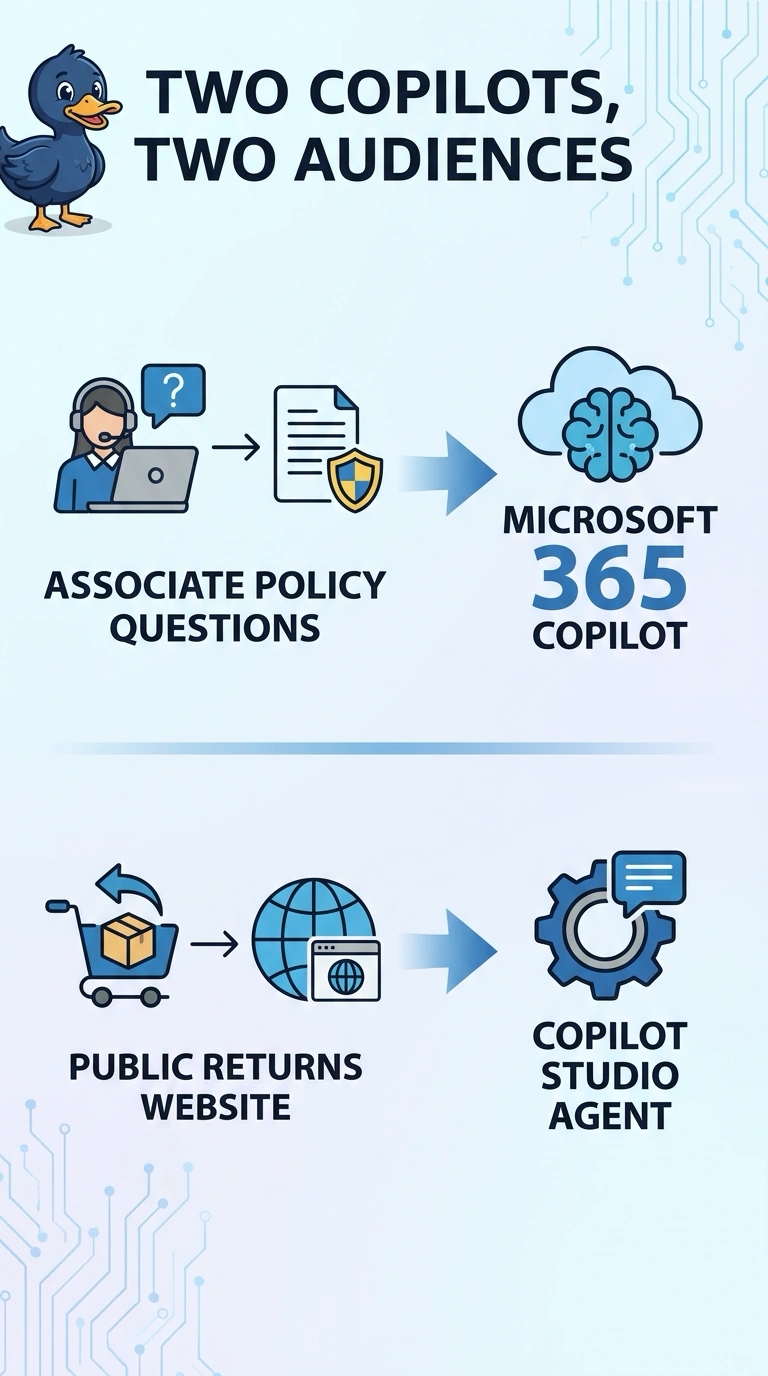
The counter and the public website are different doors. You give associates Microsoft 365 Copilot for policy questions, and you put a Copilot Studio agent on the returns website. One surface cannot be both a work account and an anonymous shopper.
Full Explanation
Use Microsoft 365 Copilot when the person already works in Microsoft 365 and the agent should use that person's own files, and use Copilot Studio when the channel and the identity sit outside that. Associates asking policy questions in their own apps are the first case, and shoppers with no work account on the returns website are the second, so the build uses both, each on its channel. One Copilot Studio agent on the returns site that also signs in as each store associate pulls associates out of Microsoft 365 and invents a shared sign-in the stores do not have. A single Foundry model with no separate channel for shoppers and for store associates picks a hosting place and still mixes two audiences that do not share identity or data rights. Microsoft 365 Copilot as the only surface, including anonymous shoppers on the returns website, puts people with no work account into a copilot that runs for a signed-in user. Exam caveat: Copilot Studio can be the editor for the Microsoft 365 extension. The choice here is where each agent runs. Operational check: a pilot associate asks a policy question inside Microsoft 365 Copilot, and a shopper with no work account starts a return only on the website agent.