
Citizens of a public agency may ask only about their own case, while caseworkers may ask about any case in the unit. The two audiences have different data rights. A designer wants one prompt for both. What should the architect require?
Select an answer to reveal the explanation.
Short Explanation
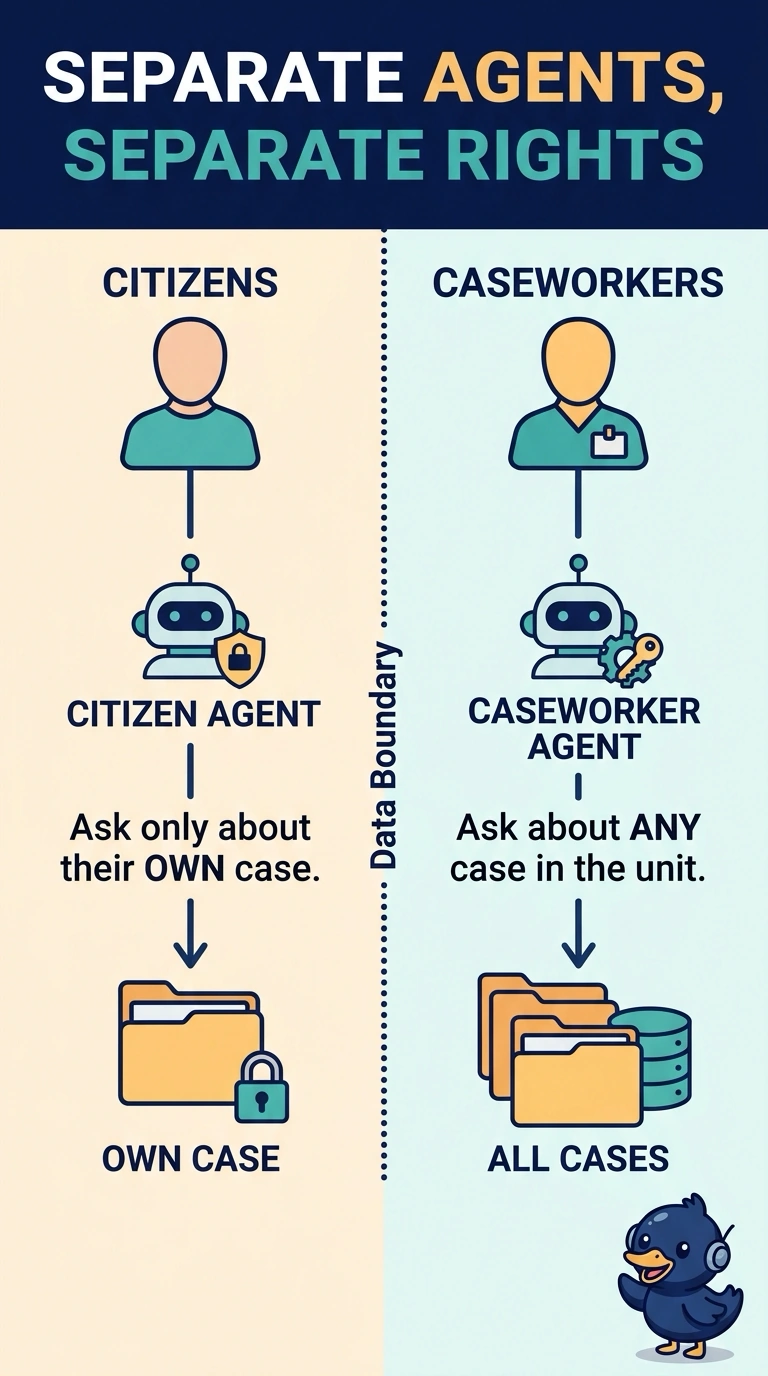
The lobby and the back office do not share one key. You require two agents, one for citizens and one for caseworkers, each limited to that audience's data rights. A sentence in a shared prompt is not a boundary on case data.
Full Explanation
Citizen questions and caseworker questions carry different data rights, so one prompt that serves both audiences cannot be the control. The architect requires two agents, one bound to a citizen's own case and one that caseworkers may use across the unit. One shared prompt that hides extra cases when the wording sounds like a citizen rather than a caseworker guesses the audience from style and will miss, and a wrong guess exposes another person's case. A single agent with tenant-wide case search so citizens and caseworkers receive the same case list gives the public the caseworker's view. A public prompt that includes the full caseworker guide and is linked from the citizen portal publishes staff guidance, and the rights behind it, on the citizen channel. Tone and a shared instruction do not enforce data rights. Exam caveat: two agents can still call a common service if that service enforces the caller's rights. The agents themselves are not one prompt with two audiences. Operational check: a citizen test account can retrieve only its own case, and a caseworker test account can retrieve the unit cases the role allows.