
A maintenance agent and a safety agent both write the same work-order fields and overwrite each other's updates. What should the design change?
Select an answer to reveal the explanation.
Short Explanation
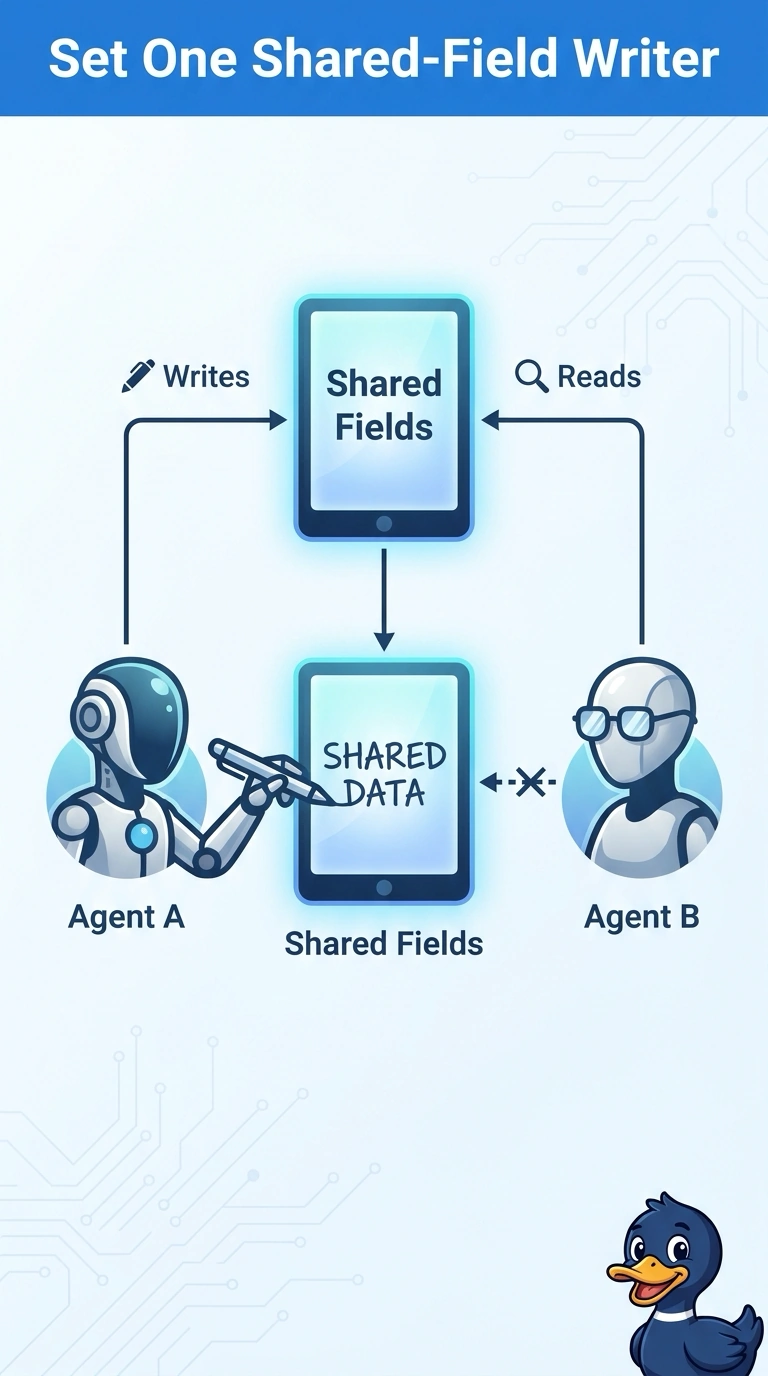
Two people writing on the same line of a form will erase each other. You give write rights on the shared work-order fields to one of the two agents and let the other read. A third writer does not stop the erasing.
Full Explanation
When two agents write the same fields, the later save replaces the earlier one and the work order loses an update that may have been the safety note or the maintenance note. The design should give write rights on those shared fields to one of the two agents and let the other read, so a single writer is accountable for the row. Leaving both agents with write rights and letting the later save replace the earlier one on those fields keeps the overwrite and calls it a rule. Adding a third agent that also writes the same fields and is supposed to repair the overwritten values adds another writer to a collision that already has two. Removing write rights from both agents so the work order can no longer be updated by either one stops the overwrite by stopping the process, which is not the same as choosing one owner for the write. Exam caveat: the agent that only reads can still send a requested change to the agent that writes, or to a person. Read rights are not a second silent save. Operational check: confirm the platform shows write permission on those fields for one agent only, then run both agents against one test work order and confirm the reader's pass does not change the fields.