
A logistics firm uses a Microsoft Foundry agent to score delay risk from internal shipment data, and a Copilot Studio agent to tell the customer the new arrival window. A sponsor wants the score folded into the customer chat. What should the architect keep?
Select an answer to reveal the explanation.
Short Explanation
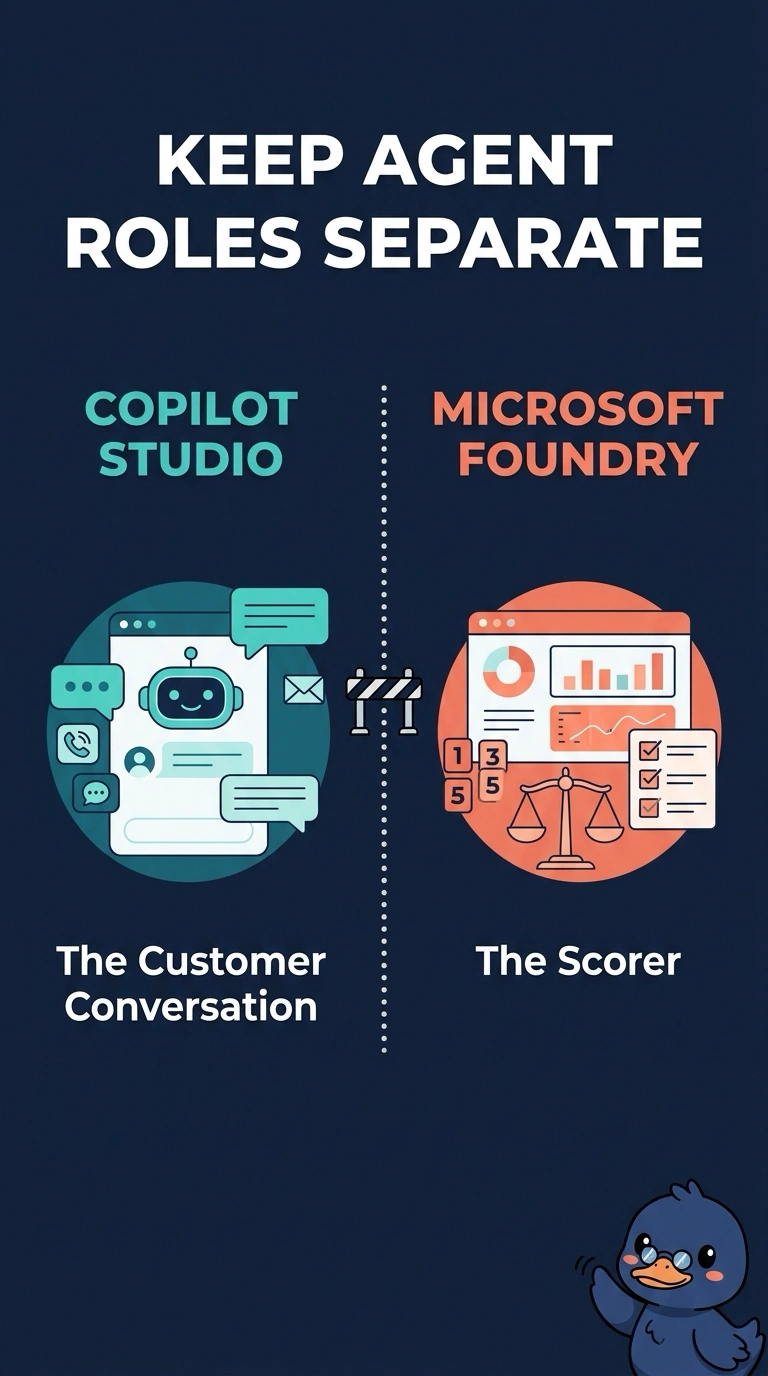
The analyst who scores the lane and the clerk who talks to the customer do not share one headset. You keep the Foundry agent on delay scoring and the Copilot Studio agent on the customer conversation. Folding the score into that chat shows the customer a model built for internal use.
Full Explanation
Delay scoring and the customer conversation are different jobs on different platforms. The Foundry agent scores risk from internal shipment data, and the Copilot Studio agent tells the customer the arrival window, so the architect keeps those agents separate and does not merge the scorer into the customer conversation. One customer-facing chat that runs the internal risk score and shows the scoring inputs to the customer directly puts internal features and internal data on the customer channel. A nightly spreadsheet that replaces both agents and is mailed to every shipper each morning drops both the score and the conversation and substitutes a batch report. A prompt topic that reveals the raw scoring inputs once the customer asks to see the math still merges the scorer into the customer conversation, only after a question. Exam caveat: the customer agent can state the arrival window the business chose to share. That window is not the risk model or its inputs. Operational check: read a customer transcript and confirm it contains the arrival window and does not contain the score inputs or the Foundry agent's internal features.