
Support, store operations, and finance at a retailer each want an agent this quarter. The architect must set the build order before any team starts. What should decide that sequence?
Select an answer to reveal the explanation.
Short Explanation
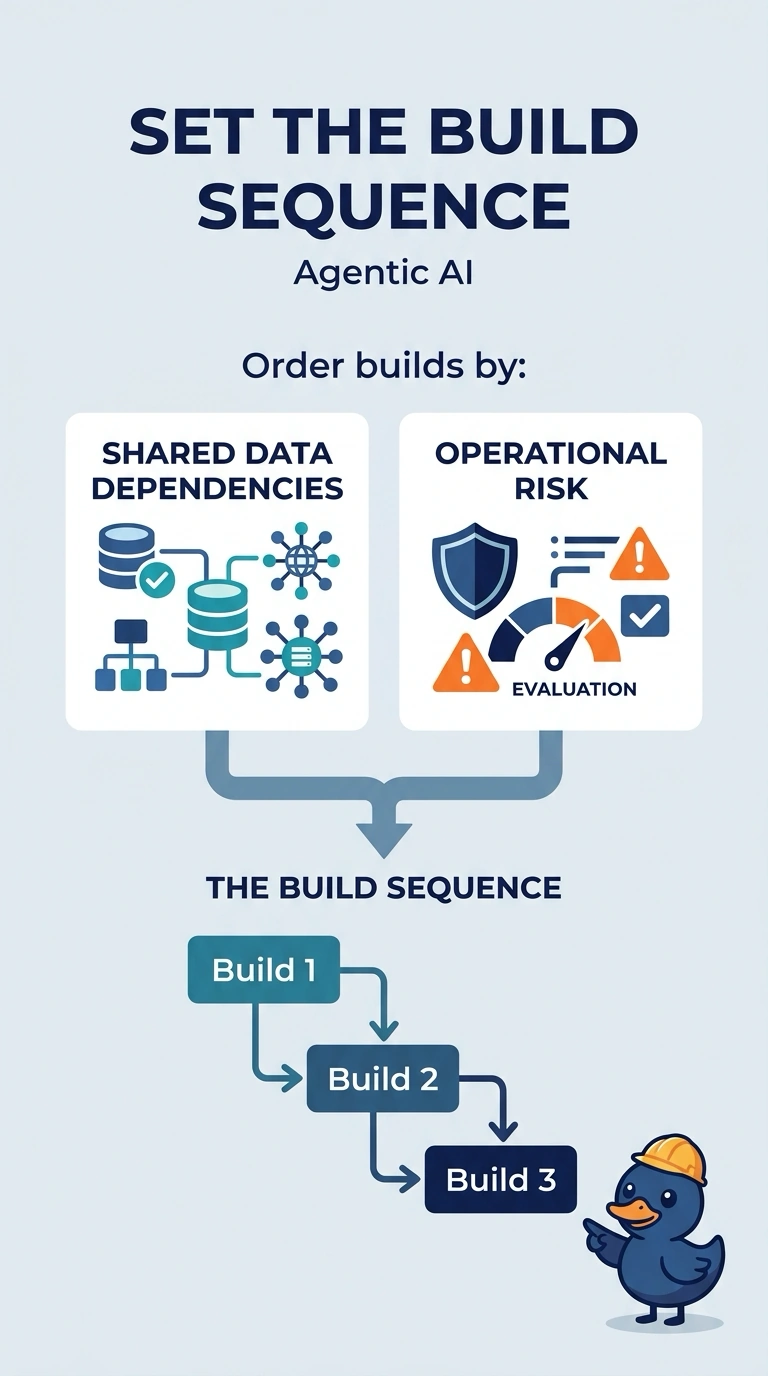
The loading dock does not unload whichever truck honked first. You order the builds by which agents share data and which ones carry more operational risk. A louder sponsor is not a sequencing rule.
Full Explanation
A build strategy sets order from constraints the teams actually share. Support, store operations, and finance may read the same product, store, and tender data, and they do not carry the same operational risk, so the sequence should follow those dependencies and that risk rather than the order of requests in a meeting. Building the support agent first because that sponsor spoke first in the steering meeting treats volume in the room as a plan. Starting all three agents in one sprint so that no sponsor has to wait ignores a dependency that would make the later builds redo integration, and it ignores risk that may call for a narrower first release. Giving each sponsor a separate platform so the three programs have no shared sequence removes the ordering decision instead of making it, and it still does not say which job is safe to learn from. Exam caveat: shared data is a reason to sequence the three builds and to reuse a source, not a reason to start every sponsor in the same sprint. Operational check: on one page, list the data each agent needs and the harm if it acts wrongly, and confirm the build order matches that page rather than the meeting order.