
An airline sponsor wants one agent to schedule crews, refund passengers, and write maintenance logs. What should the build strategy do with that request?
Select an answer to reveal the explanation.
Short Explanation
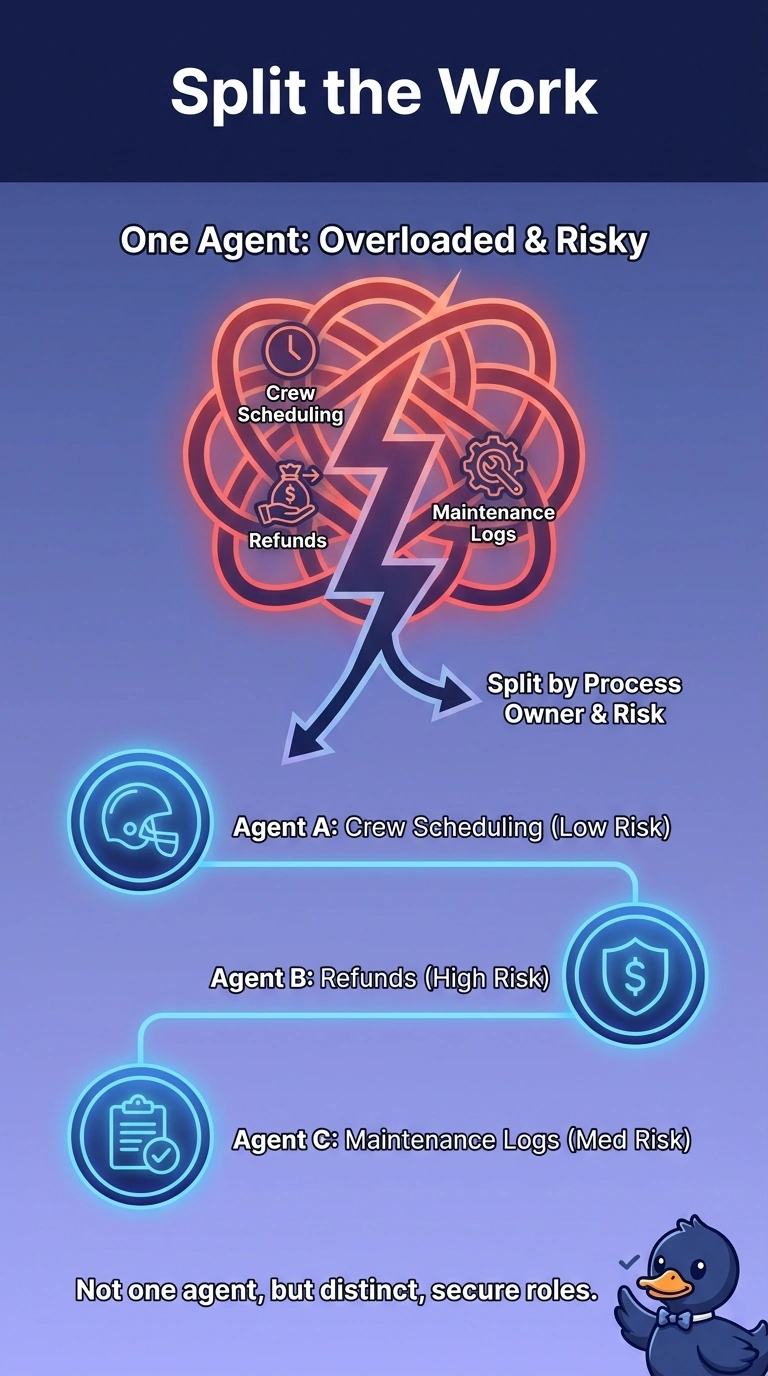
You would not ask one person to roster the crew, refund the cabin, and sign the engine log on the same form. Split this request by process owner and by risk so those three jobs are not one agent. A bigger model does not create three owners.
Full Explanation
Crew scheduling, passenger refunds, and maintenance logs have different process owners and different harm when an action is wrong, so a build strategy should split them rather than honor a request for one agent. One identity would mix authorities that the airline keeps apart, and a failure in one process would be hard to attribute. Accepting one agent and adding three topics so crew, refunds, and maintenance share a single identity keeps the mixture and only changes the conversation map. Deferring every build until one executive agrees to own crew, refunds, and maintenance together invents a single owner the organization does not have and blocks work that could proceed as separate, owned efforts. Buying a larger model so one agent can hold crew rules, refund policy, and the maintenance log treats a capacity guess as a remedy for mixed risk and mixed ownership. Exam caveat: a split strategy can still share a platform and a landing zone. Separate agents are not separate clouds. Operational check: write an owner and a harm statement for each of the three processes, and reject any design in which one agent definition includes all three actions.