
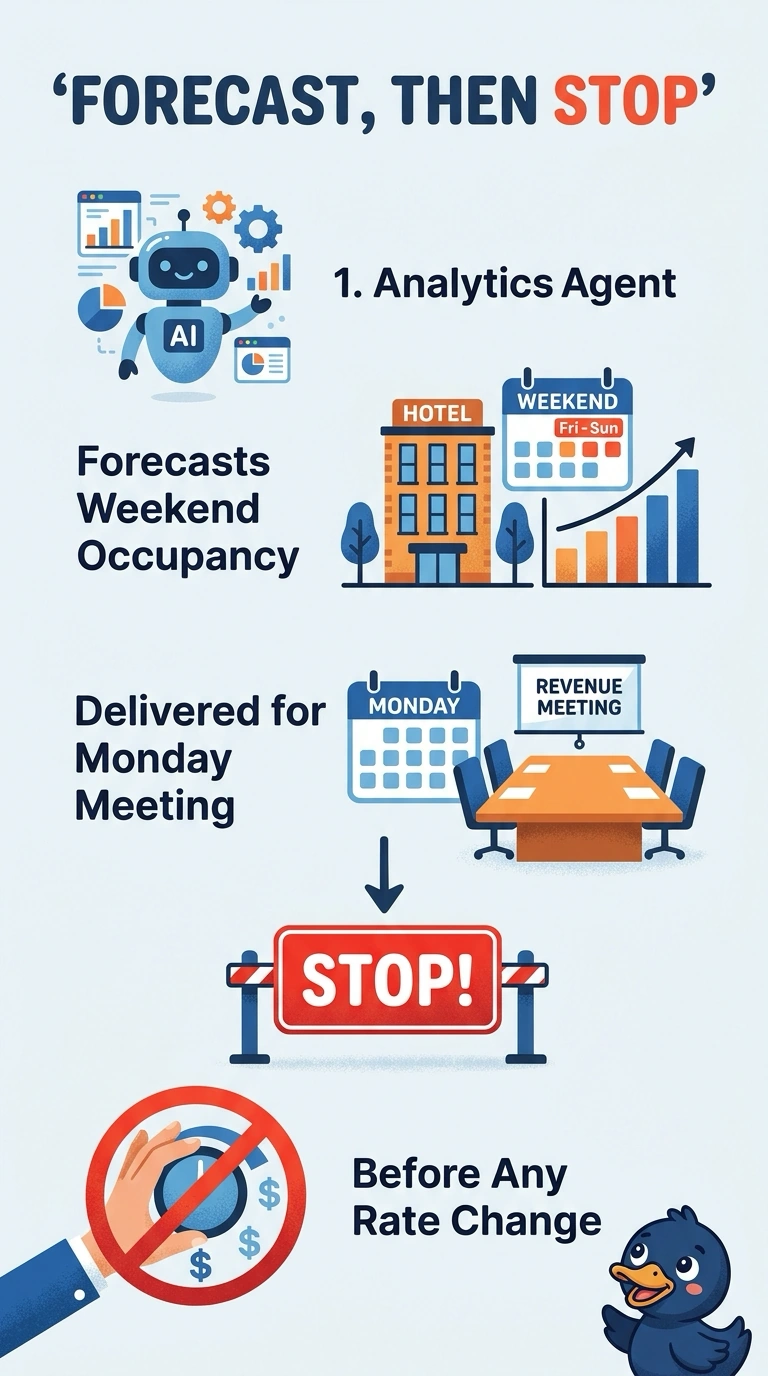
A hotel group wants an agent that forecasts weekend occupancy for the revenue manager's Monday meeting and then stops. It must not change room rates. Which use of an agent matches this requirement?
Select an answer to reveal the explanation.
Short Explanation
The Monday meeting needs a forecast on the table, with the rate keys left in the drawer. You want analytics that delivers weekend occupancy and stops before any rate change. An agent that posts new rates is doing the job the revenue manager did not hand over.
Full Explanation
Data analytics fits when the agent produces an explanation or a forecast and stops before it changes the operation. The Monday meeting needs weekend occupancy, and the hotel group said the agent must not change room rates, so the forecast is the whole deliverable. Task automation that changes weekend room rates as soon as the forecast is calculated does the rate action the requirement forbids. Decision support that asks the revenue manager to approve room-rate changes the agent is prepared to post still frames the job as a rate decision, which the meeting did not request. Knowledge lookup that quotes the rate-setting policy and does not produce a weekend occupancy forecast retrieves a standing document and leaves the manager without the number the meeting is for. The revenue manager can change rates later, by hand, using the forecast. That later choice is outside this agent. Exam caveat: a forecast that happens to inform a rate meeting is still analytics, as long as the agent itself does not post a rate. Operational check: generate the Monday forecast in a test property and confirm occupancy is reported and the rate tables are unchanged.