
A retailer claims an agent project is profitable because the Copilot Studio license costs less than the wages of the clerks it might deflect. Maker time, model consumption, support, and training are left out. What should the architect add before accepting that return?
Select an answer to reveal the explanation.
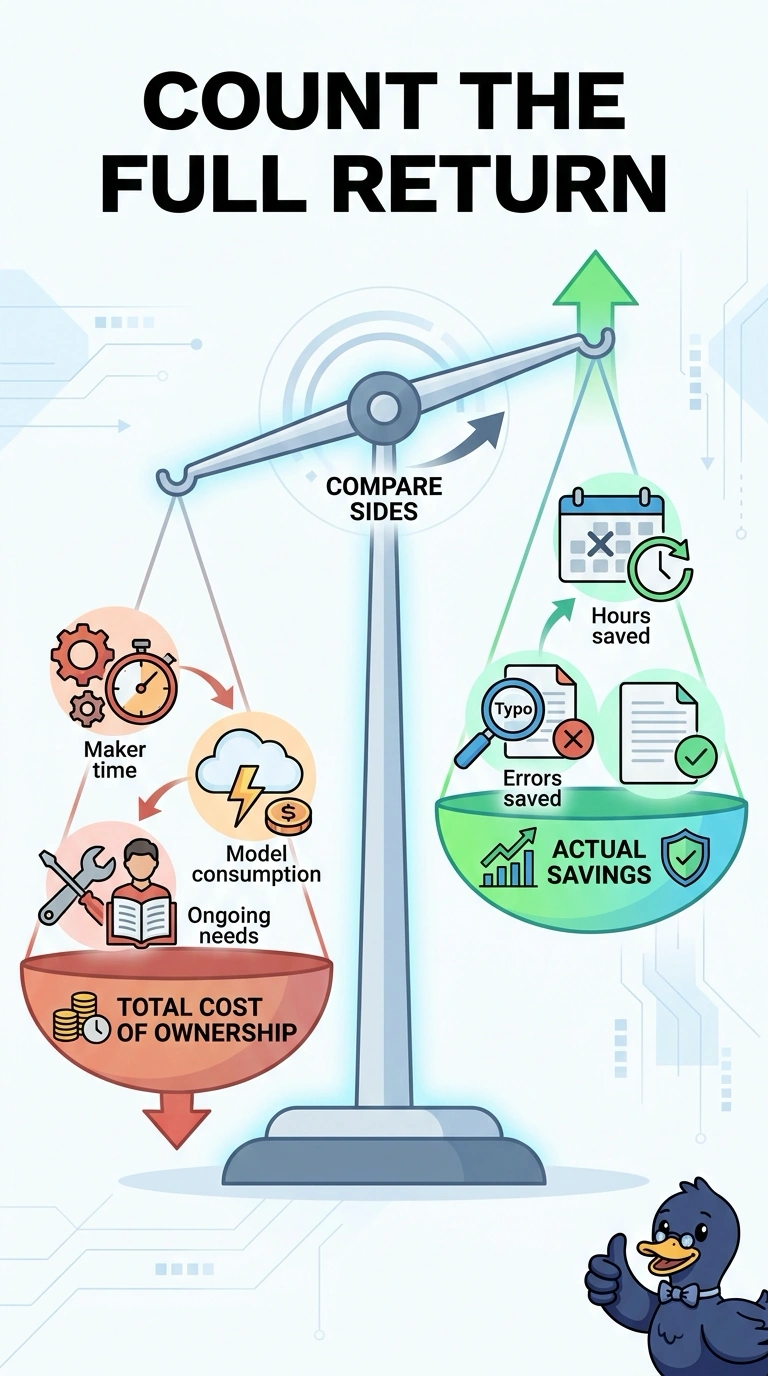
Short Explanation
A cheap hammer is not a savings until you count the nails, the labor, and the boards you still throw away. You add the rest of the total cost and set it against the hours and errors this process actually saves. A license-to-wage comparison is the trap.
Full Explanation
An ROI analysis for an AI process compares the benefit in that process with the total cost of ownership, not with the most visible license line. Maker time, model consumption, grounding storage, support, and the training people need are costs the retailer's spreadsheet omits, and the benefit has to be the clerks' hours and error reduction the agent really takes, not a hoped-for headcount. A rule that any cheaper license is a positive return skips the benefit side entirely and will bless an agent that deflects nothing. A custom model is not a prerequisite for the arithmetic. Most of this cost stack exists for a copilot that never trains one. Comparing two vendors' licenses still ignores consumption, support, and the process benefit, so it repeats the original mistake with an extra column. Exam caveat: total cost of ownership is part of the ROI criteria, not a separate exercise you do after the project is approved. Operational check: rebuild the one-page case with license, consumption, people, and support on the cost side and measured deflections on the benefit side, and do not approve it while either side is blank.