
Claims adjusters at an insurer already work in Outlook and Teams. They need answers drawn from their own mail and from the claim file in SharePoint, inside the Copilot they already open. The agent has no public website and no separate sign-in. What should the architect choose?
Select an answer to reveal the explanation.
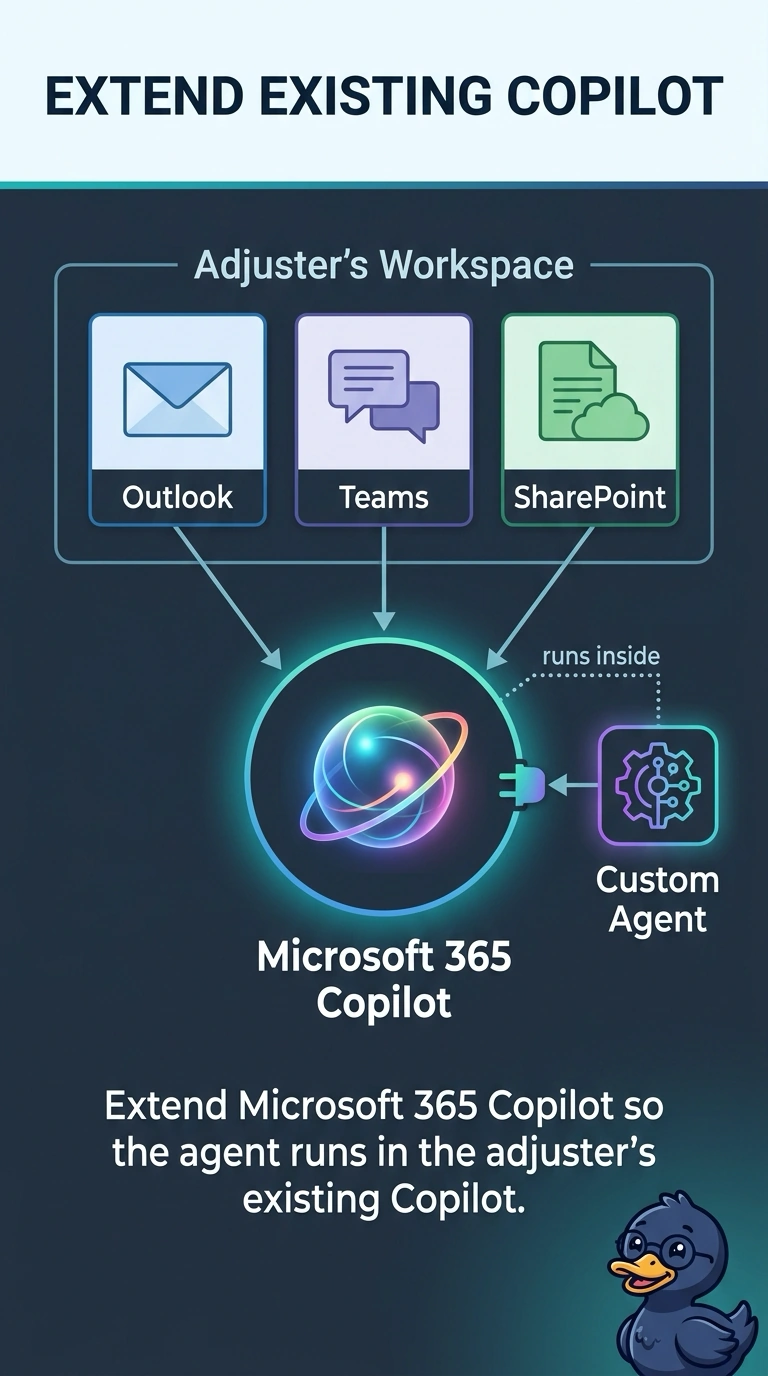
Short Explanation
You do not build a new front door when people are already standing in the lobby. Extend Microsoft 365 Copilot so adjusters ask inside the Copilot they open all day, with their own mail and files in reach. A public website agent solves a channel this team does not have.
Full Explanation
Extend Microsoft 365 Copilot when the user already lives in Microsoft 365, the answers must respect that user's own mail and files, and there is no separate channel or identity. Adjusters opening Copilot in Outlook and Teams, with the claim file in SharePoint, are that case. A standalone Copilot Studio agent on a public website would introduce a channel and a sign-in the requirement says do not exist, and it would not start from the adjuster's own mailbox. A custom model is justified when prompting and grounding cannot produce a needed behavior, which nobody has shown here. A small language model that replaces Outlook search throws away the work graph the adjusters need and takes on a retrieval problem Microsoft 365 Copilot is already meant to handle. Exam caveat: Copilot Studio can still be the tool you use to build the extension. The architectural choice is where the agent runs, not which logo is on the editor. Operational check: confirm the agent is available inside Microsoft 365 Copilot for a pilot adjuster and that it can open that adjuster's claim mail and the matching SharePoint file without a second login.