
A plant copilot quotes a retired torque value because last year's work instruction is still in its grounding library and the current controlled document is missing from that library. What should the architect correct first?
Select an answer to reveal the explanation.
Short Explanation
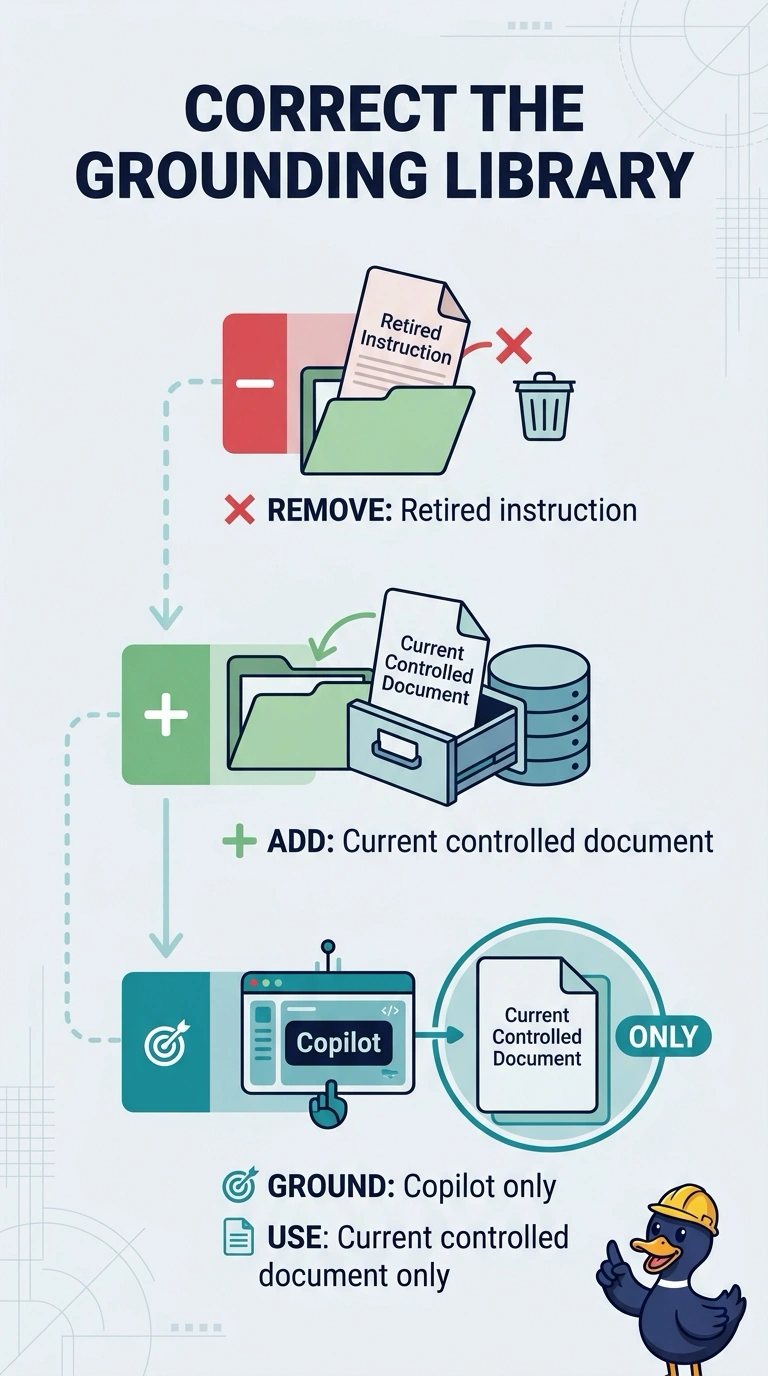
If the binder on the bench is last year's, a smarter reader still quotes the wrong torque. You fix the library: take out the retired instruction and put the current controlled document where the copilot can read it. Training a model on the old sheet locks the mistake in.
Full Explanation
Grounding quality includes timeliness and availability. The copilot is quoting the document it can see, and that document is the retired work instruction, while the current controlled document is not in the library at all. The first correction is to remove the obsolete instruction and add the current one, so the next answer has a current source. Fine-tuning on the retired values would teach the old torque as if it were the standard, which makes the data problem harder to undo. Extra trigger phrases change how a topic is selected, but they do not replace a stale file inside the knowledge source the copilot is already using. A small language model that memorizes one number fails the moment the controlled document changes again, and it still ignores the real defect, which is the library. Exam caveat: when two grounding defects stack, name the one the user can see. Here the answer is wrong because the source is old and the right source is absent. Operational check: search the grounding library for the torque instruction, confirm only the current revision is indexed, and ask the copilot the same question again.