
A hotel chain wants an agent to read room status from a property system that already has a supported connector. Which extension should the architect design?
Select an answer to reveal the explanation.
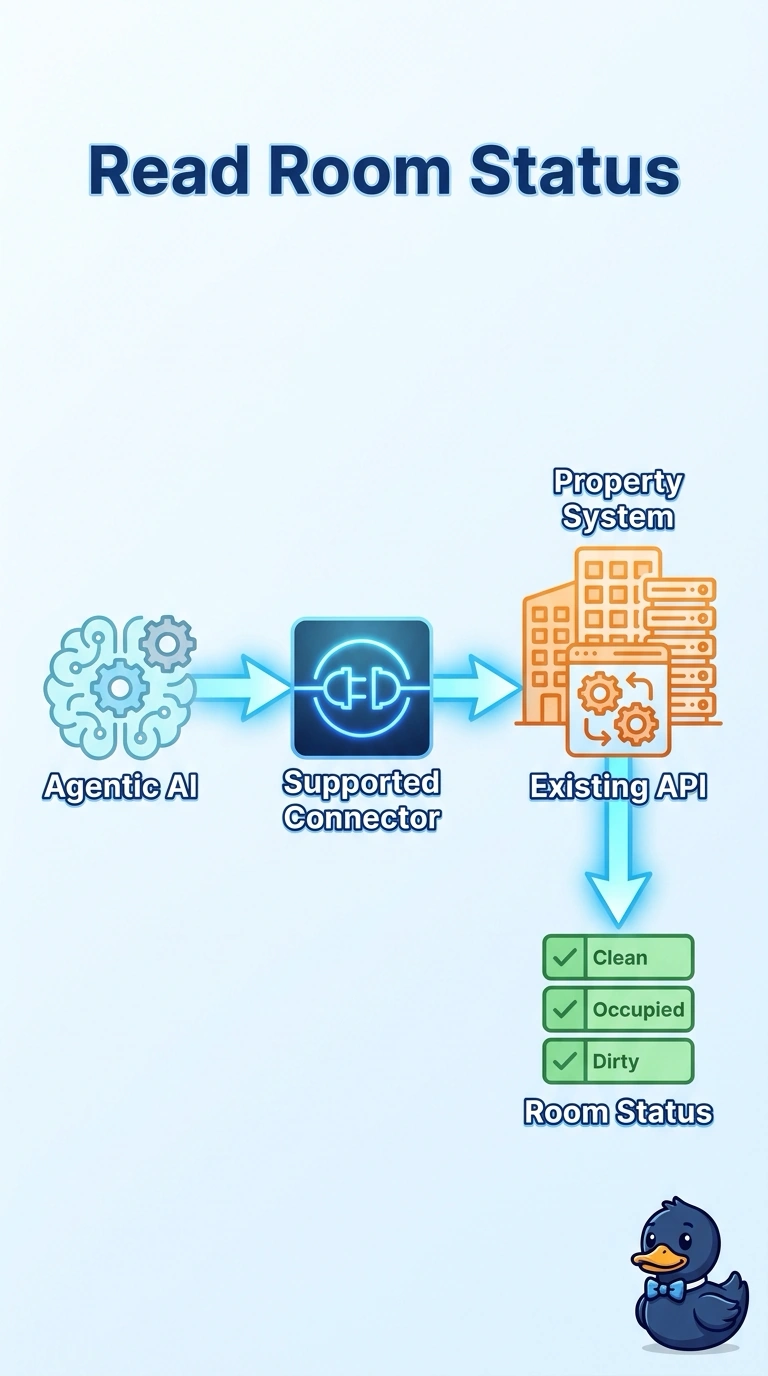
Short Explanation
You do not climb through a window when the front desk already handed you a key. You design the supported connector so the agent reads room status through the property system's API. Computer Use is the fallback for a screen that has no API, and this system is not that case.
Full Explanation
A connector is the right extension when the system already exposes an API the platform can call. This property system has a supported connector, so the agent should read room status through that connector, and Computer Use should not be the design. Computer Use drives a user interface and is reserved for an app or site that has no API. Using it here adds a fragile screen path beside an API that already exists. A Model Context Protocol server fits a tool server that already speaks that protocol. The hotel has a connector, not an MCP server, and keeping Computer Use as a second path preserves the design the scenario rejects. A nightly spreadsheet pasted into chat is a manual copy, and it ignores the connector that can read the live room status. Exam caveat: a connector that exists but is not yet permitted for this agent is an access problem, not a reason to switch the design to Computer Use. Operational check: bind the room-status connector in a test environment and confirm a status change in the property system shows up through the connector without a screen session.