
A utility outage line speaks with callers who report a dark house. The agent must confirm the address and log the outage. Which design fits?
Select an answer to reveal the explanation.
Short Explanation
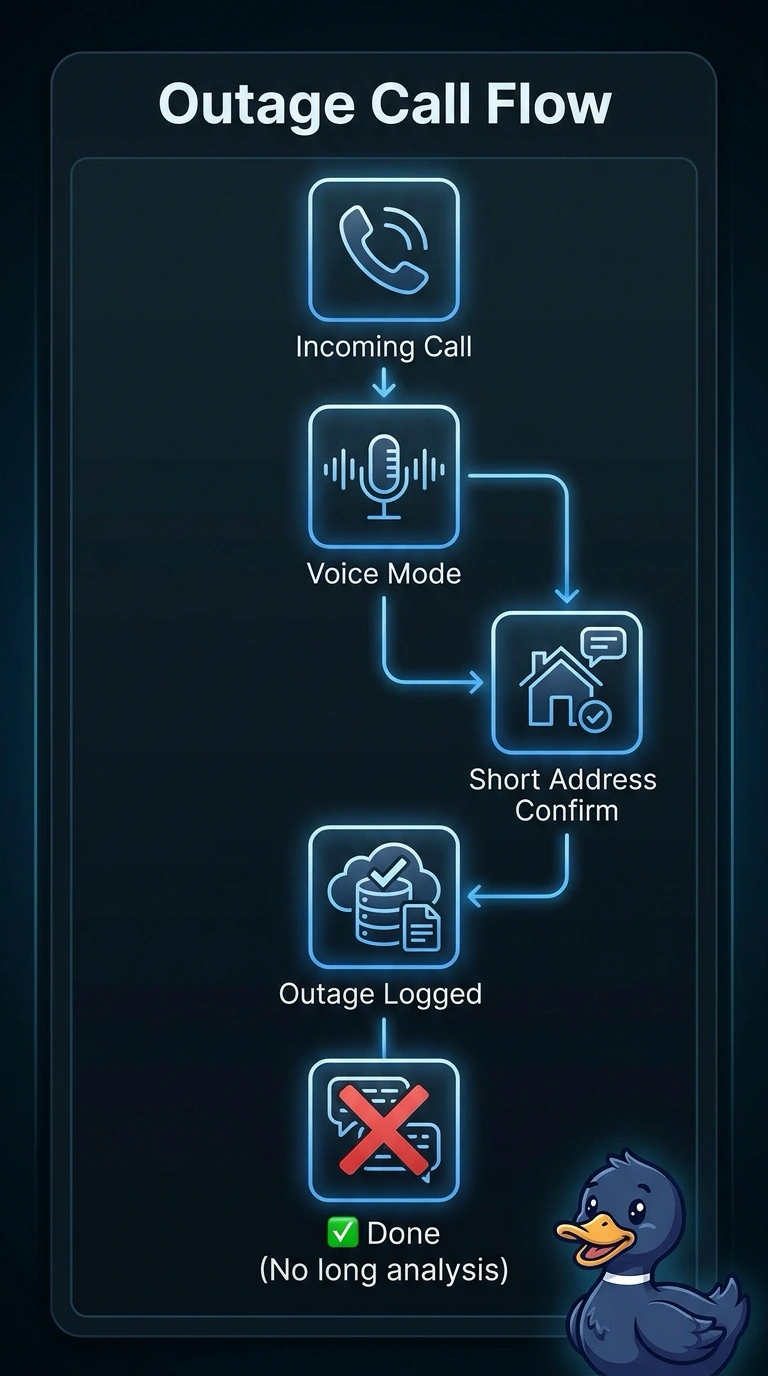
Someone in a dark house needs you to confirm the address and write the ticket, not a lecture on the grid. You use voice mode and a short confirmation, then log the outage. A long spoken analysis keeps the caller waiting on the line for reasoning the ticket does not need.
Full Explanation
Voice mode fits a caller who is reporting by phone. The required work is a short confirmation of the address and a log of the outage, not a monologue. Deep reasoning is slower and belongs on complex analysis, so speaking a long chain of causes while the caller waits is the wrong depth for this line. A long spoken analysis that starts before the address is confirmed can log the wrong house and spends the call on speculation. A text form on a laptop ignores the voice channel and asks for a computer during the outage, which the caller may not have. Deep reasoning spoken in full about the feeder network before any ticket is created delays the log and dumps a network study into a call that needed an address check. The ticket can wait for the address check, and it should not wait for a spoken essay on the grid. Exam caveat: a short confirmation is still a check. The agent should repeat the address and proceed only when the caller agrees, rather than logging a guess. Operational check: place a test call, confirm the agent speaks the address back in one short turn, and confirm the ticket is created without a feeder-level reasoning trace.