
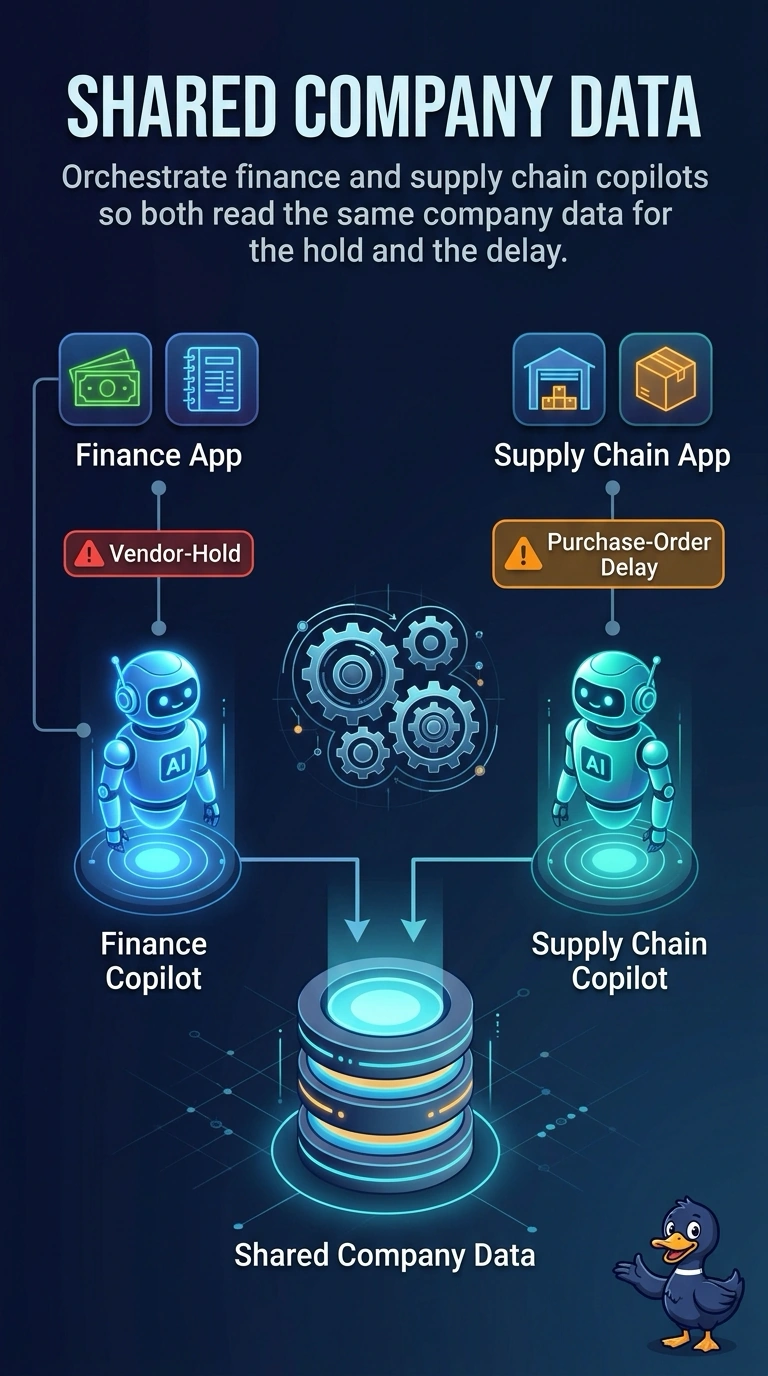
A retailer needs a vendor-hold explanation in the finance app and a purchase-order delay explanation in the supply chain app, and both must use the same company data. Which design fits?
Select an answer to reveal the explanation.
Short Explanation
You want the vendor hold and purchase-order delay to reflect one company record, not competing versions of the data. Orchestrate the finance and supply chain copilots so both read that same company data. A third assistant with its own nightly copy—or private extracts that refresh on separate schedules—can bring back the mismatch you’re trying to avoid.
Full Explanation
The vendor hold and purchase-order delay are two views of one company’s records, even though the retailer needs an explanation in both the finance app and the supply chain app. Orchestrating the finance and supply chain copilots so both read the same company data lets each explain its part of the situation from a shared record. A third assistant that copies finance and supply data into its own store on a nightly job creates a separate copy; it can be stale by the time a hold changes. Letting each app’s copilot keep a private extract that refreshes on its own schedule also creates independently updated versions, which can disagree about the company’s current status. Answering both explanations from a generic vendor FAQ that is not tied to the company record may describe what a hold means generally, but it cannot reliably identify the right company, vendor, or delayed purchase order. Exam caveat: orchestration means the two copilots share the company record; it does not mean merging the apps into one screen. Practical check: place a vendor on hold in the finance company, open the related purchase order in the supply chain app, and confirm both copilots cite the same company and hold.