
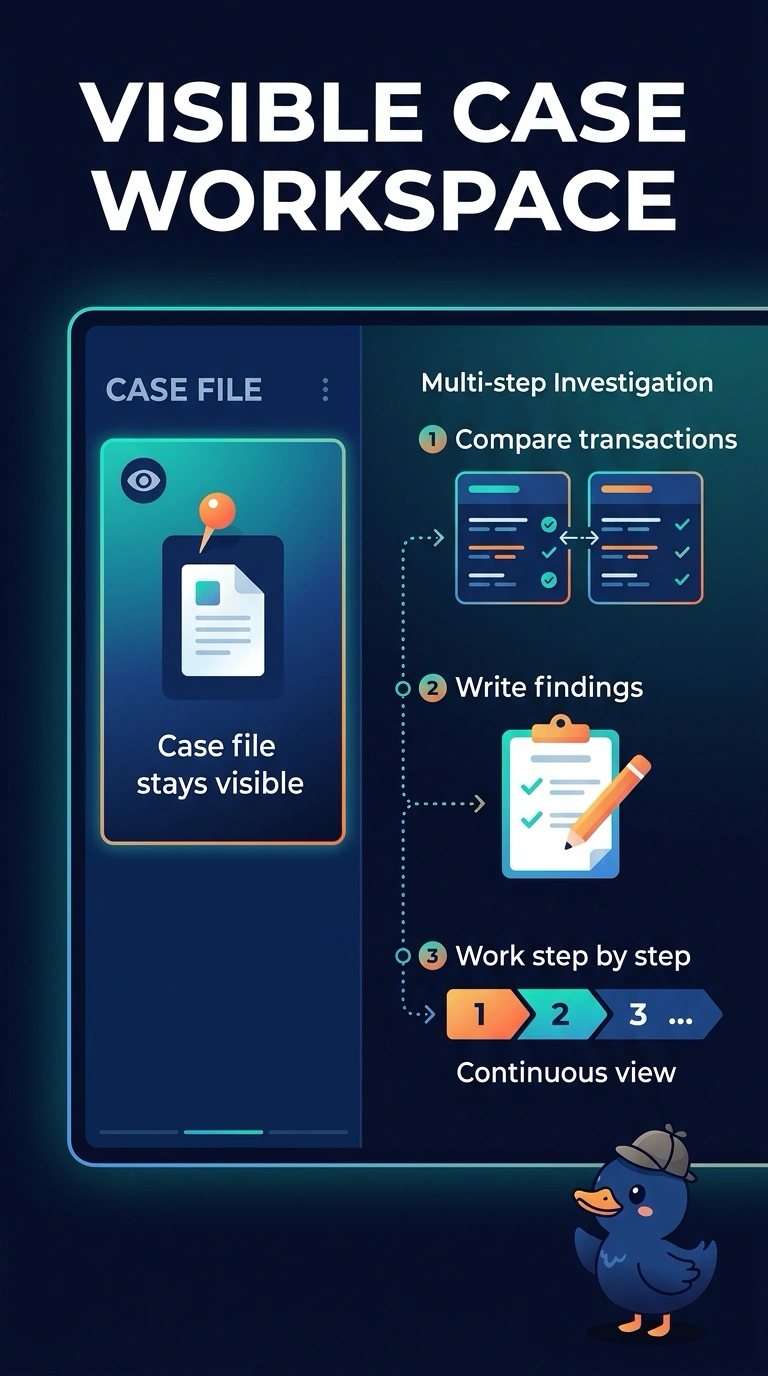
Fraud analysts compare several transactions and write findings while the case file stays on screen. Which design fits this investigation?
Select an answer to reveal the explanation.
Short Explanation
You do not run a multi-step investigation by listening with the folder shut. You keep the case file on a screen where the analyst can compare transactions, and you do not make a voice agent the channel. A spoken theory is a poor substitute for the file the desk has to read.
Full Explanation
Voice mode fits a spoken, short exchange. This fraud investigation is multi-step, and the analyst has to see the case file while comparing transactions and writing findings, so the design is a screen workspace on that file and not a voice agent. A voice agent that reads each transaction aloud forces the analyst to hold the case in memory and takes the file off the screen, which is the channel the work does not fit. A phone menu that closes the alert after a card number is spoken ends the case without the comparison or the findings. A voice call that runs deep reasoning and narrates a theory before the file is opened spends the slow, heavy path on speech and still withholds the record the analyst must read. Exam caveat: voice can still be how a customer reports the fraud. That intake is a different activity from the analyst's investigation of the case file. Operational check: walk one alert in a test workspace and confirm the analyst can see the transactions, the prior notes, and the finding field at the same time, with no step that requires the investigation to move to a voice-only channel.