
Consultants want a statement-of-work draft from the project files they personally can open, inside the Microsoft 365 Copilot they already use. The draft must stay limited to the person who asked. Which design fits?
Select an answer to reveal the explanation.
Short Explanation
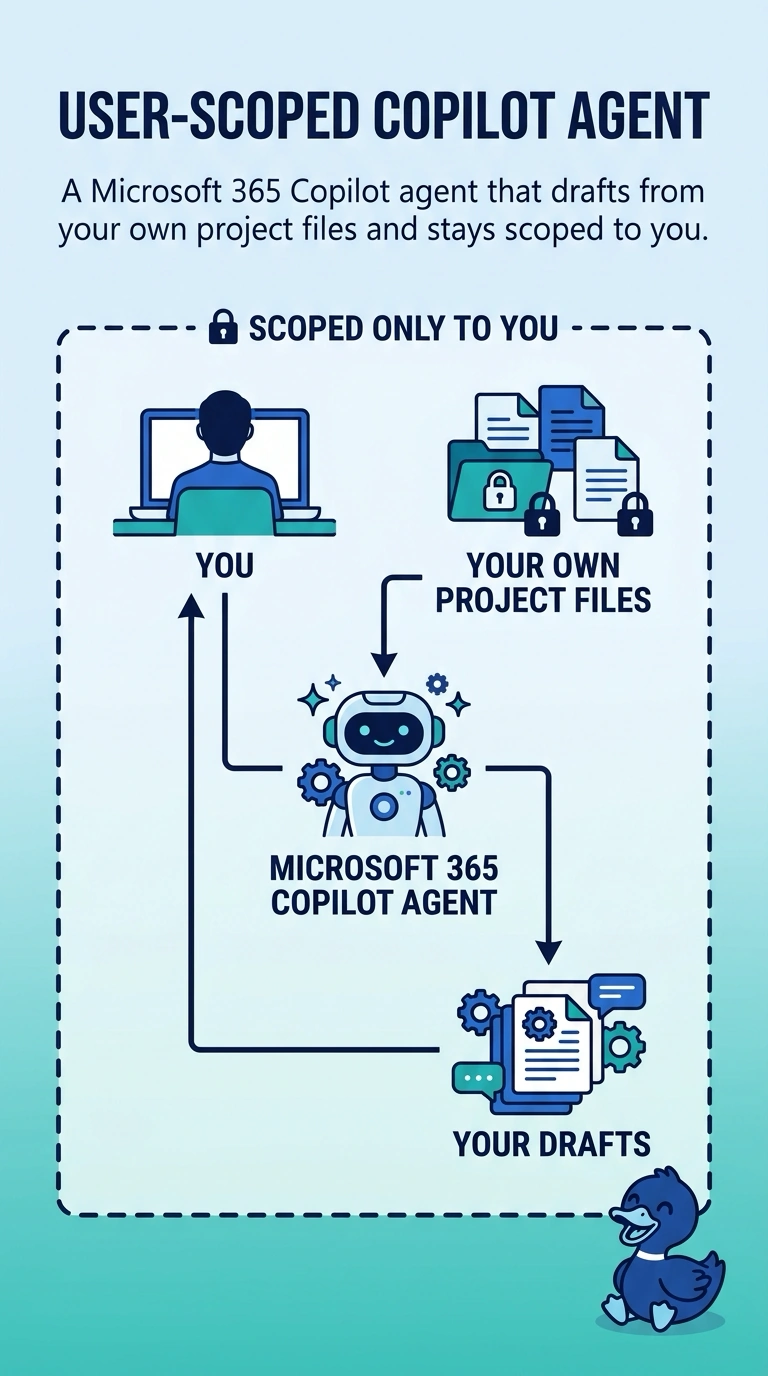
The draft should come from the binder already on that consultant's desk. You design a Microsoft 365 Copilot agent that uses the asking user's own project files and stays scoped to that user. A search of the whole tenant would open work the consultant cannot open.
Full Explanation
A Microsoft 365 Copilot agent is the right design when the draft has to come from the signed-in user's own files and must not reach past that user. The consultant already works in Microsoft 365 Copilot, the statement of work is composed from that person's project files, and the scope is that user, so the agent runs there with that boundary. A public Copilot Studio agent that searches the whole tenant and merges every client's files into one draft changes the channel, the identity, and the file boundary the requirement sets. A custom Foundry model trained on last year's statements, with no link to the user's current files, freezes old language and cannot see the project the consultant has open now. An autonomous agent that files the statement in the client system before the consultant reads the draft takes an action the request does not allow: the consultant asked for a draft, not a filing. Exam caveat: running in the user's context still needs the knowledge limited to that user's project files, or a broad search can follow permissions the draft should not use. Operational check: sign in as one consultant, confirm the draft cites only that user's project files, and confirm a second consultant's files are not in the draft.