
Standard vision labels miss one weld defect a manufacturer must catch. Photos from a second plant were kept out of training. What should the design call for?
Select an answer to reveal the explanation.
Short Explanation
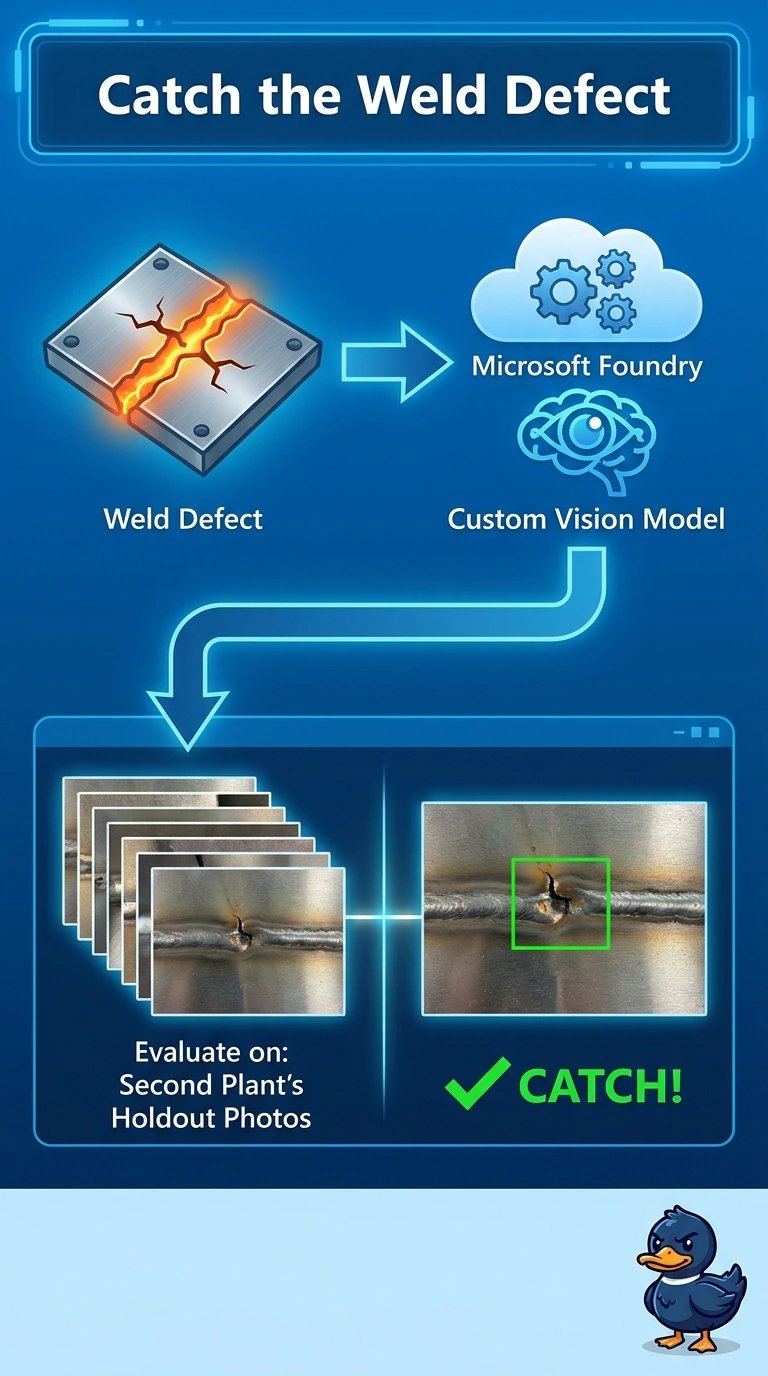
You do not grade a weld inspector only on the photos used in the lesson. You design a custom vision model in Microsoft Foundry for the defect the standard labels miss, and you score it on holdout photos from a second plant. Training on that holdout spends the exam.
Full Explanation
The standard labels do not see this defect, so a custom vision model in Microsoft Foundry is the design, scoped to the defect the standard vision labels miss. Photos from a second plant were kept out of training, and that holdout is the evaluation set the model must face before anyone wires it to an inspection agent. The same standard vision labels, with inspectors told to ignore the defect those labels miss, documents the gap and does not close it. A custom vision model trained on both plants, including the photos that were supposed to remain a holdout set, can memorize the second plant and then has nothing unseen to score. A text prompt that describes a weld photo in words and hopes the wording names the missed defect turns an image judgment into a caption and has no holdout. Exam caveat: a holdout from a second plant checks whether the model travels, and it is not a substitute for the label the first plant's inspectors agreed. Both the label quality and the unseen plant matter. Operational check: confirm training photos come from the first plant only, score the second plant's holdout before the model is connected, and do not add those holdout photos to training after a weak score.