
A distributor wants collection emails drafted from overdue invoices and a plain-language reason when a purchase order is late. Both answers must use the same customer and order records in Dynamics 365 Finance and Supply Chain Management. What should the architect orchestrate?
Select an answer to reveal the explanation.
Short Explanation
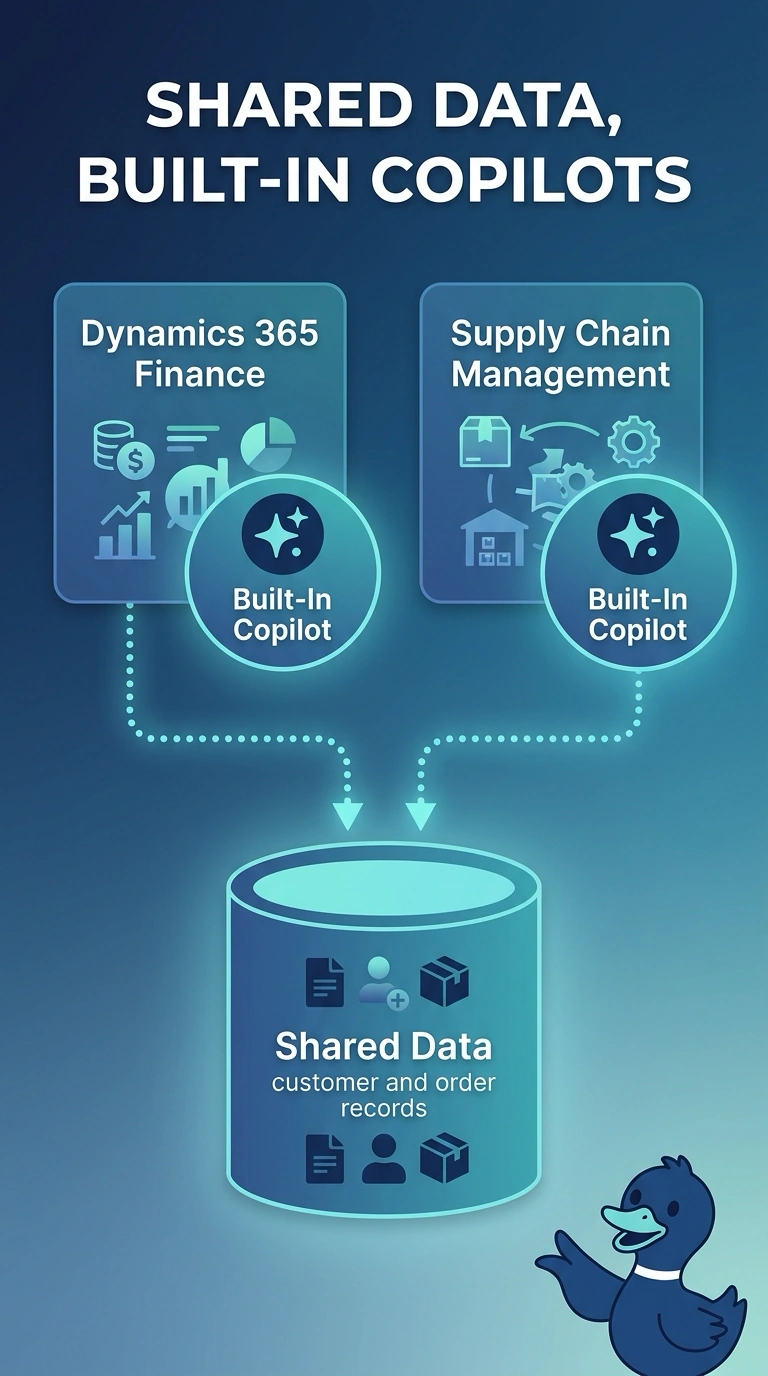
The apps already know the invoice and the late order. You turn on the copilots that sit on those records instead of teaching a new model a stale export. A website that asks a clerk to paste each invoice throws away the system of record.
Full Explanation
When Dynamics 365 Finance and Supply Chain Management already hold the customer and order records, the architect orchestrates the AI features in those apps so both answers use the same data. Collection drafting and a late-order explanation are in-app copilot work, not a reason to train a model. A one-time export becomes stale the next time an invoice is paid or a receipt is posted, so a foundation model trained on it will explain a company that no longer exists. A public website that cannot see Dynamics 365 pushes clerks to paste invoices into a chat, which duplicates the system of record and breaks the shared-data requirement. A warehouse small language model with no finance connection cannot see the overdue invoice or the purchase order at all. Exam caveat: orchestrate does not mean turn on every copilot in the tenant. It means the finance feature and the supply-chain feature that match these two jobs, on the same records. Operational check: draft a collection note and a late-order explanation for the same customer in a test company and confirm both use the current invoice and order, not a copied file.