
A utility agent drafts a switching plan. An approver overrides the draft, and the stored record keeps the original draft with no sign of the override. What must the audit trail include?
Select an answer to reveal the explanation.
Short Explanation
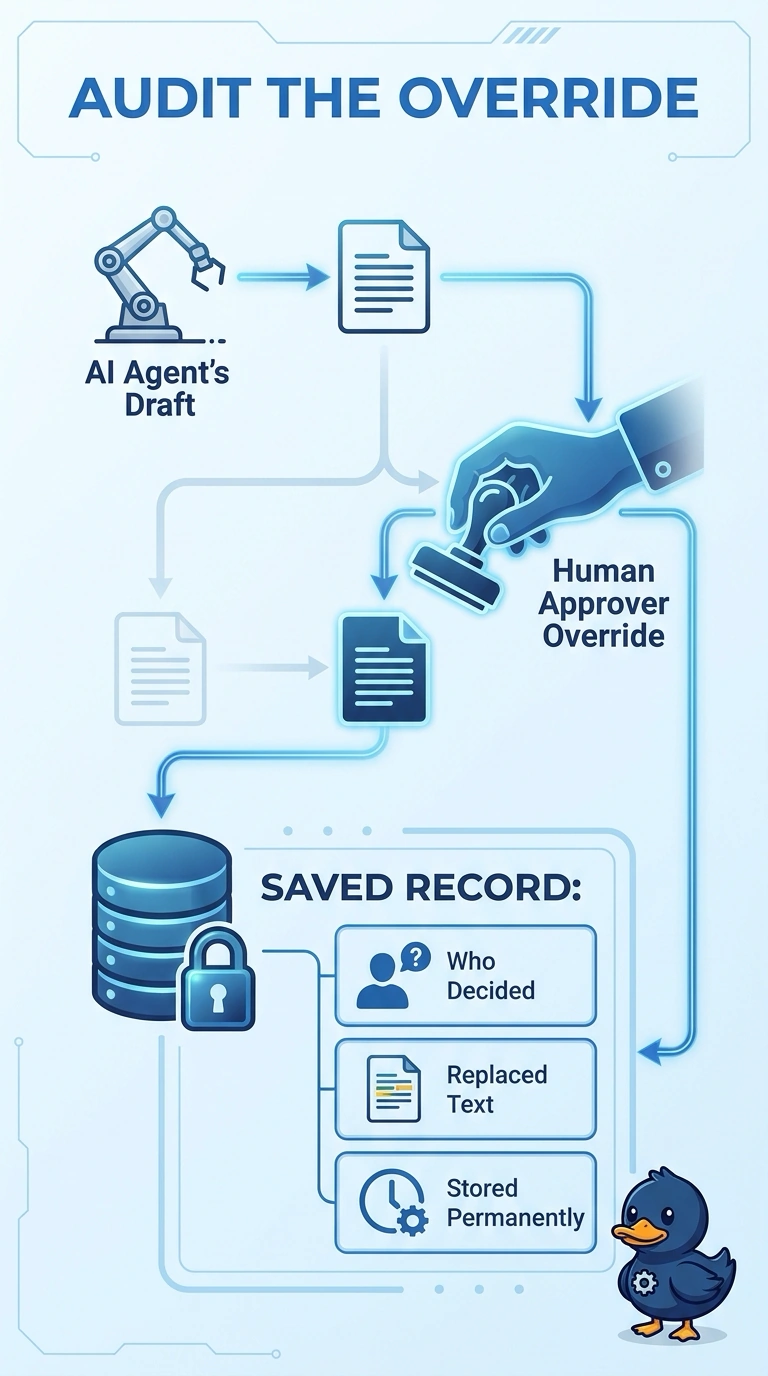
A signed change on a paper plan is the decision, and an unsigned scratch copy loses it. You store the approver's override in the audit trail, including who decided and what replaced the draft. Keeping only the agent's first text hides the call the utility actually made.
Full Explanation
The switching record is incomplete when it keeps the agent's draft and drops the approver's override, because the override is the decision that changed the plan. The audit trail has to include that human decision: who overrode the draft and what text replaced the agent's wording. Storing only the model's first draft leaves later human edits outside the record and makes the executed plan look like the agent's original text. Putting the approver's name in a greeting identifies a person and still omits the decision that replaced the draft. A satisfaction score from the control room rates a feeling about the shift and leaves the override itself unsaved. Exam caveat: the trail is the record of the decision that was allowed to stand, and it does not replace the operational approval the switching procedure already requires. Operational check: override a test switching draft, then open the stored record and confirm it shows the approver, the time, and the text that replaced the agent's draft. Compare that record with the model's first draft and confirm both the original text and the override remain readable.