
A chemical manufacturing plant accumulates spent concentrated nitric acid and needs an empty 55-gallon drum in its central accumulation area. Operators find a steel drum that previously held organic solvent residue and still has a strong odor inside. What must the facility do under RCRA 40 CFR 262.16(b)(2)(v) or 262.17(a)(1)(vii), depending on generator category, before using that drum for the nitric acid?
Select an answer to reveal the explanation.
Short Explanation
Think of an unwashed chemical drum like a frying pan that still holds hot oil before you pour in water. The trap is assuming trace residue at the bottom of an empty container is harmless once you relabel it. Mixing concentrated nitric acid with residual organic solvent can trigger violent heat, gas, or fire.
Full Explanation
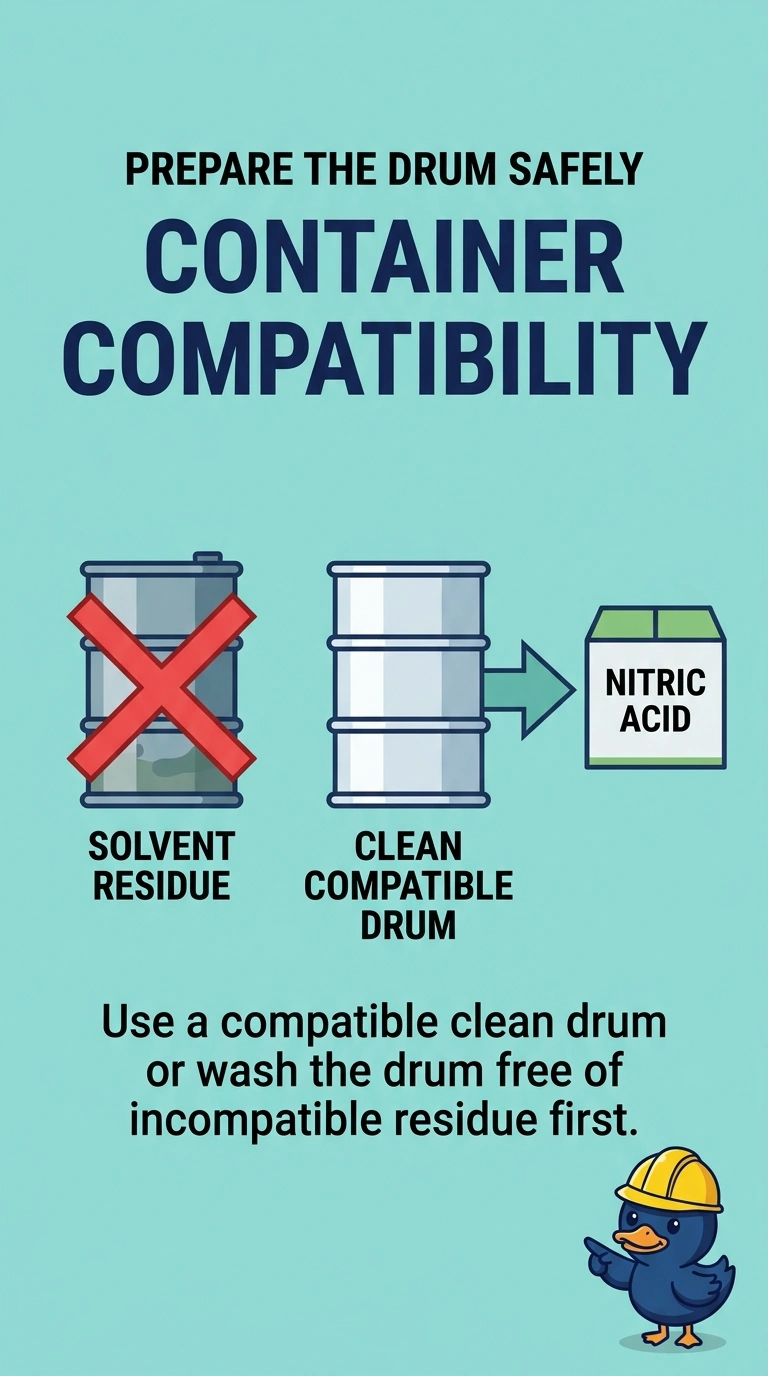
Under RCRA container compatibility rules in 40 CFR 262.16(b)(2)(v) or 262.17(a)(1)(vii), depending on generator category, a facility must not place a hazardous waste in an unwashed container that previously held an incompatible waste or material. Therefore, the facility must Use a compatible clean drum or wash the drum free of incompatible residue first. Concentrated nitric acid is a strong oxidizer that reacts violently with residual organic solvents, potentially causing rapid pressurization, toxic nitrogen oxide fumes, or container rupture. Choosing to Rinse the drum briefly with cold water and immediately pump the new waste stream inside fails because a quick water rinse rarely removes non-polar organic residues and residual water itself can generate exothermic heat with strong acids. Choosing to Cover the prior chemical markings with a fresh hazardous waste label before filling it addresses only exterior hazard communication while leaving the reactive residue inside. Choosing to Add an inert absorbent layer to the bottom of the drum to isolate any residual liquid does not prevent vapor contact or chemical reaction when acid permeates the absorbent. As a regulatory caveat, even a clean steel drum is unsuitable if nitric acid corrodes carbon steel, so both residue removal and container material compatibility must be verified. As an operational check, inspect drum interiors, review prior-contents logs, and confirm chemical compatibility charts before transferring any waste.
Prefer to study offline? Printable PDF study book + test engine ($7.50, unofficial). These questions stay free here.