
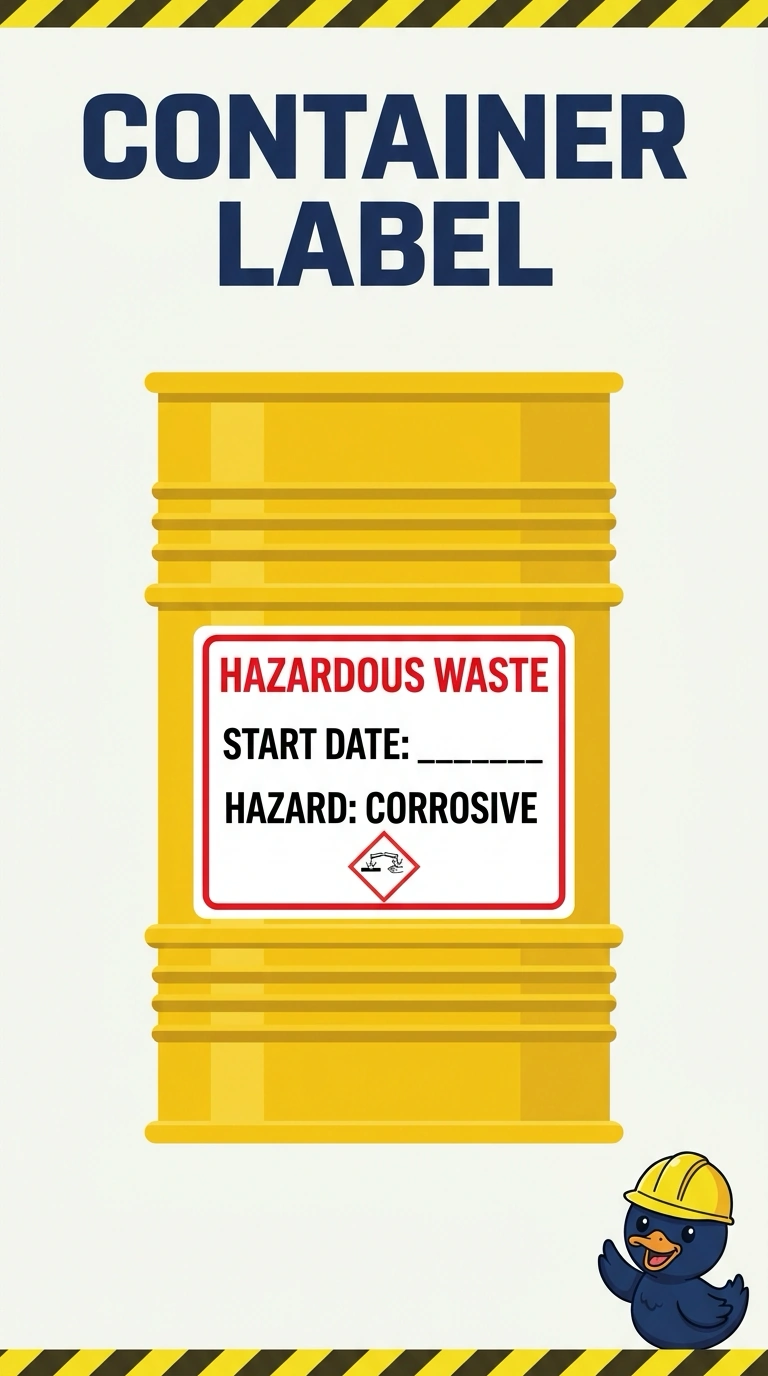
A metal-finishing facility operating as a RCRA Large Quantity Generator places a new 55-gallon steel drum in its central accumulation area to collect spent acidic rinsewater. Along with the accumulation start date, what information must be marked on the container label?
Select an answer to reveal the explanation.
Short Explanation
When you label a central accumulation drum, include Hazardous Waste and an indication of the hazards so workers can recognize the danger. You don’t need to put the receiving disposal facility’s EPA identification number and address, the plant manager’s home telephone number and emergency extension, or an exact pH measurement on the drum label.
Full Explanation
Under RCRA 40 CFR 262.17, a Large Quantity Generator accumulating hazardous waste in containers at a central accumulation area must mark each container with the accumulation start date, the words Hazardous Waste, and an indication of the hazards of the contents. For spent acidic rinsewater, that indication alerts workers and responders to corrosivity or other dangers. The receiving disposal facility’s EPA identification number and address belong on the Uniform Hazardous Waste Manifest when a shipment is arranged, not on an active accumulation drum. The plant manager’s home telephone number and emergency extension are not required on every drum; emergency coordinator contacts belong in the RCRA Contingency Plan and quick-reference guide. An exact analytical pH measurement to two decimal places can be useful in waste characterization records, but it is not a mandatory container marking. As an exam caveat, EPA waste codes are required on containers before off-site shipment rather than at initial accumulation. As a practical check, inspect labels during weekly central accumulation area walks to confirm they remain legible and intact.
Prefer to study offline? Printable PDF study book + test engine ($7.50, unofficial). These questions stay free here.