
A specialty chemical warehouse receives sealed steel drums of a Division 4.3 dangerous-when-wet solid that evolves flammable hydrogen gas upon contact with moisture. Which storage arrangement should the warehouse manager establish?
Select an answer to reveal the explanation.
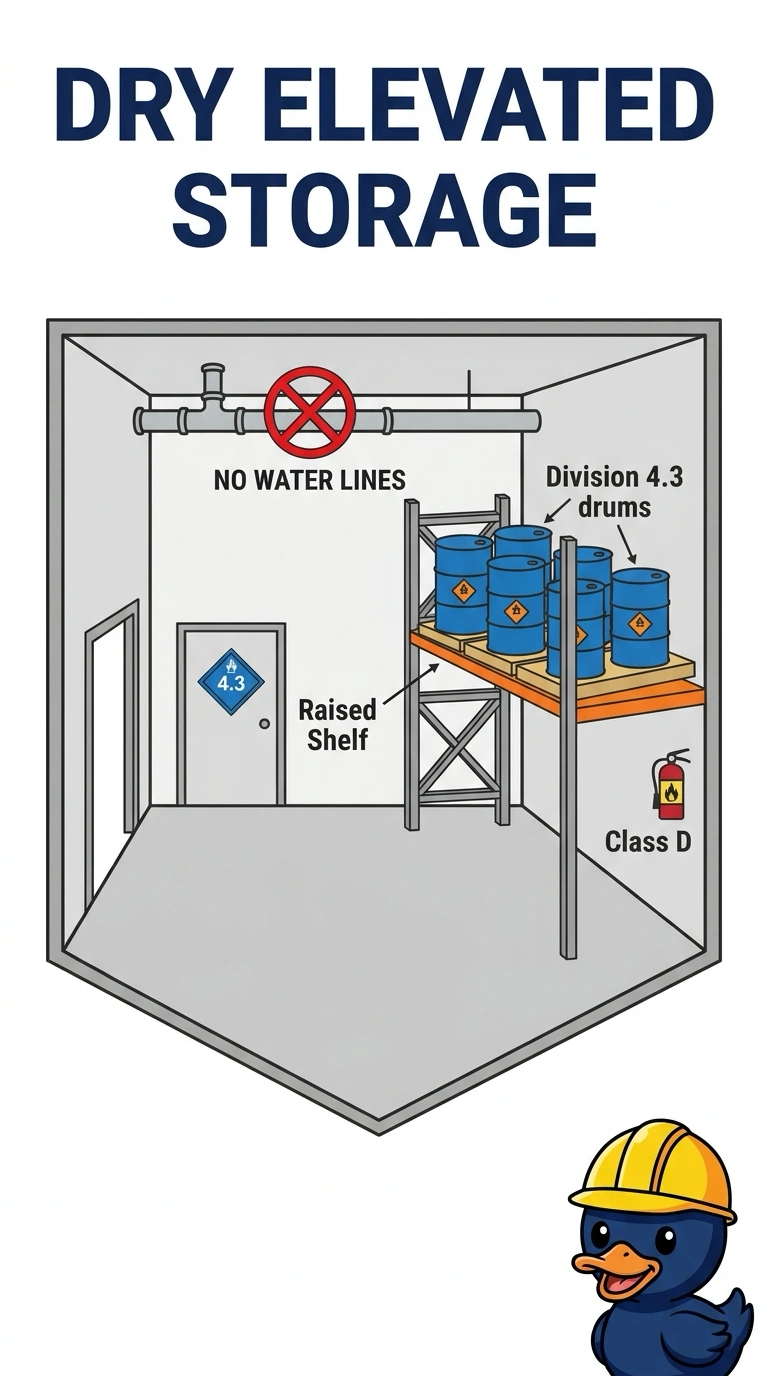
Short Explanation
Water is usually a firefighter's best friend, but with water-reactive solids it fuels an explosion or toxic gas cloud. The trap is putting these drums under standard ceiling sprinklers or near wash-down hoses out of habit. Keep your storage dry, elevated, and equipped with dry extinguishing media.
Full Explanation
Division 4.3 water-reactive materials react vigorously with water or ambient moisture to release flammable or toxic gases and heat, requiring strict exclusion of water sources during storage. Choosing to Store the drums in a dry, elevated room free of water lines with Class D extinguishers protects containers from roof leaks, plumbing failures, floor condensation, and incompatible water-based firefighting. Choosing to Place the drums directly under standard wet-pipe ceiling sprinklers for fire protection fails because sprinkler activation would deluge the material, accelerating hydrogen generation and fire severity. Choosing to Locate the pallets beside an exterior loading dock wash-down bay for easy spill rinsing fails because routine wash-down spray or splashed water can trigger a violent reaction if a drum is damaged. Choosing to Stack the containers on bare concrete floors near floor drains to speed moisture runoff fails because bare concrete wicks moisture, corrodes steel chimes, and invites water contact near drains. Exam caveat: verify whether a specific water-reactive chemical requires Class D dry powder or compatible dry chemical agents, as carbon dioxide or foam can still be ineffective or reactive. Operational check: inspect the storage room roof, seals, and floor elevation monthly and verify that NFPA 704 water-reactive signage is posted at every entrance.
Prefer to study offline? Printable PDF study book + test engine ($7.50, unofficial). These questions stay free here.