
A maintenance shop places a 55-gallon satellite accumulation drum for spent solvent in an unlocked corridor two rooms away from the parts-cleaning sink because floor space near the sink is tight. Why does this placement violate RCRA satellite accumulation rules under 40 CFR 262.15?
Select an answer to reveal the explanation.
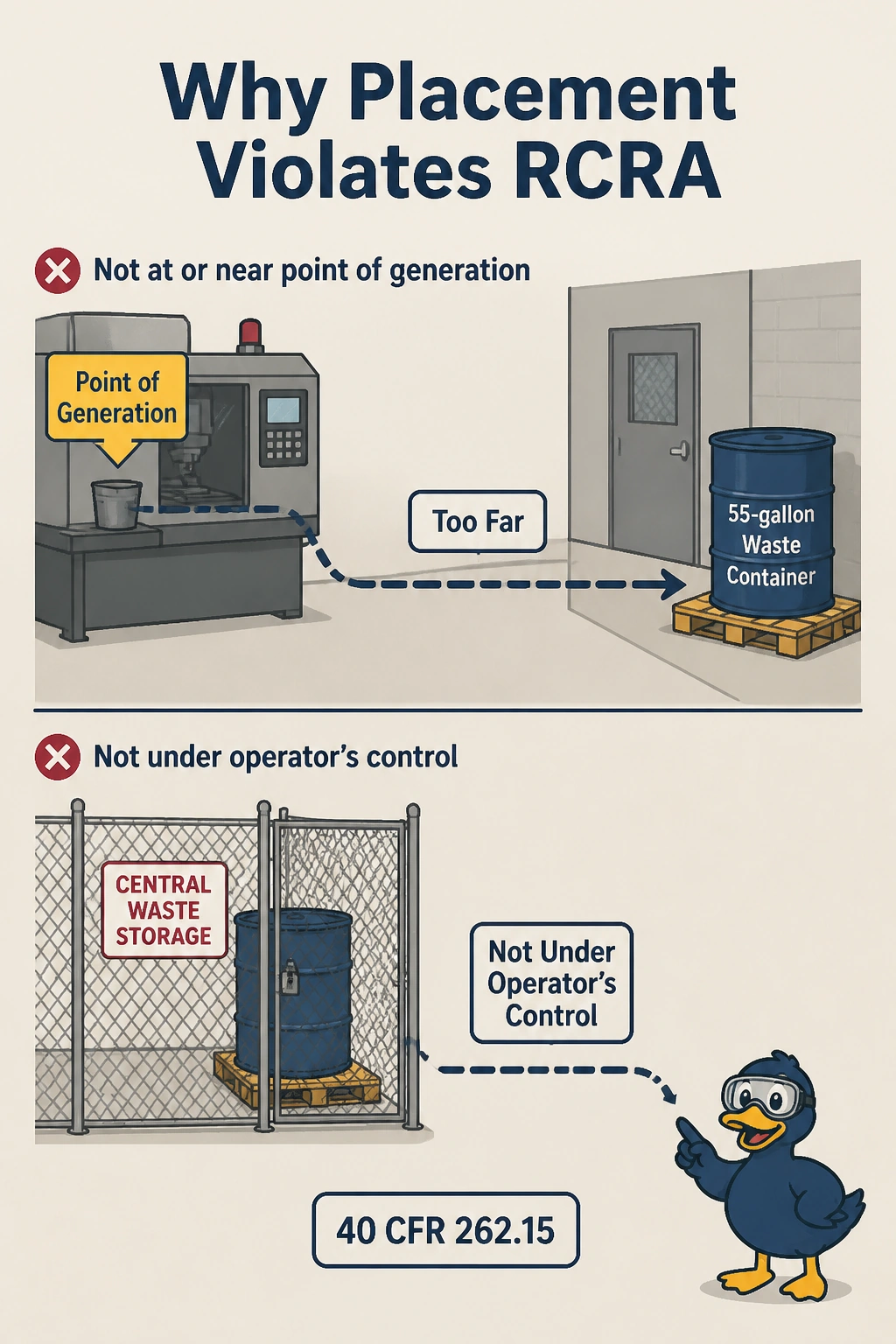
Short Explanation
Satellite accumulation is a convenience rule, not a hallway free-for-all. If you wheel that drum down an unlocked corridor out of the operator's sight, you lose the satellite exemption and trigger full central accumulation rules.
Full Explanation
Under 40 CFR 262.15, a generator may accumulate hazardous waste in a satellite accumulation area only when The container is neither at or near the point of generation nor under the operator's control is avoided—meaning the drum must sit right at or near the generating process and remain under the direct control of the operator. Placing a drum in an unlocked corridor two rooms away breaks both physical proximity and operator oversight, converting the location into an unauthorized storage area subject to central accumulation standards. Claiming Satellite accumulation drums must never exceed five gallons in capacity fails because federal rules allow up to 55 gallons of non-acute hazardous waste per satellite area. Asserting Solvent waste must be stored outdoors at least fifty feet from buildings fails because the 50-foot property-line setback applies to Large Quantity Generator central accumulation areas for ignitable or reactive waste, not indoor satellite points. Stating Satellite containers require weekly written inspections by a supervisor fails because weekly inspection logs apply to central accumulation areas rather than satellite containers. As an exam caveat, moving waste out of operator control immediately starts central accumulation time clocks. For an operational check, verify that every satellite container sits within sight or direct process control of the generating workstation.
Prefer to study offline? Printable PDF study book + test engine ($7.50, unofficial). These questions stay free here.