
A quality-control laboratory stores several bottles of uninhibited tetrahydrofuran and ethyl ether in a flammable storage cabinet, and some containers have been on the shelf for over a year without inspection. During a safety walk-through, the EHS specialist notes white crystalline residue around one cap. What storage management program should the facility implement for peroxide-forming chemicals?
Select an answer to reveal the explanation.
Short Explanation
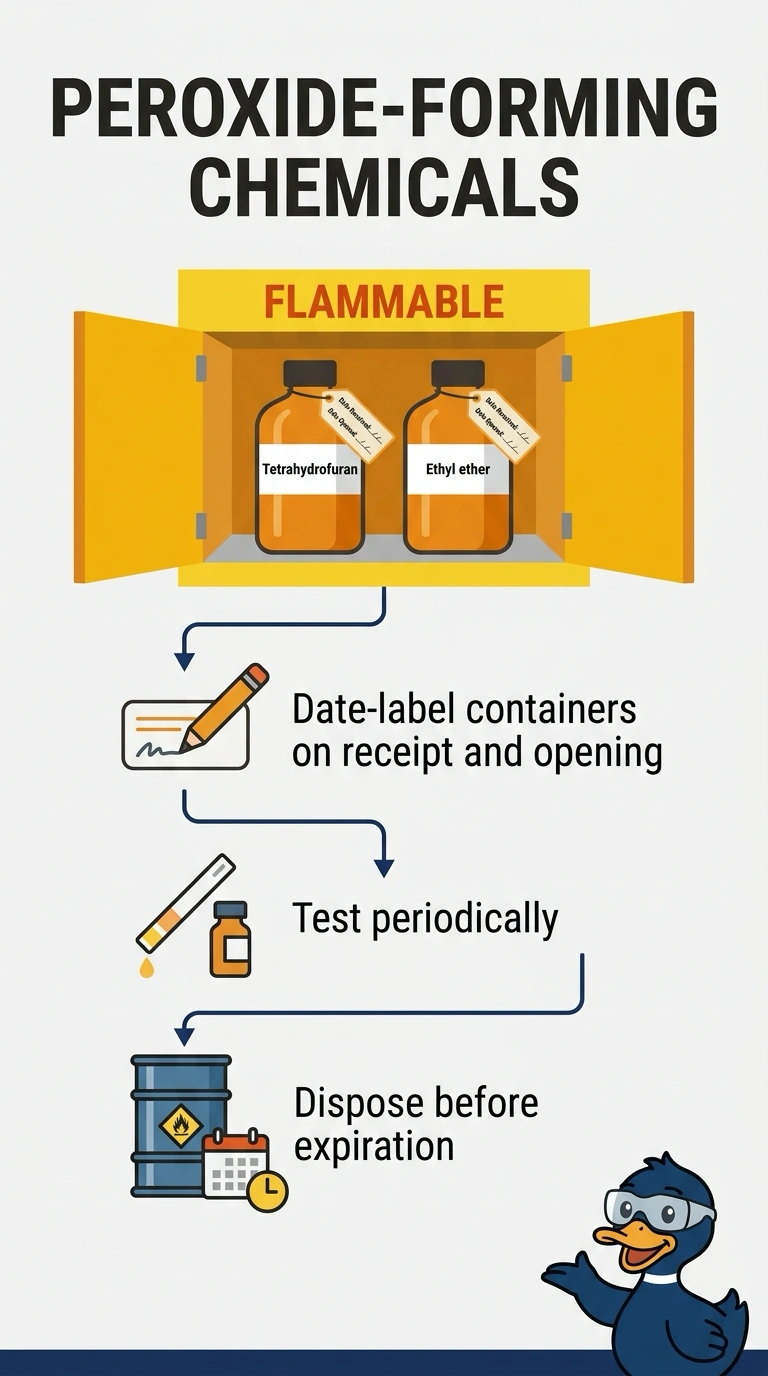
Time-sensitive peroxide formers like ethyl ether can turn into shock-sensitive explosives while sitting quietly on a shelf. You prevent that hazard by stamping receipt and opening dates, testing for peroxides on schedule, and removing expired bottles before crystals form. The trap is trying to dilute, chill, or re-bottle aged ether—any disturbance of dry crystals can detonate.
Full Explanation
For peroxide-forming chemicals such as uninhibited tetrahydrofuran and ethyl ether, the standard control is to "Date-label containers on receipt and opening, test periodically, and dispose before expiration" because exposure to air and light initiates auto-oxidation that concentrates shock-sensitive organic peroxides over time. Choosing to "Store all peroxide-forming solvents in a standard domestic refrigerator to halt decomposition" introduces severe ignition hazards from interior thermostats and lights, and cold temperatures alone do not prevent peroxide formation in opened containers. Attempting to "Transfer aged ether into clear glass bottles so technicians can visually inspect for crystals" is doubly dangerous because pouring or twisting caps on aged containers can detonate friction-sensitive crystals, and clear glass accelerates light-induced peroxide formation. Trying to "Top off older solvent bottles with fresh stabilized solvent to dilute any accumulated peroxides" neither eliminates existing crystals in threads nor resets the container's safe shelf life. As an operational caveat, a container already showing crystalline residue around the cap must never be opened or moved by lab staff and instead requires qualified bomb-squad or specialized hazmat stabilization. For an operational check, audit the chemical inventory quarterly for missing open dates and overdue peroxide test strips.
Prefer to study offline? Printable PDF study book + test engine ($7.50, unofficial). These questions stay free here.