
A semiconductor fabrication plant generates spent hydrofluoric acid etching solution classified as RCRA hazardous waste and needs new 55-gallon drums for its central accumulation area. Which container choice satisfies federal RCRA container-compatibility rules?
Select an answer to reveal the explanation.
Short Explanation
When you store hydrofluoric acid, picking the wrong container turns a routine drum into a slow-motion leak. Watch out for the trap of assuming heavy-duty glass or steel can handle any corrosive liquid, because hydrofluoric acid attacks both. Always match your container material directly to the chemical's reactivity before filling.
Full Explanation
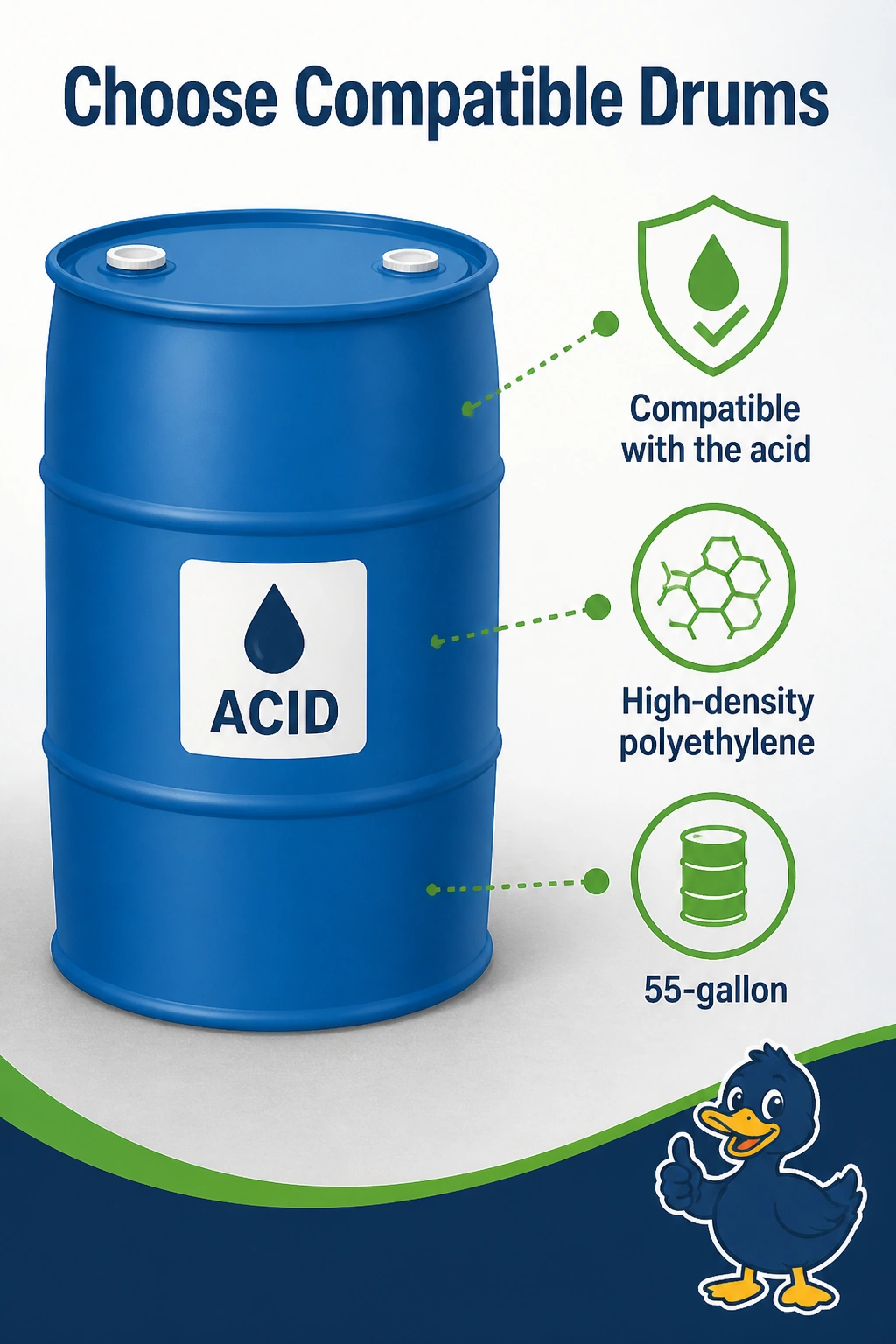
Under 40 CFR 262.17(a)(1)(iii), the generator must use a container made of or lined with material compatible with the waste. Hazardous waste must be stored in containers made of or lined with materials that will not react with, and are otherwise compatible with, the waste so containment integrity is never impaired. Selecting High-density polyethylene drums compatible with the acid prevents chemical attack, corrosion, and premature container failure during accumulation. Borosilicate glass carboys inside a cushioned metal overpack fail because hydrofluoric acid dissolves silica and rapidly etches or breaches glass. Unlined carbon-steel closed-head drums on a spill pallet fail because mineral acids corrode bare carbon steel, generating hydrogen gas and pinholes. Galvanized steel safety cans with spring-loaded self-closing lids fail because the acid strips zinc coatings and corrodes the steel body, and safety cans are designed for flammable liquids rather than corrosive acid waste. Exam caveat: even when an acid is aqueous and familiar, hydrofluoric acid behaves differently from hydrochloric or sulfuric acid with glass and metals. Operational check: verify the manufacturer's chemical compatibility chart and Safety Data Sheet Section 7 and Section 10 before staging any new drum type in the accumulation area.
Prefer to study offline? Printable PDF study book + test engine ($7.50, unofficial). These questions stay free here.