
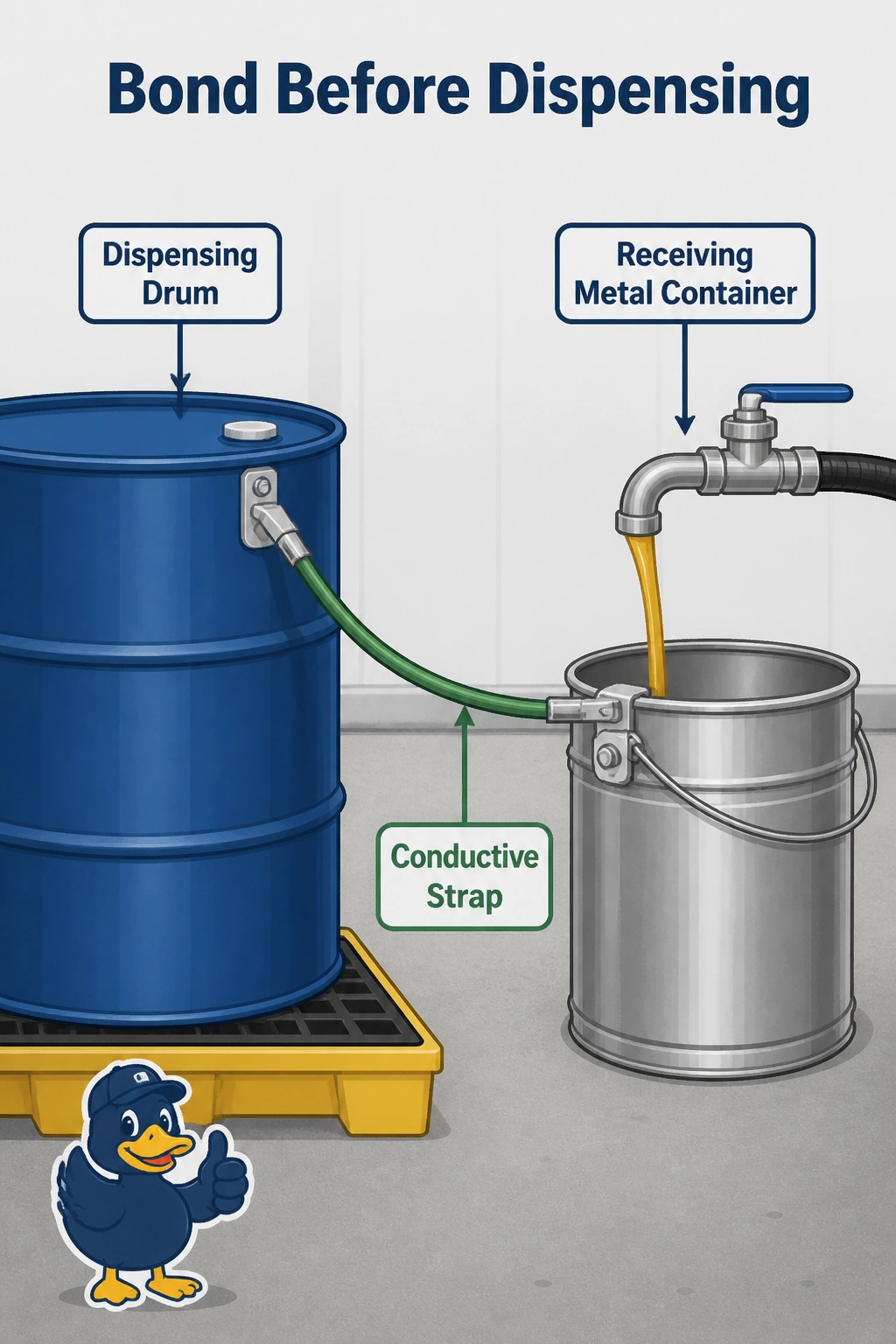
A paint-manufacturing facility stores 55-gallon steel drums of Class 1B flammable solvent inside a dedicated flammable storage room and dispenses solvent from a grounded drum into a smaller metal safety can. To prevent an electrostatic discharge spark from igniting flammable vapors during transfer, what physical connection must the operator establish before opening the drum valve?
Select an answer to reveal the explanation.
Short Explanation
Flowing flammable solvent can build static electricity, much like shuffling across a wool carpet in winter, and a tiny spark can ignite the vapors. By bonding the two metal containers, you equalize their electrical charge and help keep your transfer spark-free.
Full Explanation
When transferring Category 1 or 2 flammable liquids, or Category 3 liquids with a flash point below 100 F (37.8 C), between conductive containers, OSHA 29 CFR 1910.106(e)(6)(ii) requires bonding the dispensing drum directly to the receiving metal container with a conductive strap while the supply drum is grounded. Liquid moving through nozzles and spouts generates static electrical charges; bonding connects both metal vessels to the same electrical potential, preventing a spark from jumping across the gap at the fill opening, where ignitable vapor concentrations may exist. Placing a rubber anti-fatigue mat underneath both containers on the concrete can insulate the receiving container from earth ground and worsen static charge accumulation. Replacing the metal safety can with a non-conductive polyethylene transfer jug prevents bonding the receiving vessel and can trap static charge on the plastic surface. Closing the room's mechanical exhaust louvers to reduce air turbulence disables vital dilution ventilation and allows heavier-than-air flammable vapors to accumulate toward the lower explosive limit. One caveat: paint, rust, or corrosion on drum chimes can block electrical continuity if alligator clamps do not bite into bare metal. As a practical check, inspect bonding and grounding cables for frayed wires, verify bare-metal clamp contact on both containers, and confirm continuity before opening the dispensing valve.
Prefer to study offline? Printable PDF study book + test engine ($7.50, unofficial). These questions stay free here.