
A manufacturing plant operates a RCRA central accumulation area storing 55-gallon steel drums of ignitable and toxic hazardous waste on spill-containment pallets. During a routine walk-through, the EHS coordinator notices drums staged tightly wall-to-wall with no walking path between rows. Under RCRA container storage standards, what condition must be restored immediately?
Select an answer to reveal the explanation.
Short Explanation
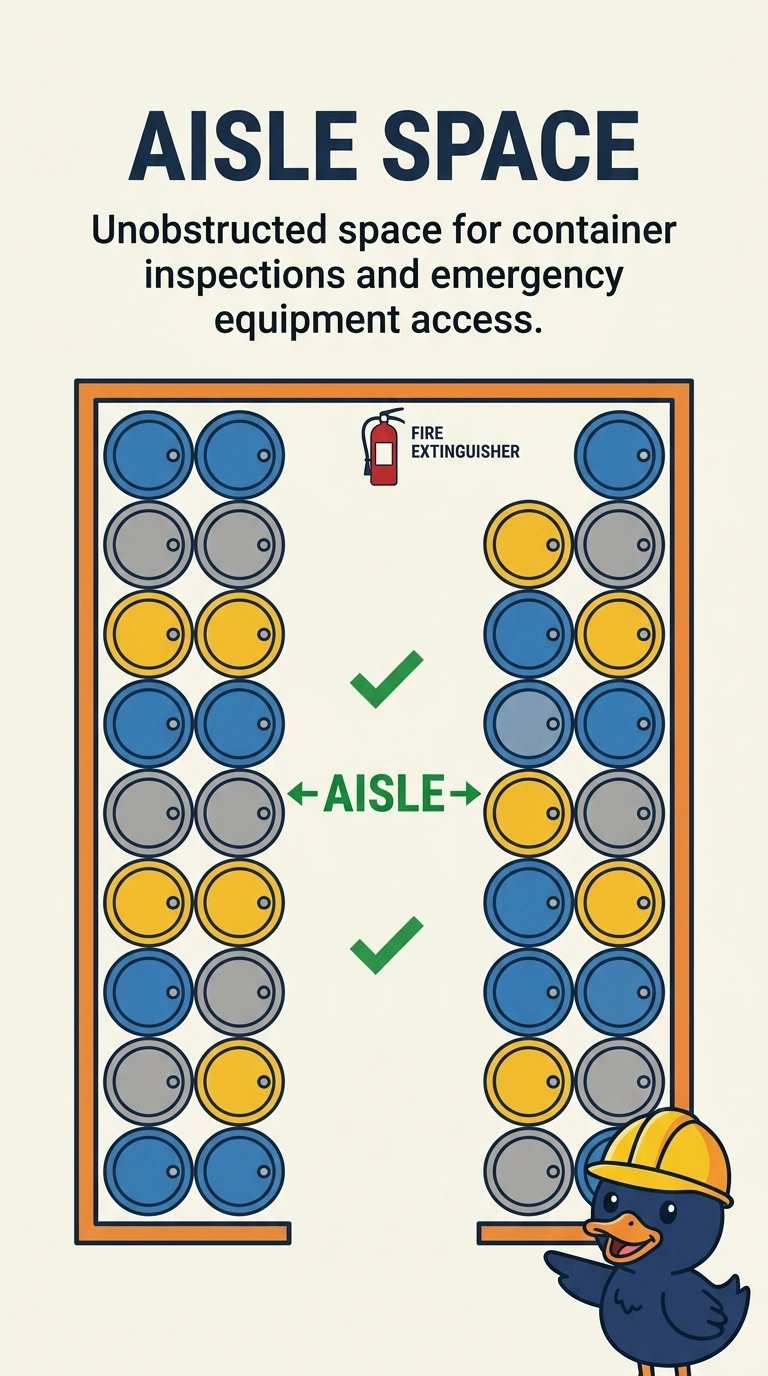
Packing waste drums wall-to-wall turns a routine weekly inspection into an obstacle course and blocks firefighters if a drum leaks. You must maintain Unobstructed aisle space for container inspections and emergency equipment access to comply with RCRA storage standards. The trap is overlooking physical access requirements when all containers are otherwise closed and labeled.
Full Explanation
Under RCRA generator rules at 40 CFR 262.255, applied through 262.17(a)(6), generators must maintain Unobstructed aisle space for container inspections and emergency equipment access so personnel can inspect every drum for leaks or corrosion and responders can reach a spill or fire with fire-control and decontamination equipment. Tightly packed rows prevent visual checks of rear containers and block emergency response. Section 262.255 sets no numeric width. Inspecting only the front row of drums from the area doorway fails because weekly inspections must cover every container for leaks, corrosion, and damage, which is impossible without entering the aisle space. Inspecting only drums whose accumulation start date falls in the current month fails because weekly inspections must cover all containers regardless of date to detect leaks and ensure timely shipment within accumulation time limits. Storing incompatible acids and caustics in one shared sump violates RCRA incompatibility rules because a simultaneous leak could trigger violent heat, gas, or toxic fume generation. Caveat: aisle space must remain clear of temporary pallets, empty drums, and hoses at all times, not just during inspections. As an operational check, paint high-visibility floor lines around drum rows and verify clearance during each weekly hazardous waste area inspection.
Prefer to study offline? Printable PDF study book + test engine ($7.50, unofficial). These questions stay free here.