
A business analyst automates weekly status summaries from GitHub issues. Summaries must follow a fixed format, use plain language, and run on a cost-effective model for routine text. Which automation setup should the analyst choose to configure prompts and models for an automation?
Select an answer to reveal the explanation.
Short Explanation
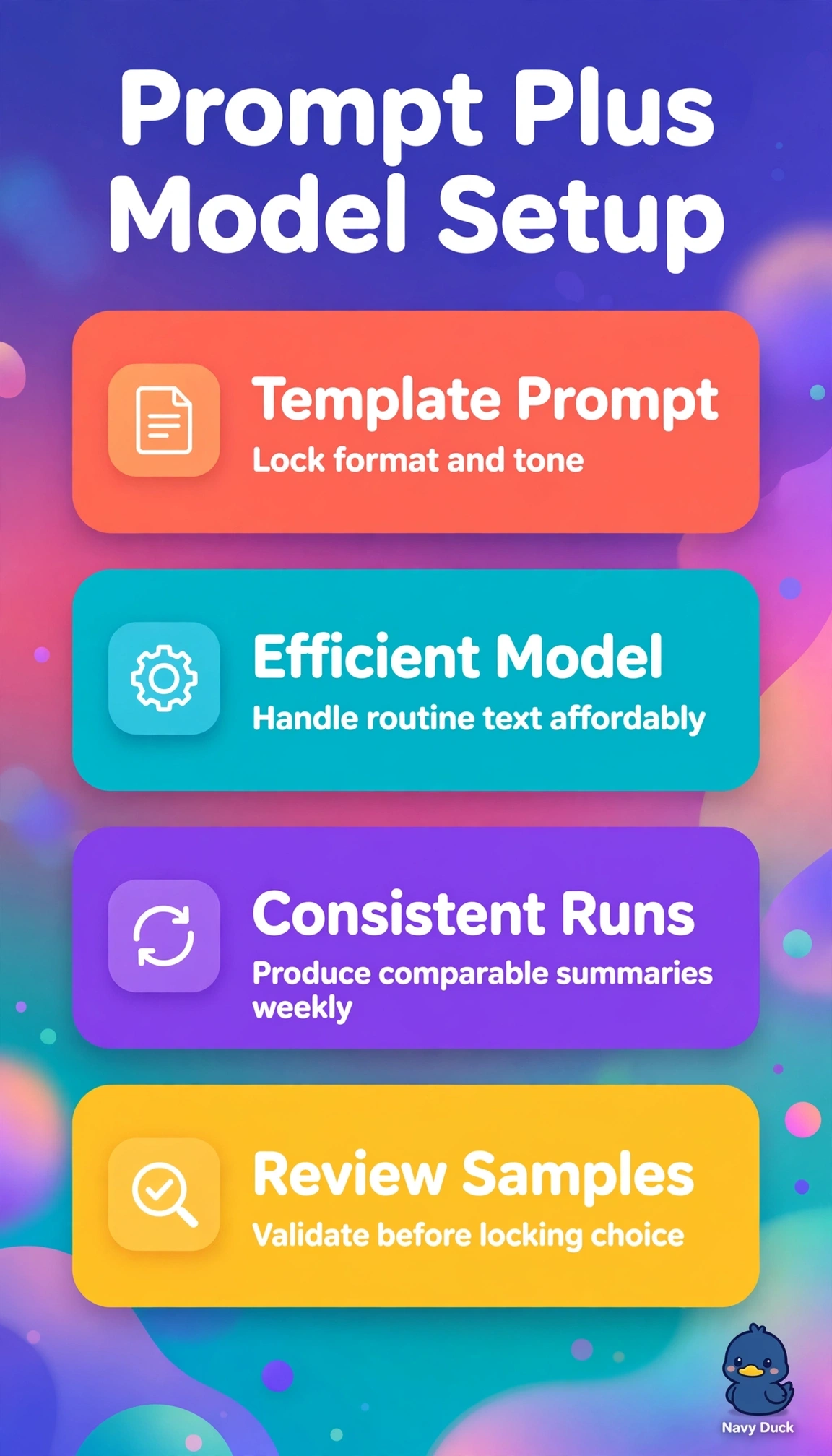
You’re building a reliable assembly line, not a surprise art project each week. A fixed template and an efficient everyday model keep your summaries consistent and affordable; check that the wording stays plain, too.
Full Explanation
The setup with a saved templated prompt and an efficient general-purpose model best fits weekly automation: the template makes the required format repeatable, and the model is a cost-effective choice for routine summaries. Plain language remains an important requirement, so make sure the prompt and resulting summaries meet that audience need. A reusable prompt for flexible weekly digests uses an efficient model and plain language, but without fixed format rules its structure can drift from week to week and fail reporting expectations. A templated prompt with format and plain-language guidance paired with an advanced reasoning model supports the content requirements, but the model’s extra reasoning capability is unnecessary for routine text and can add cost and latency. A templated prompt that uses detailed engineering terminology and an efficient model supports repeatability and economy, but dense technical wording can make summaries less clear to business readers. An exam caveat: a more capable model is not automatically more appropriate; when the task is routine and cost-effective, choose a model that is sufficient without unnecessary expense. A practical check is to run two weekly cycles and verify that summaries follow the required headings, read in plain language, and meet expected token-cost and runtime targets.