
A product operations lead at a 200-person SaaS firm spends hours triaging duplicate support tickets, copying details into GitHub issues, and chasing owners for status updates. Leadership wants faster triage without hiring. Which use case should the lead prioritize first for optimization by an agentic workflow or automation?
Select an answer to reveal the explanation.
Short Explanation
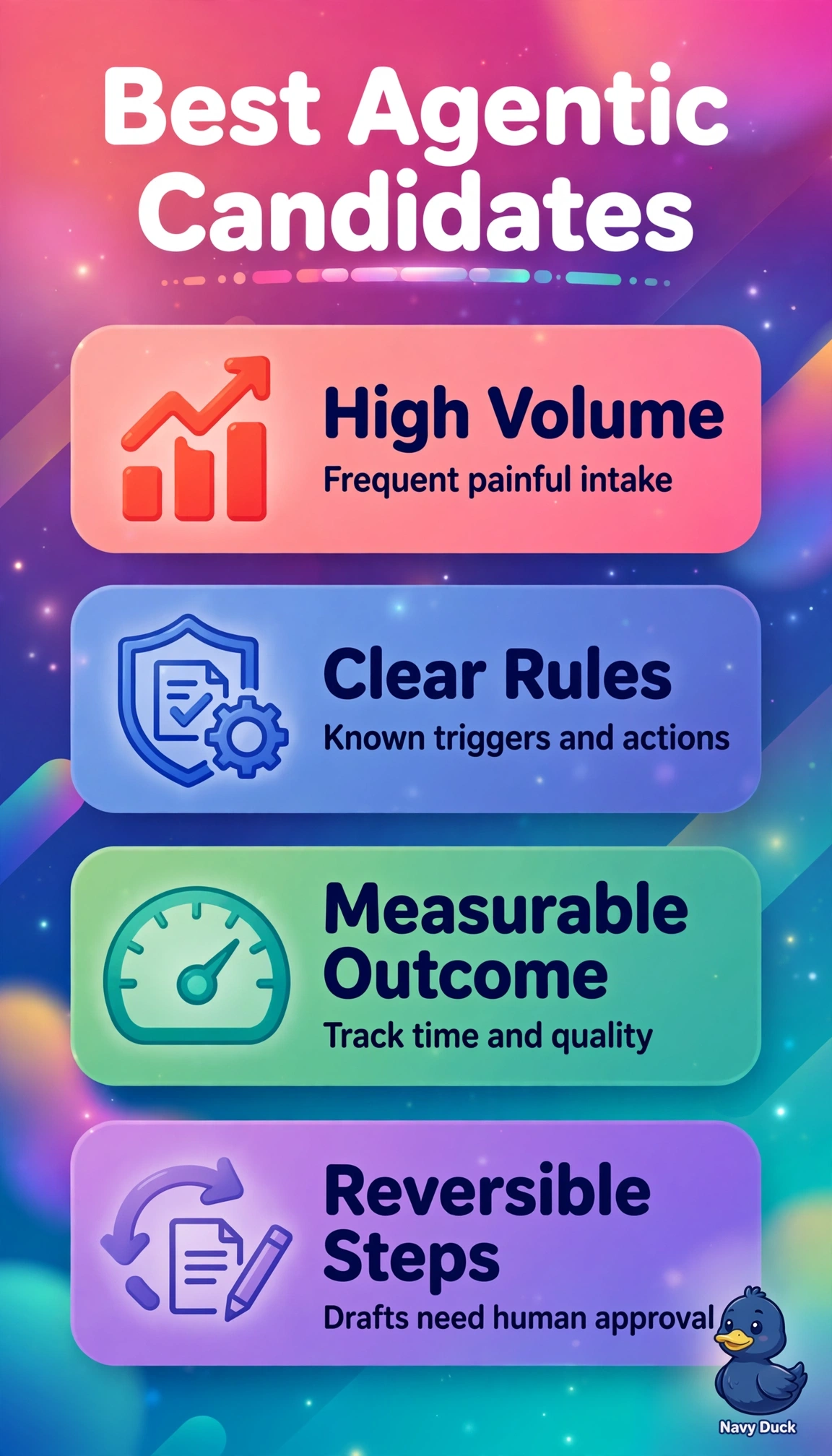
You win fastest where work is repetitive and rules are clear. Ticket triage with repeatable triggers is fertile ground for agents. High-judgment decisions still need human hearts and minds.
Full Explanation
The correct use case is right because it directly maps to the three documented bottlenecks in sequence: clustering removes manual duplicate triage effort, drafting preserves context when moving from support to engineering without copy-paste, and nudging closes the follow-up loop that otherwise stalls work, delivering faster triage without headcount which is the leadership constraint. Auto-prioritizing by urgency with drafting and nudging fails by concept because prioritization sorts queue order but does not collapse duplicates, so agents still review the same issue multiple times and triage time remains high. Posting customer status replies with clustering and nudging fails by concept because external communication improves perceived responsiveness but breaks the support-to-engineering handoff, leaving manual copying into GitHub as the bottleneck. Clustering with drafting while assigning every ticket to on-call fails by concept because static assignment creates overload and alert fatigue rather than solving stale ownership, since no mechanism re-engages the accountable owner. As an exam caveat, do not select a plausible automation simply because it is common; match all verbs and objects in the stem before considering efficiency gains. As a practical check, time-box a pilot on historical tickets and measure duplicate merge rate, draft acceptance rate, and median days stale before expanding permissions for autonomous nudges.