
A program manager supports a support triage repo where new bugs arrive daily, need labeling within an hour, and only issues labeled bug plus priority-high should start an agentic triage workflow that assigns owners. Which trigger configuration should the program manager select to implement the automation?
Select an answer to reveal the explanation.
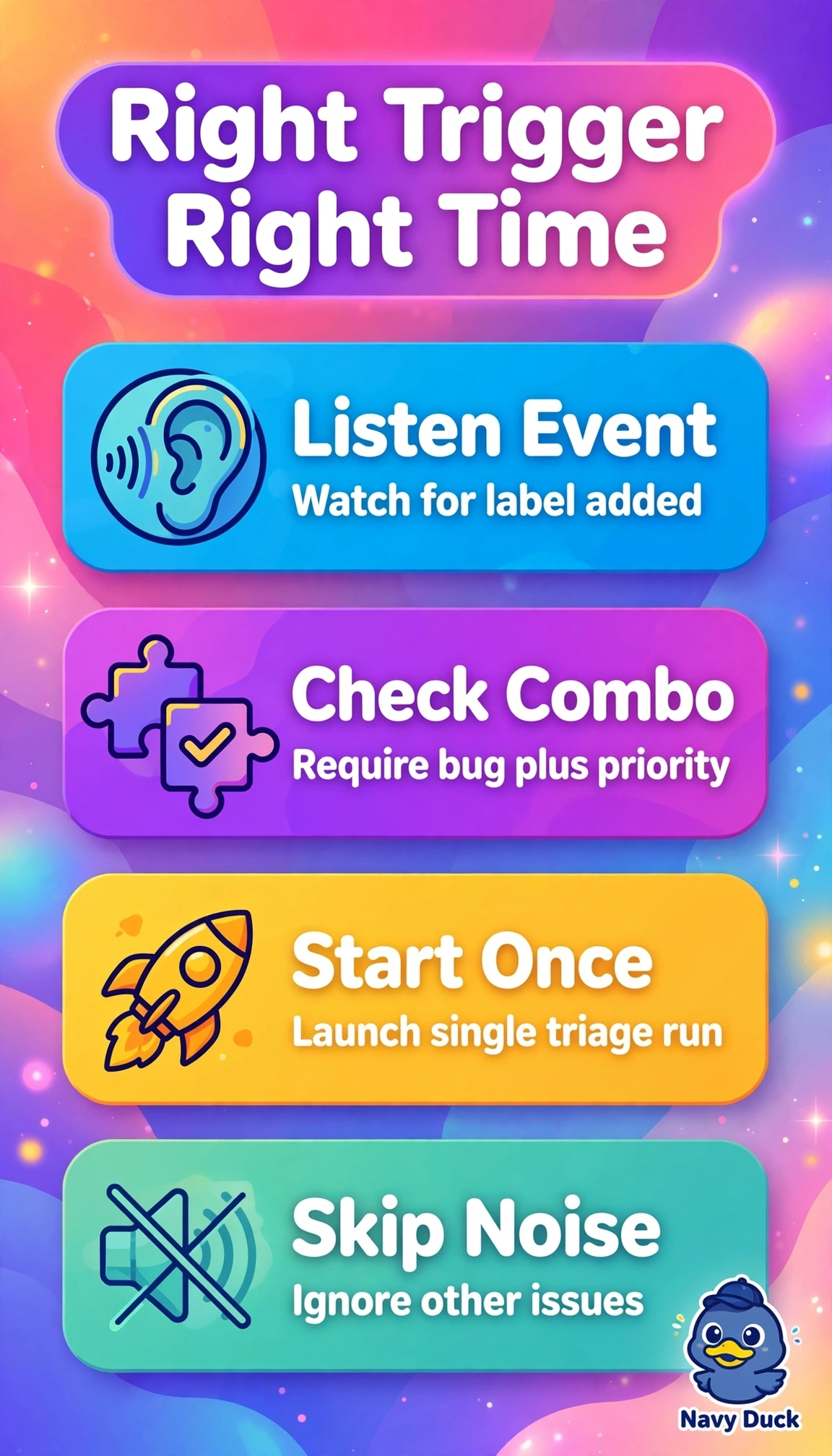
Short Explanation
You win by firing exactly when work qualifies, no sweeping or guessing. That tight event trigger is your doorbell that rings only for true high-priority bugs.
Full Explanation
Event-based triggers evaluate repository events and conditional filters before starting a run, so combining the labeled event with bug and priority-high conditions ensures the automation launches only for qualifying issues while preserving quota and audit clarity. A scheduled hourly scan satisfies timing but misses exactness because it reprocesses all open issues and requires extra filtering logic to avoid duplicate assignments. A manual dispatch satisfies control but misses timeliness because it depends on a human noticing the label and clicking start within the hour. A push trigger fails by concept because commits to main describe code changes rather than issue metadata, so it would fire on unrelated deploys and ignore the stated labeling requirement; for the exam remember triggers define when to start while subsequent steps define what to do, so always verify trigger event plus filter in the run history before broadening scope.