
A 40-person product org uses Copilot Business with premium models for refactoring. Finance flags rising premium request consumption, three squads share one budget, and leads need per-user visibility before renewing seats. Which token usage review practice best controls premium request consumption?
Select an answer to reveal the explanation.
Short Explanation
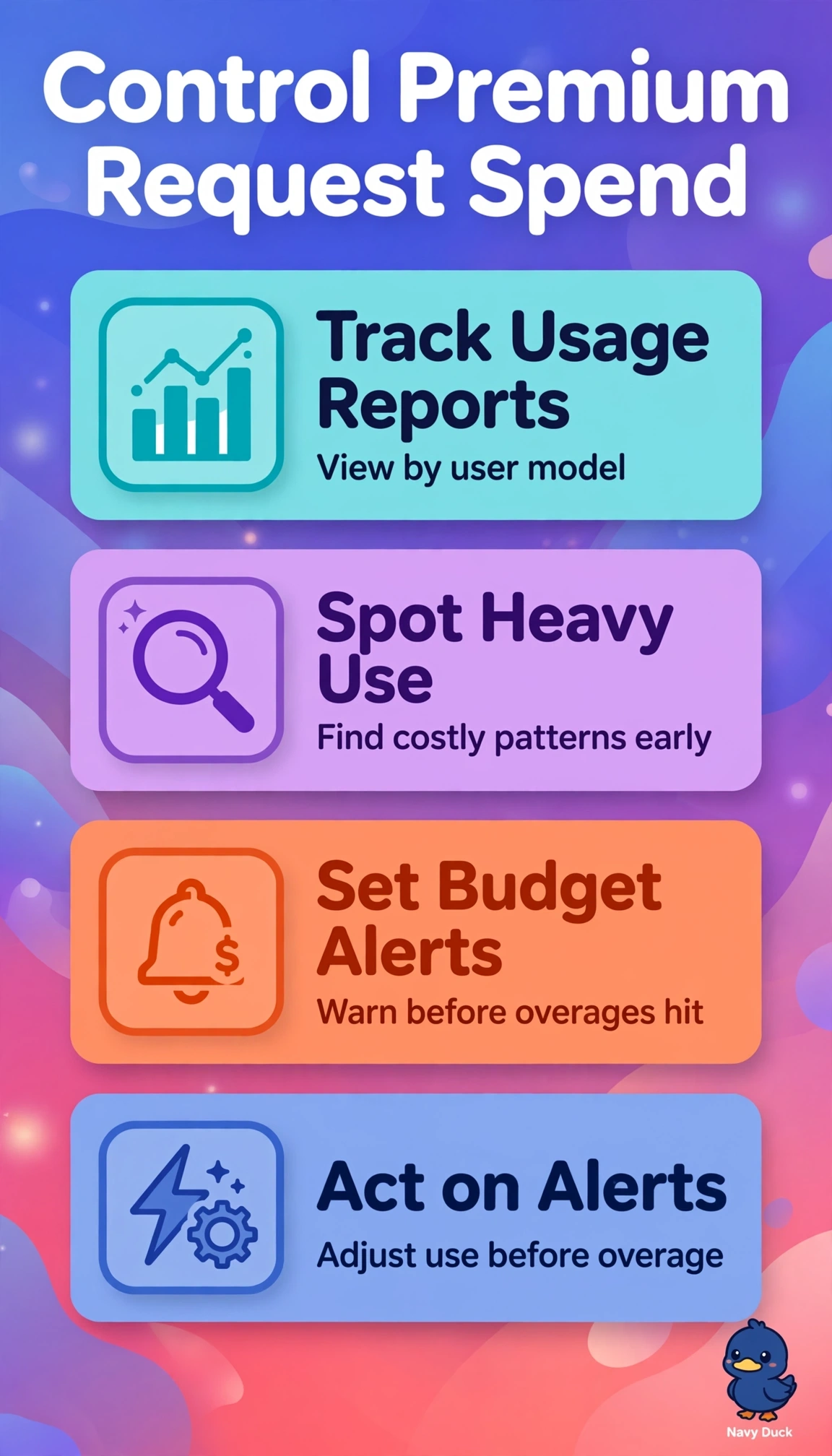
You're steering spend without stalling delivery, and usage data lights the way. Premium requests act like toll miles, so tracking them by user and model shows who burns budget fastest.
Full Explanation
The correct practice works because premium requests are metered separately in Copilot Business, so slicing usage by user and by model reveals which developers and which refactoring models drive the increase, while budget alerts on the single shared pool provide continuous enforcement for three squads and create per-user evidence for renewal decisions rather than reacting after overages. Weekly per-user coaching on efficient prompting is widely used for efficiency but fails cost governance by concept because without model-level attribution and automated alerts it improves habits yet leaves shared-budget overuse unconstrained. Aggregate monitoring against the shared budget with alerts is sound financial tracking but fails visibility by concept because org totals obscure individual outliers and cannot justify retaining or removing specific seats. Monthly by-user-and-model review for renewals supports planning but fails proactive control by concept because periodic reporting without ongoing alerts lets mid-cycle spikes exhaust the budget unchecked. An exam caveat is that control questions require both granularity and guardrails, so any answer offering only analytics, only totals, or only coaching is incomplete even when it sounds mature. A practical check is to confirm the dashboard shows user and model dimensions reconciling to the shared total, verify an alert threshold with an owner, and link seat renewals to that report.