
An operations team wants failed nightly data syncs to open a GitHub issue, assign on-call, and post to Slack without manual triage. Sync logs live in Actions, noise must stay low, and retries should not duplicate tickets. Which automation trigger configuration best meets these needs?
Select an answer to reveal the explanation.
Short Explanation
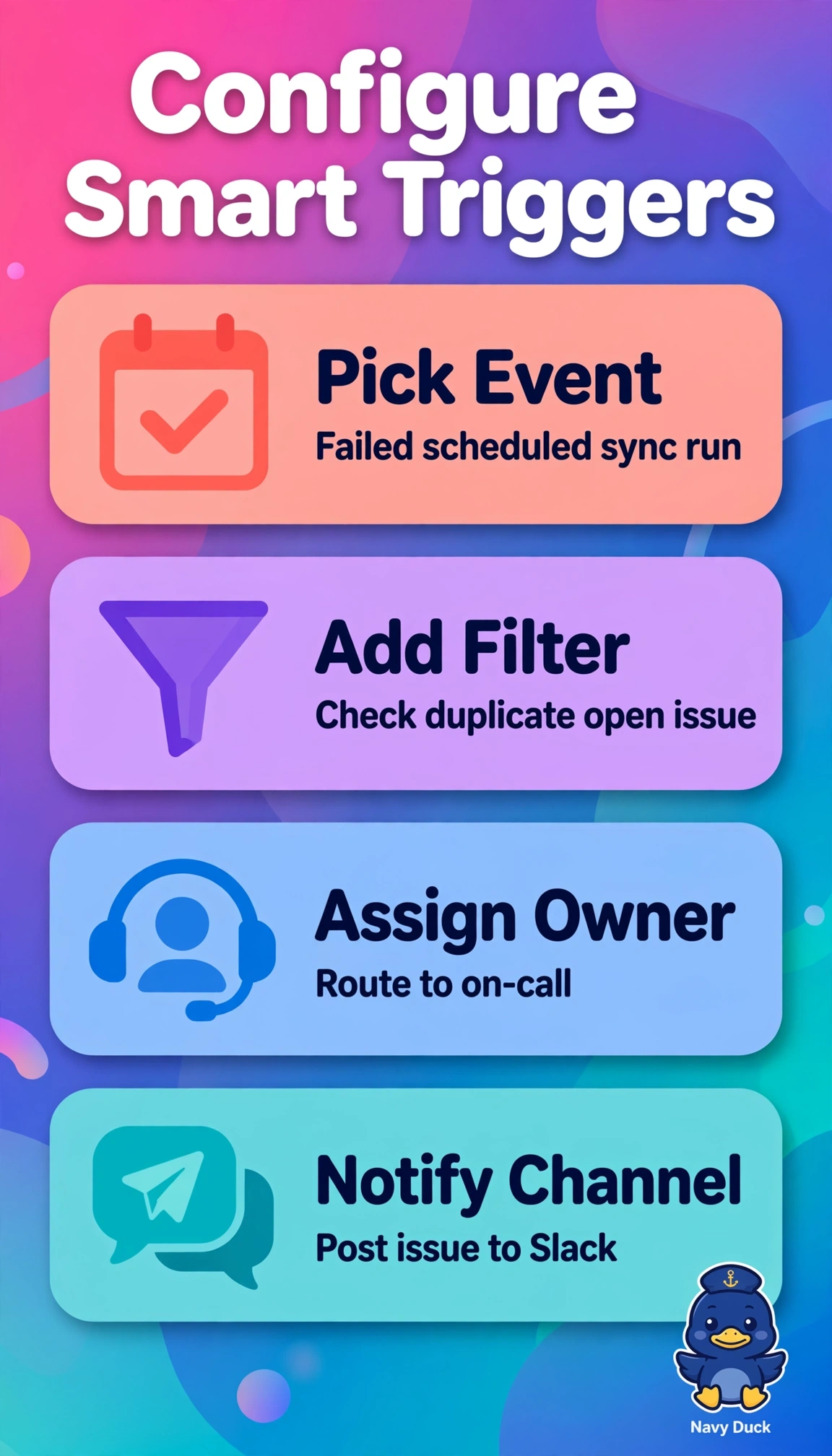
You'll want your automation to fire only when that nightly run actually fails, then check for an open ticket first so you don't get spammed. That's like a smoke alarm that knows burnt toast from a real fire, and that deduplication check keeps things quiet.
Full Explanation
The correct trigger narrows automation to the failed scheduled nightly sync and gates issue creation behind an open-issue deduplication search, which satisfies low-noise operation, preserves Actions logs as context, and ensures automatic on-call assignment plus Slack notification without manual triage while preventing retry storms from opening duplicates. The immediate-creation variant fails on idempotency because without checking for an existing open sync-failure issue before creating, each retry generates another issue and Slack message, multiplying triage work despite correct scope and routing. The any-failure variant fails on event scoping because listening to all failed workflow conclusions applies the same high-urgency assignment and Slack broadcast to pull-request checks, manual dispatches, and unrelated workflows, violating the low-noise nightly-sync requirement even though deduplication and routing are correct. The manual-assignment variant fails on end-to-end automation because opening a deduplicated issue and posting to Slack but leaving on-call assignment to human triage retains a manual step the scenario explicitly removes. Exam caveat: distinguish failure triggers by filters for schedule, conclusion, and workflow name, since broad failure triggers look efficient but break noise constraints. Practical check: dry-run with a failed scheduled run followed by two retries while an issue stays open, then verify only one issue exists, on-call is assigned, and Slack received a single thread update with the Actions run link.