
A business analyst must automate weekly competitor pricing summaries that pull issues, summarize trends, and post a digest for stakeholders. The team uses GitHub agentic workflows and needs a repeatable file the platform can run. Which practice should the analyst follow to create agentic workflow files that the platform will recognize and execute?
Select an answer to reveal the explanation.
Short Explanation
You've got a recipe card the robot can actually read. Using declarative frontmatter tells GitHub what to run and what tools are allowed. It's like labeling ingredients and oven settings before baking.
Full Explanation
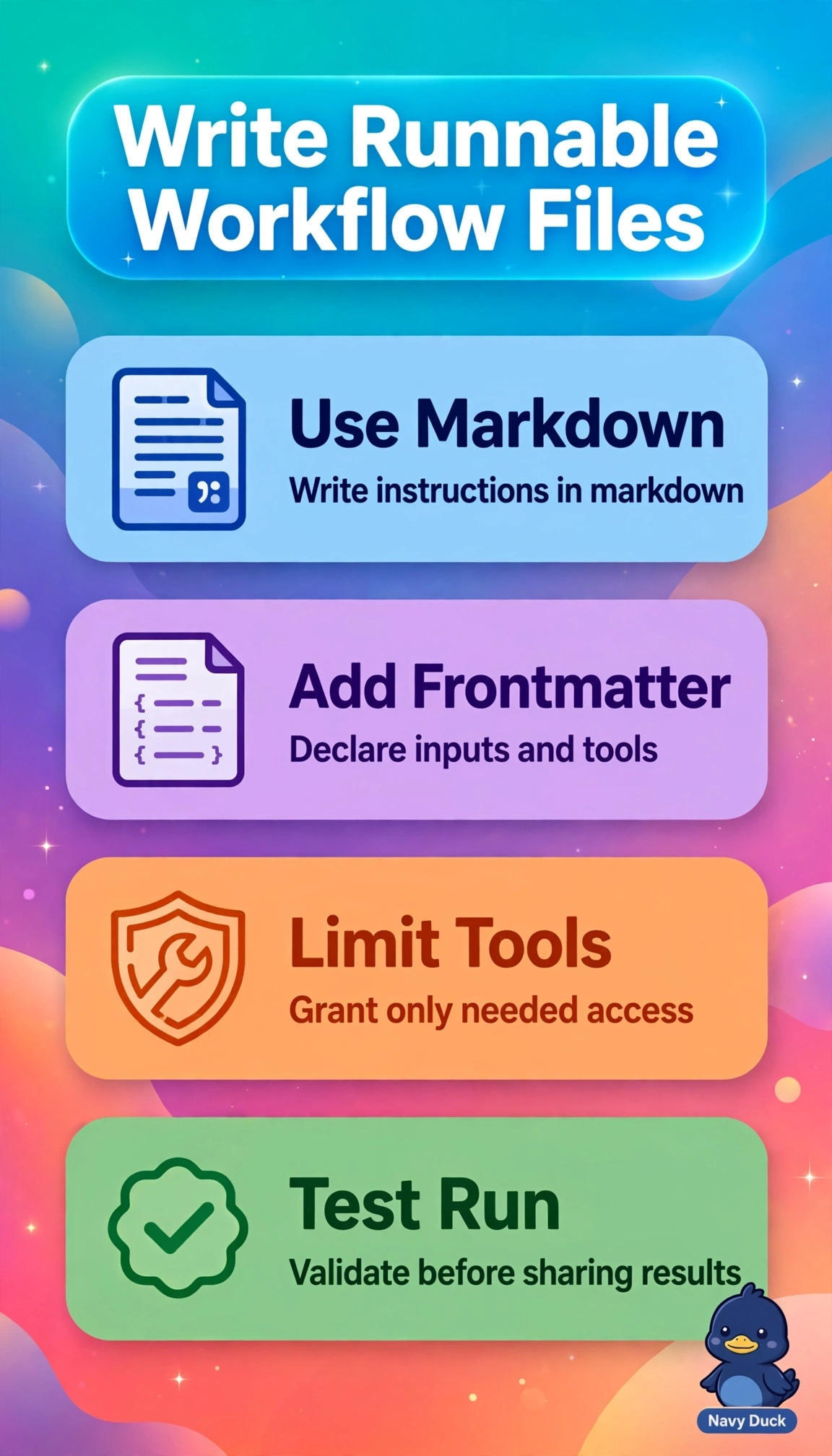
The correct practice is right because GitHub agentic workflows are defined as versioned markdown files where frontmatter provides the machine-readable contract the runner needs to recognize, validate, schedule, and execute the task safely, with purpose guiding planning, inputs enabling weekly reuse without editing, and allowed tools scoping permissions for pulling issues, analyzing trends, and posting the digest. A scheduled GitHub Actions YAML file fails by platform concept because although it is repeatable and excellent for CI cron automation, it uses the Actions job-step schema rather than the agentic frontmatter contract, so it will not be discovered as an agentic workflow. A detailed markdown runbook fails by executability concept because documentation helps analysts follow consistent steps but lacks declarative tool permissions and inputs, so the platform treats it as prose rather than runnable automation. A reusable Copilot custom agent fails by autonomy concept because interactive assistance can summarize on demand but depends on conversational prompting rather than a self-contained repeatable file the platform can invoke on schedule. Exam caveat: do not equate any automation or any markdown with an agentic workflow; look for frontmatter plus tool allowlisting as the recognition signal. Practical check: commit the file to the expected workflows path, confirm the runner lists it, trigger with sample inputs in a test repository, and verify issue reads, summary output, and digest posting before enabling the weekly schedule.