
A 12-person product operations team writes release notes the same way every sprint: pull merged PR titles, apply house style, add customer impact, and save markdown. They want this packaged as reusable team knowledge that any Copilot agent can load automatically. Which method should the lead use to create a custom skill for this repeatable process?
Select an answer to reveal the explanation.
Short Explanation
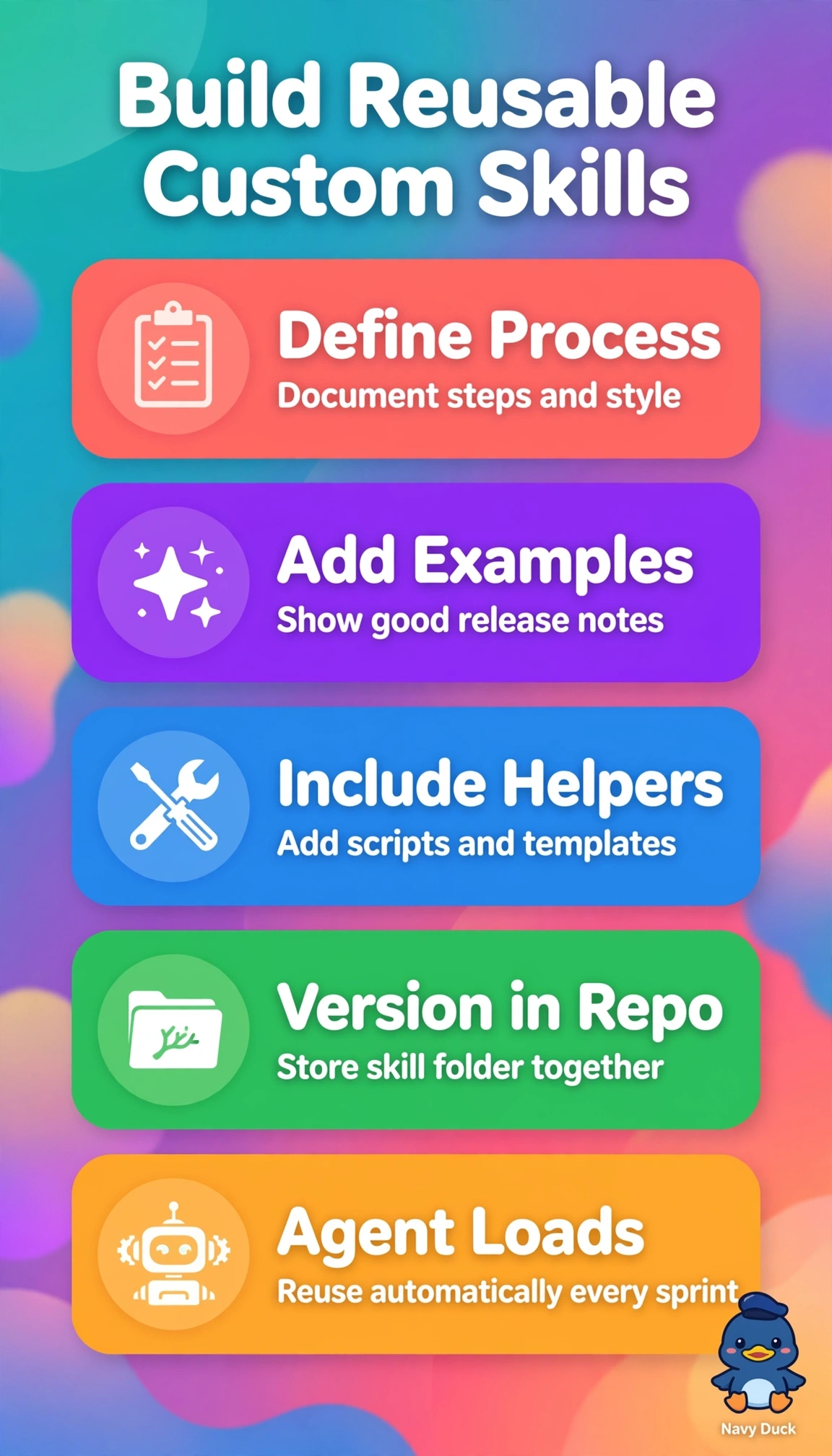
You’re turning tribal knowledge into a playbook your team can reuse. A skill bundles instructions, examples, and helpers so any agent can load the same process automatically. That’s more reliable than manually invoking a prompt each sprint.
Full Explanation
A versioned skill folder in the repository is the right choice because it packages the team’s procedural knowledge—workflow steps, house-style examples that include customer impact, and helper scripts for pulling PR titles and saving markdown—as a reusable unit any Copilot agent can discover and load automatically for the release-notes task. Versioned repository instructions can guide agents on style and relevant files, but they do not package this multi-step process and its helpers as a skill. A versioned reusable prompt file can standardize note generation, but someone must invoke it manually each sprint rather than relying on automatic loading by whichever agent handles the task. A shared MCP server can let agents query merged PR titles and customer-impact data live, but data access does not provide the workflow, style rules, and examples needed for consistent execution. An exam caveat: distinguish how work is done from where data comes from—skills teach the procedure, while MCP servers provide access to live data. A practical check is whether the artifact is versioned with the repository, travels with the team’s work, and loads without copy-pasting or manual triggering; an artifact that requires manual invocation or only supplies data does not meet the skill requirement.