
A program manager is watching a Copilot coding agent that is stuck repeatedly pushing failing commits to a release pull request, consuming runs and blocking review. The team needs the run halted immediately without losing history for audit. Which stop control should the manager use to stop an agentic workflow that is running?
Select an answer to reveal the explanation.
Short Explanation
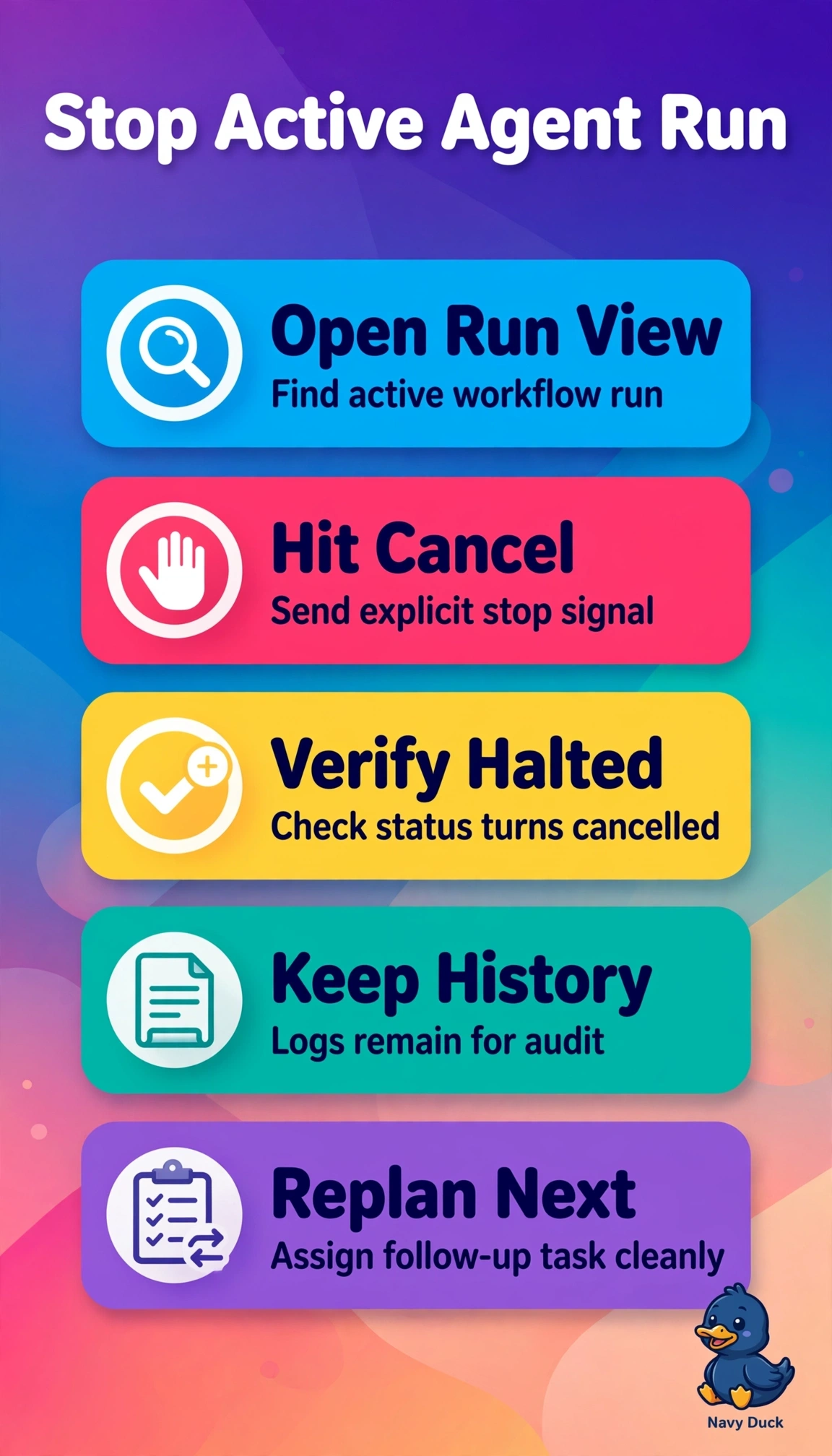
You've got a runaway helper and you need the kill switch, not demolition. Cancelling the run halts work cleanly while keeping history for review.
Full Explanation
The correct control is immediate cancellation from the run controls with log confirmation because it terminates the in-flight execution, prevents additional failing commits and run consumption, unblocks reviewers, and retains the full execution history for audit rather than erasing evidence. Pausing scheduled triggers is a legitimate throttling technique for preventing future work, but by allowing the current run to finish it fails the immediacy requirement and still permits another failing push and wasted compute during an active incident. Reverting the branch to the last green commit is standard remediation for restoring reviewability, but it fails the preservation requirement by rewriting or obscuring the failing sequence auditors need to reconstruct cause and accountability. Restricting merge permission is a sound least-privilege guardrail for protecting the release branch, but it fails the containment requirement because the agent can continue retrying, pushing commits, and consuming runs even though merging is blocked. On exams, distinguish stopping execution from preventing consequences, since blocking merge, pausing schedules, or cleaning history can look protective yet leave the loop running. In practice, cancel first and verify halted status, then preserve logs, notify reviewers, and only afterward tune triggers, permissions, or branch state.